6.400 €
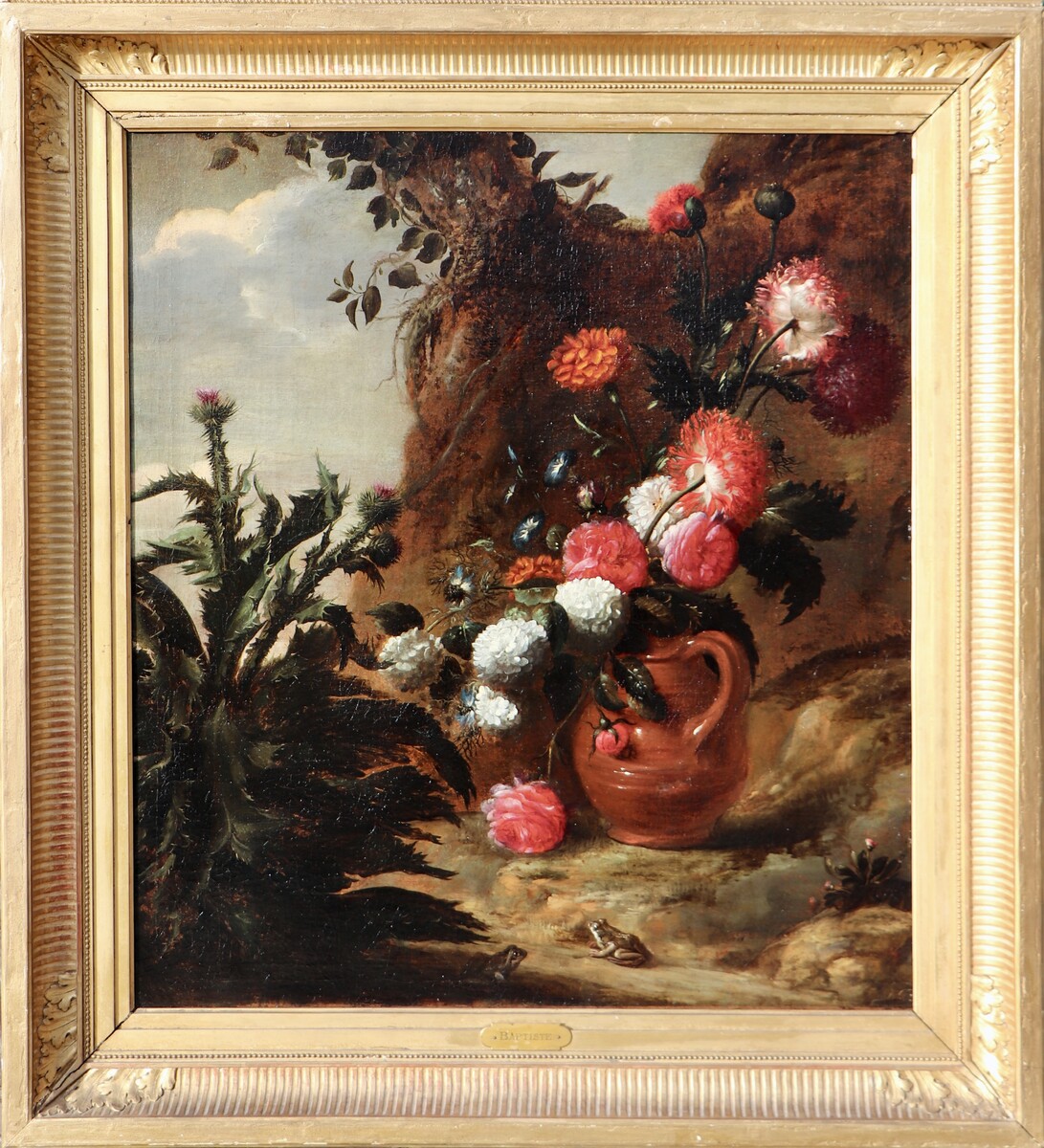
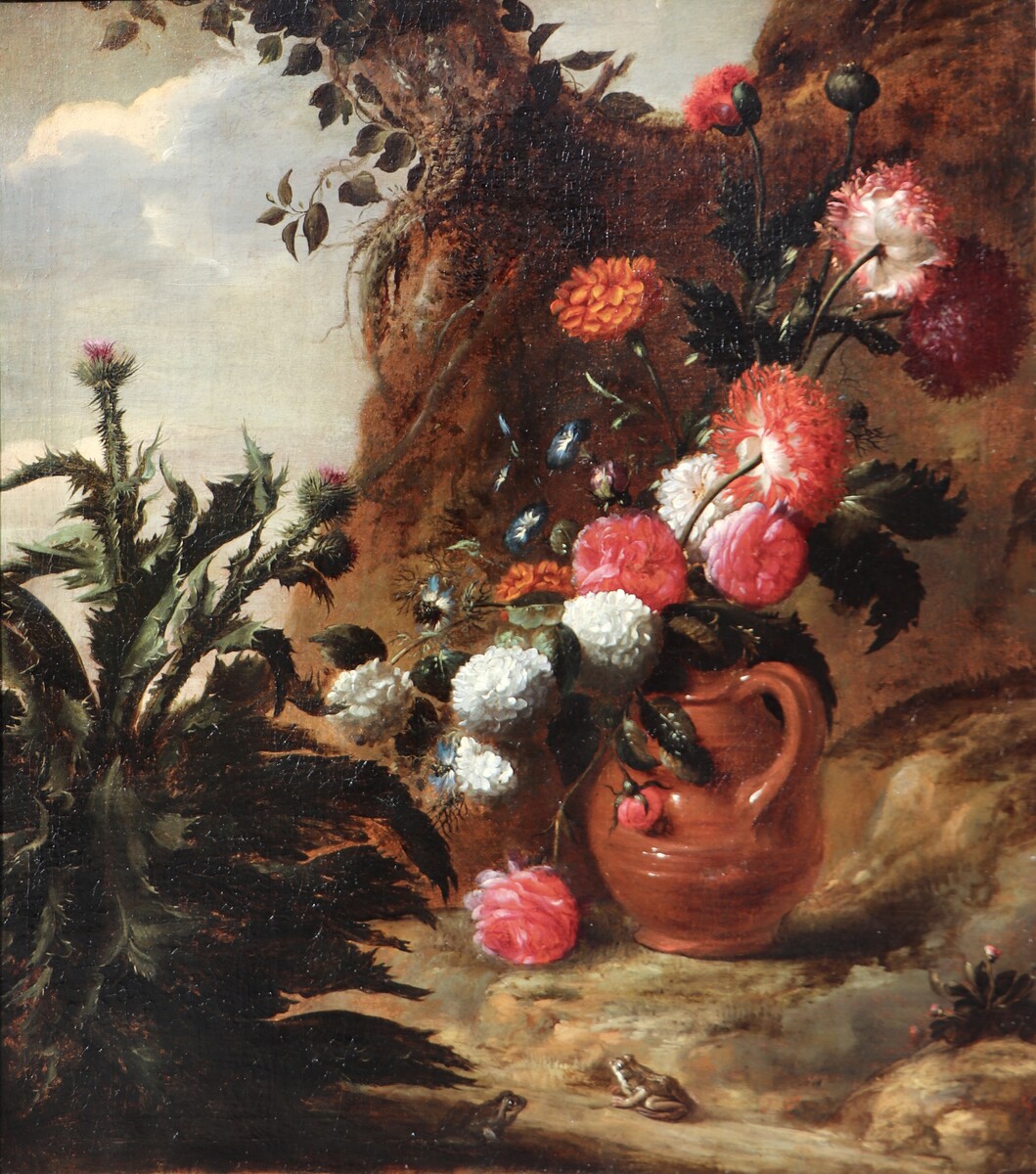
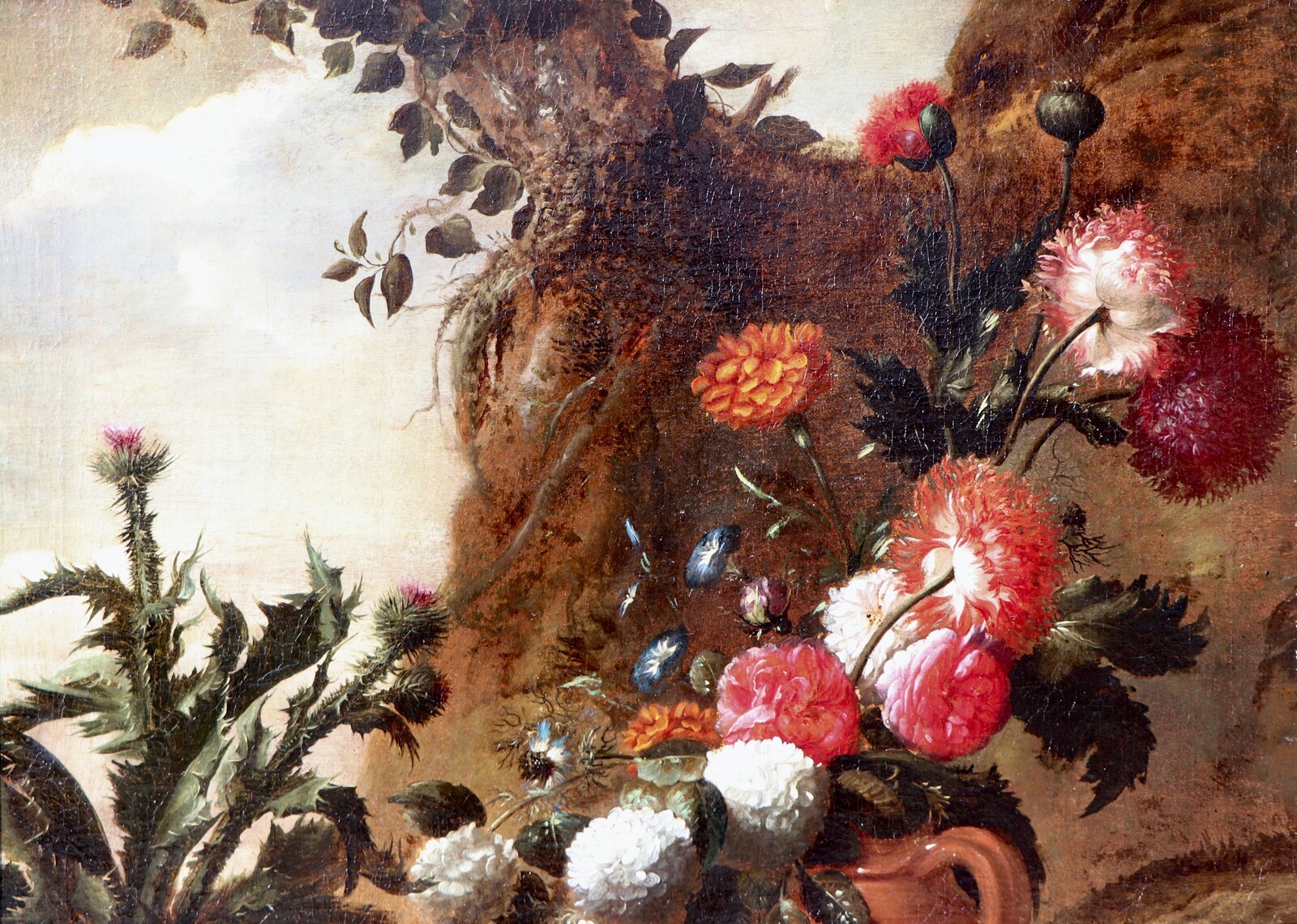
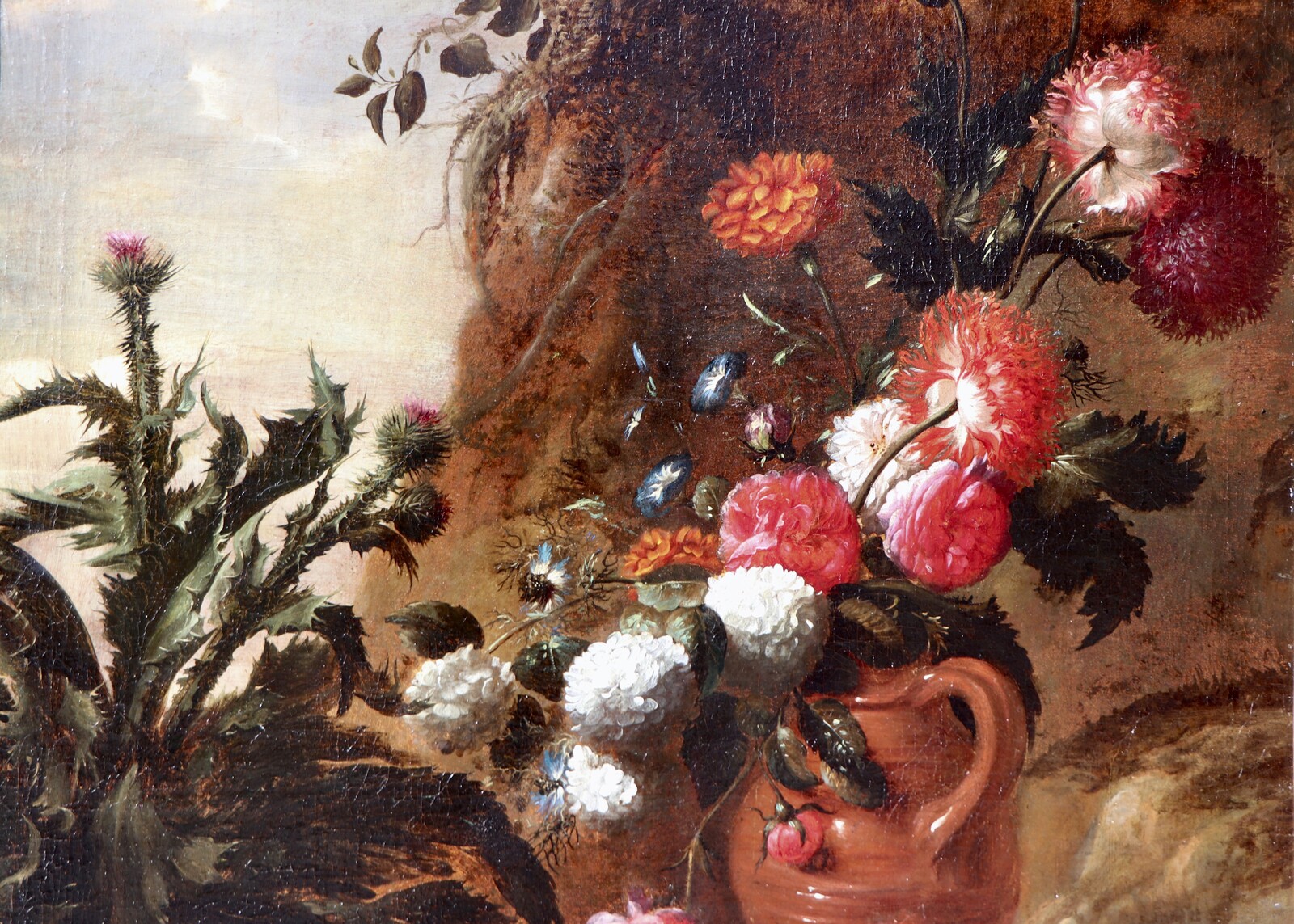
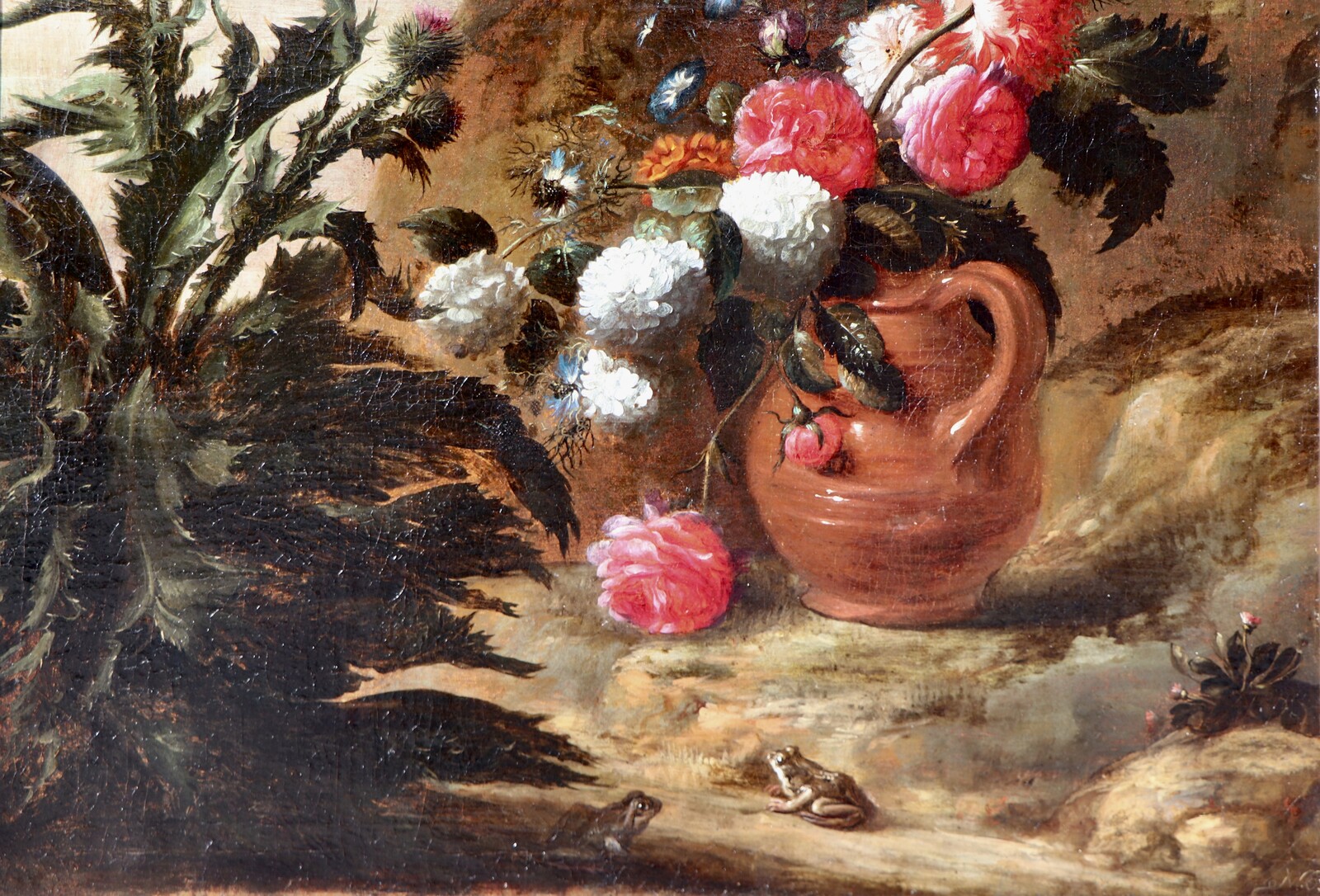
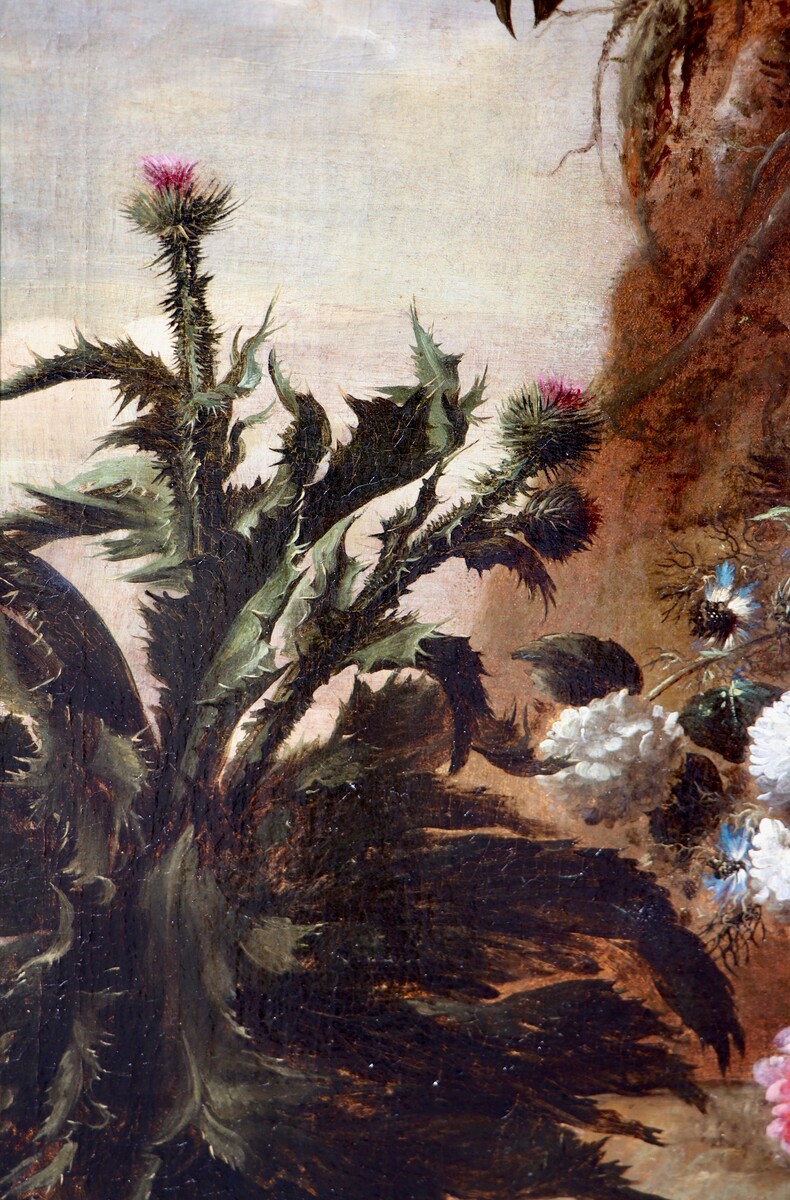
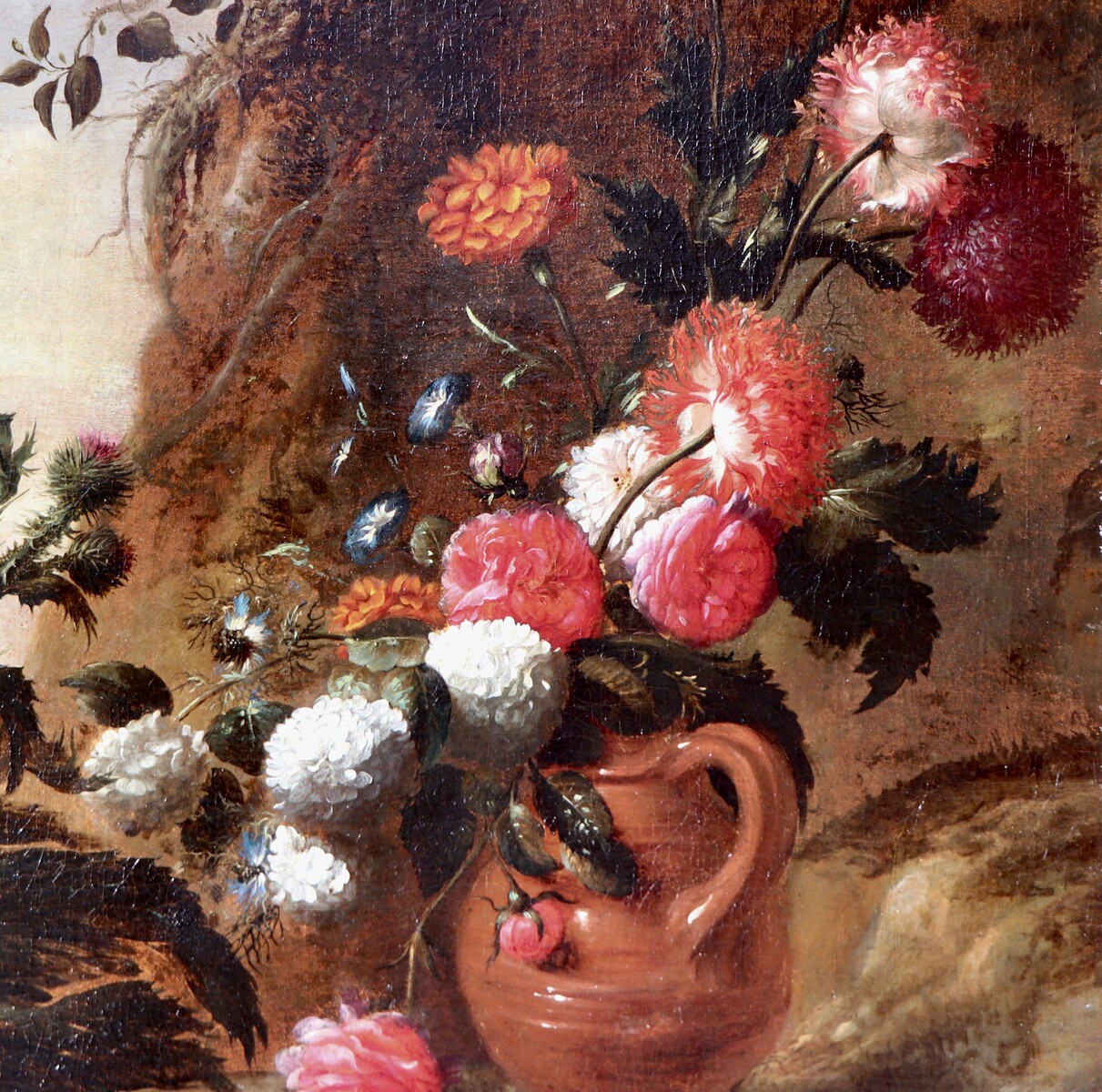
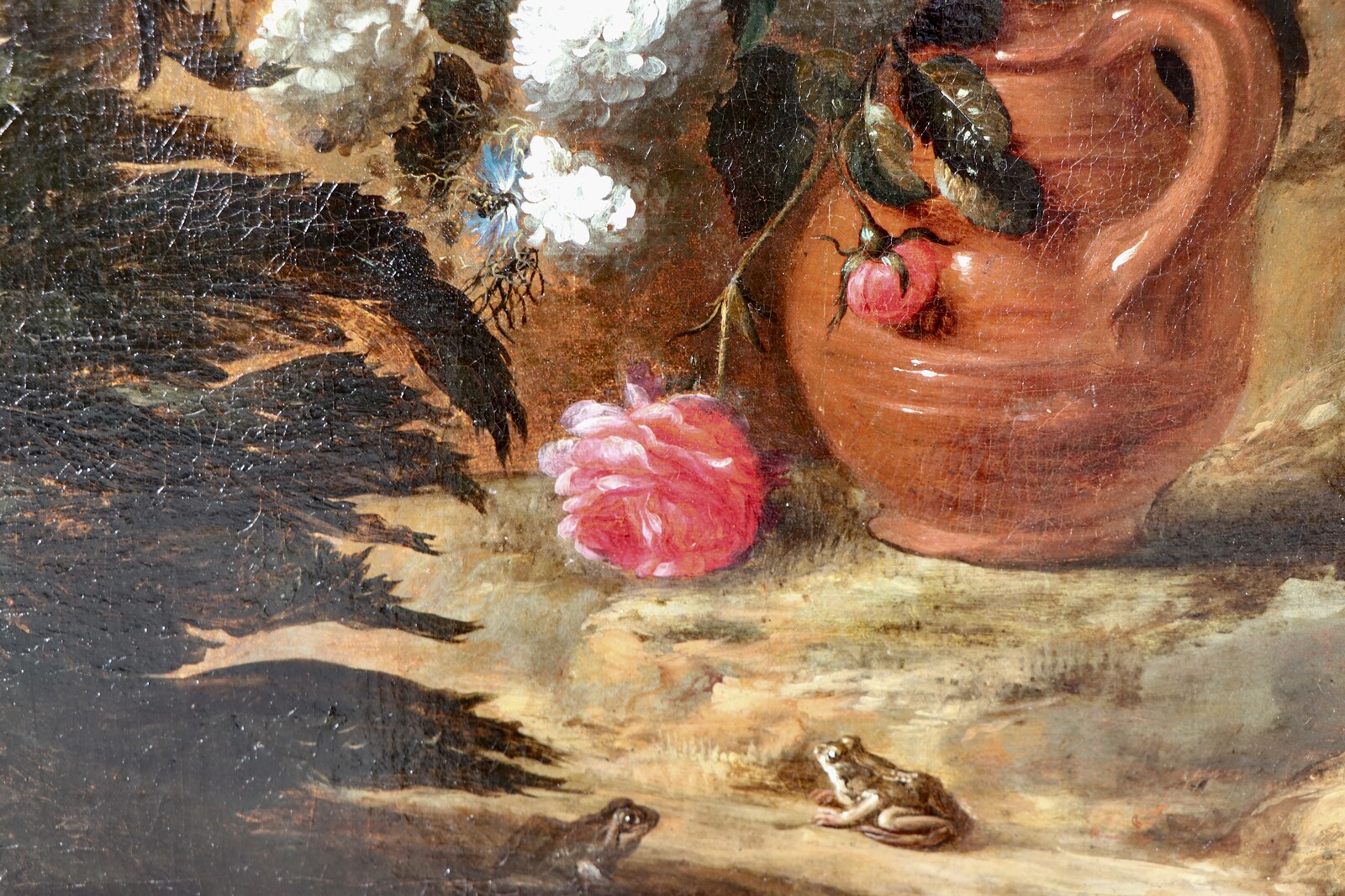
A forest floor with a thistle, a flowered jug and two frogs
Oil on canvas : 90,3 X 80,7 cm
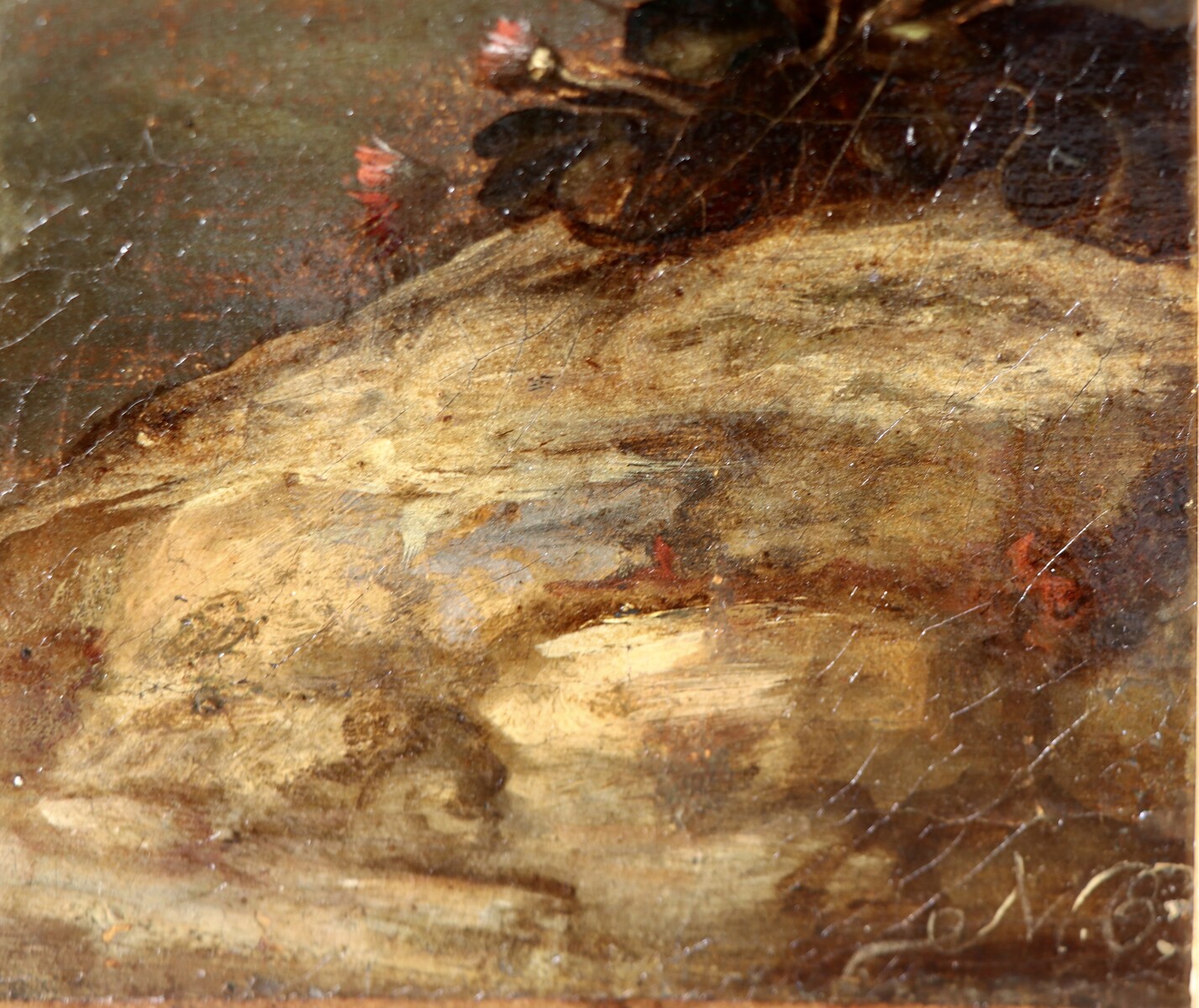
Monogrammed “MB” bottom right
Frame 115,2 X 105,2 cm
I would like to thank Fred Meijer who has given us the attribution.
I would like to thank Fred Meijer who has given us the attribution.
Absolute transparency: our cost price = 3.724 €
= acquisition price 3.175 € + restoration 424 € + certificate 125 €
Our export price 5.936 €
In short
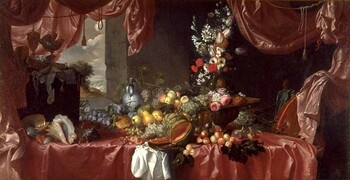
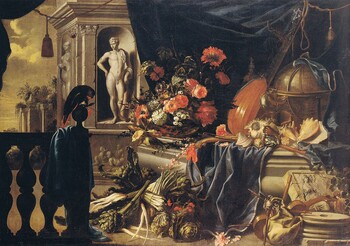
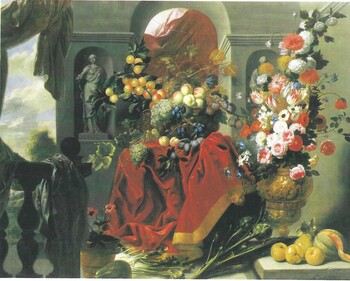
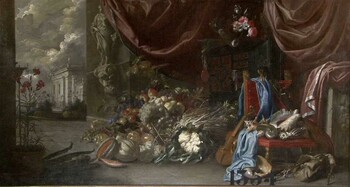
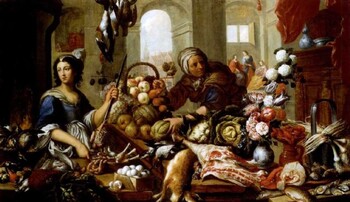
Michel Bouillon was an important and very versatile painter of still lifes of often monumental dimensions. He was born in a small village just outside Tournai. When Bouillon was in his late forties Tournai was conquered by King Louis XIV of France. Our painter might thereafter also have worked in France, where an important number of his paintings can still be found. His artistic production shows a mix of Flemish and of French elements.
Our painter rarely signed or monogrammed his paintings. This painting is monogrammed.
About Michel Bouillon
Flemish painter
Born near Tournai in Ere, date unknown (circa 1620).
He passed away in or after 1674, place unknown (possibly in Tournai in 1677).
His last name is sometimes spelt “de Bouillon”.
Still life painter.
Bouillon painted flower, fruit, fish, game and market still lifes. An important part of them has large dimensions.
Bouillon joined the Painter’s Guild of Saint Luke in Tournai in 1638.
He seems to have been active during the major part of his life in Tournai.
The young king of France, Louis XIV (1643 – 1715) succeeded in conquering on the Spaniards large parts of Flanders (Lille, Douai, Courtrai, Charleroi and Tournai) during the War of Devolution in 1667/68.
Tournai remained in French hands until 1709.
According to the Bénézit Bouillon worked in France at the end of the 1660s.
In 1670 our painter worked with Jean(-François) Delmotte on the triumphal arches erected in Tournai for the visit of King Louis XIV.
Bouillon’s last dated still life is from 1674; it was sold at Christie’s New York, 2/07/88.
About Nature Pieces
Around 1650, the empirical investigation into the behaviour and physiology of snakes, frogs, toads, lizards, chameleons, hedgehogs, etc. is detectable on a pan-European scale. Animals were either collected and housed in jars, or observed in their native or in specially designed and enclosed habitats.
During the second half of the 17th century the Dutch painter Otto Marseus van Schrieck (Nijmegen 1619/20 – 1678 Amsterdam) invented a new genre, a new subject of paintings: so-called "Nature Pieces": a small and bizarre micro-cosmos set against an often Italianate landscape background. These forest floors (“bosgrondjes” in Dutch) represent a mysterious dark close-up of the shadowy undergrowth of forest floors, giving detailed views of wild flowers, weeds, thistles and mushrooms, animated by butterflies, strange insects, reptiles, toads, frogs and lizards.
In 1648 van Schrieck had travelled to Italy with Mathias Withoos and with Willem van Aelst. In Rome they had joined the Schildersbent, an association of Northern painters, mostly Dutch and Flemish, notorious for its bacchic rituals and opposition to the Roman Accademia di San Luca. Here van Schrieck’s "Bentname" had been "Snuffelaar", the "Snuffler" because of his habit of roaming the countryside in search of plants, lizards and other animals.
Back in Holland van Schrieck, who had married a wealthy man's daughter in 1664, had a small estate outside Amsterdam, where he bred snakes and other animals.
Many important Dutch artists from the 2nd half of the 17th century and from the early 18th century painted the same subjects and were equally influenced by Otto Marseus van Schrieck, such as Rachel Ruysch, Abraham Begeyn, Willem van Aelst, Elias van den Broeck, Abraham Mignon, Melchior de Hondecoeter and Nicolaes Lachtropius. His influence also extended to Flanders, Italy, Germany and Austria.
About our painting
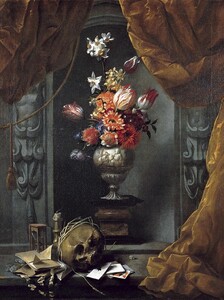
Our painting was in the past, before our restorer’s discovery of its monogram, attributed to Jean-Baptiste Monnoyer (Lille 1636 – 1699 London), who was also an important Franco-Flemish painter of the second half of the 17th century. Jean-Baptiste was born in Lille, then still a Flemish town (it was taken by the troops of the French King, Louis XIV in 1667), studied painting in Antwerp, moved to Paris already in 1655, where he had a succesful career as one of the assistants of Charles Le Brun decorating several royal houses. Around 1685 he moved to London, where he had a fulgurating success until his death in 1699.
Monnoyer rarely signed or dated his paintings, he had an important number of assistants, amongst whom his son Antoine, and an even larger group of followers and copiists. Both father and son Monnoyer used the signature “Baptiste”.
For the expert Fred Meijer it seems obvious that the painter of our monogrammed painting is Michel Bouillon (20/02/26).
Why should you buy this painting?
Because it is such beautiful, natural and original composition.
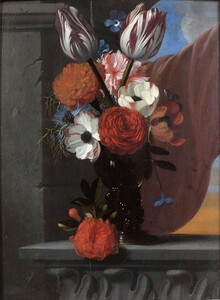
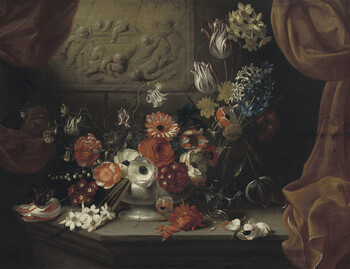
Comparative paintings
Click photos for more details