4.300 €
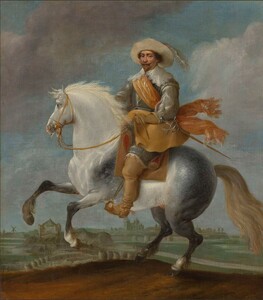
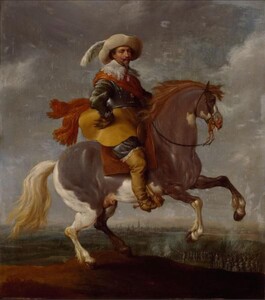
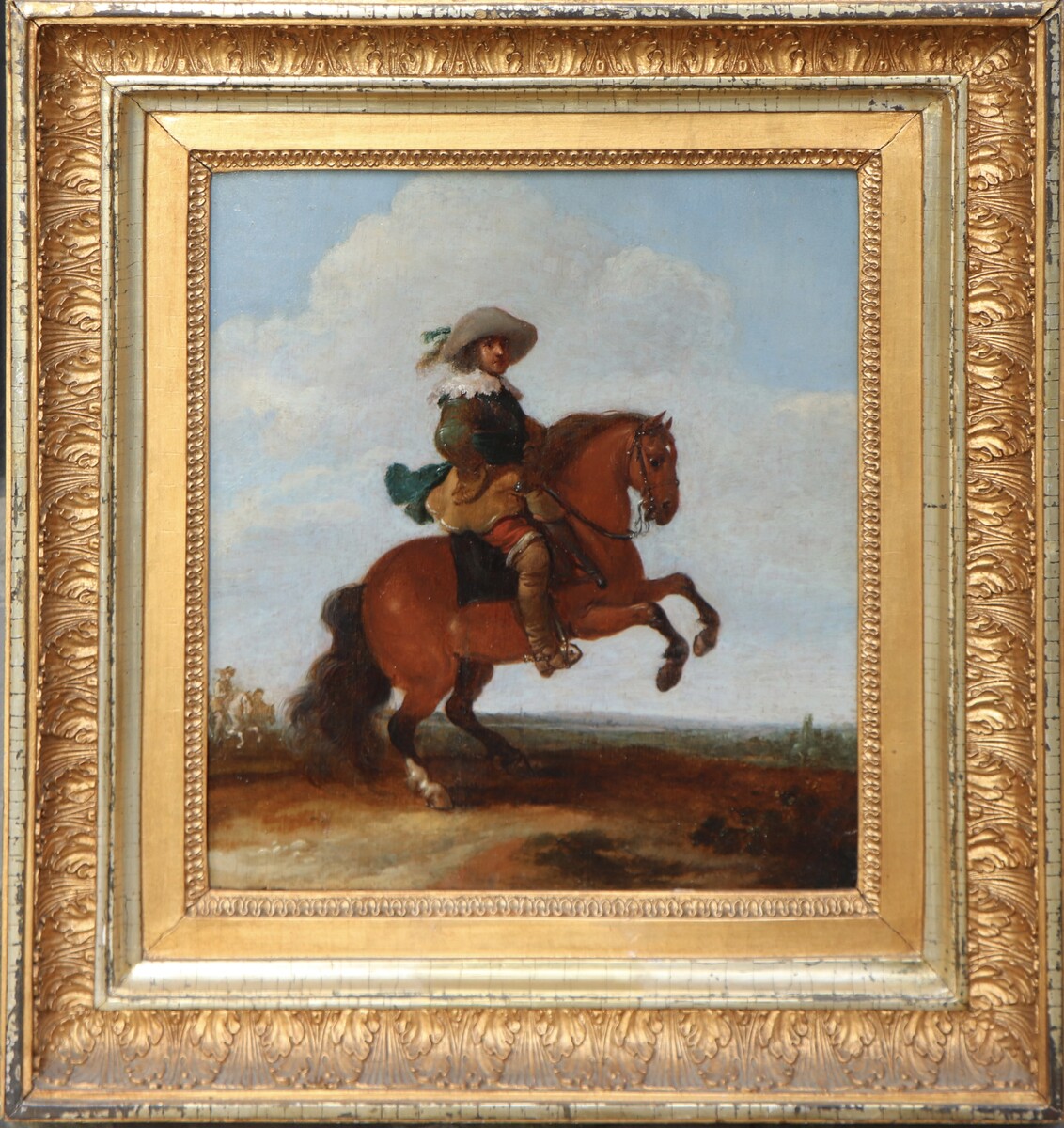
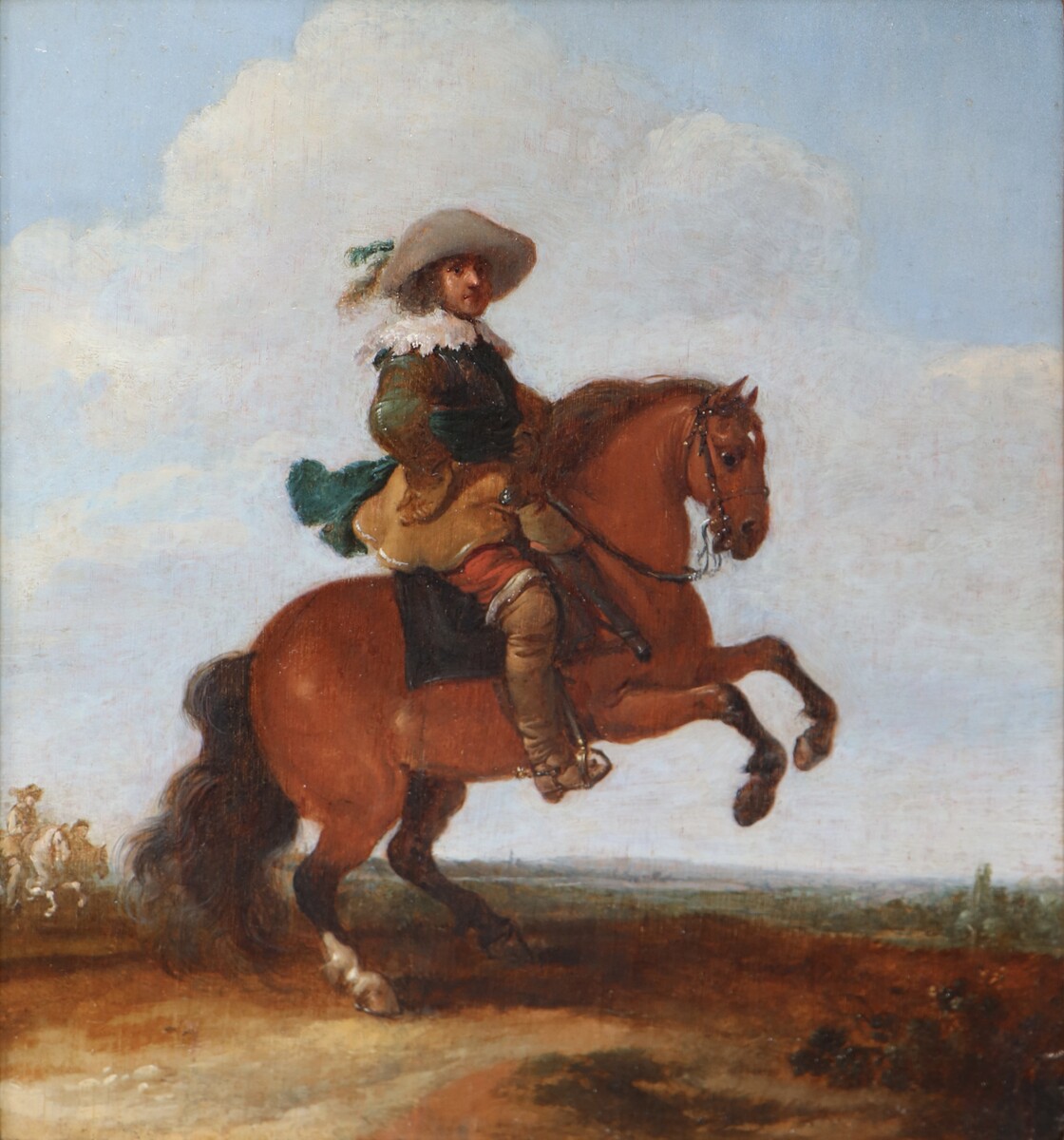
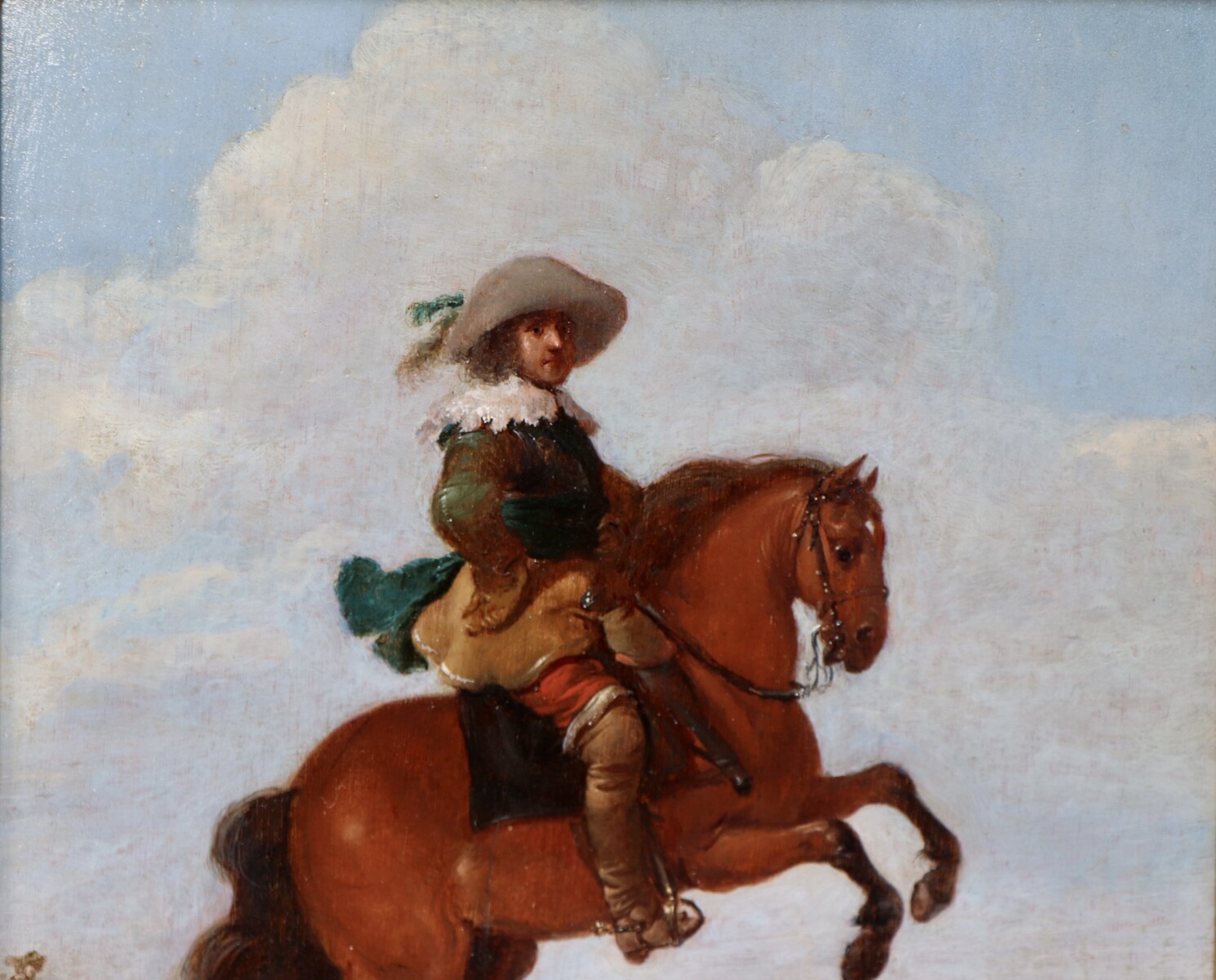
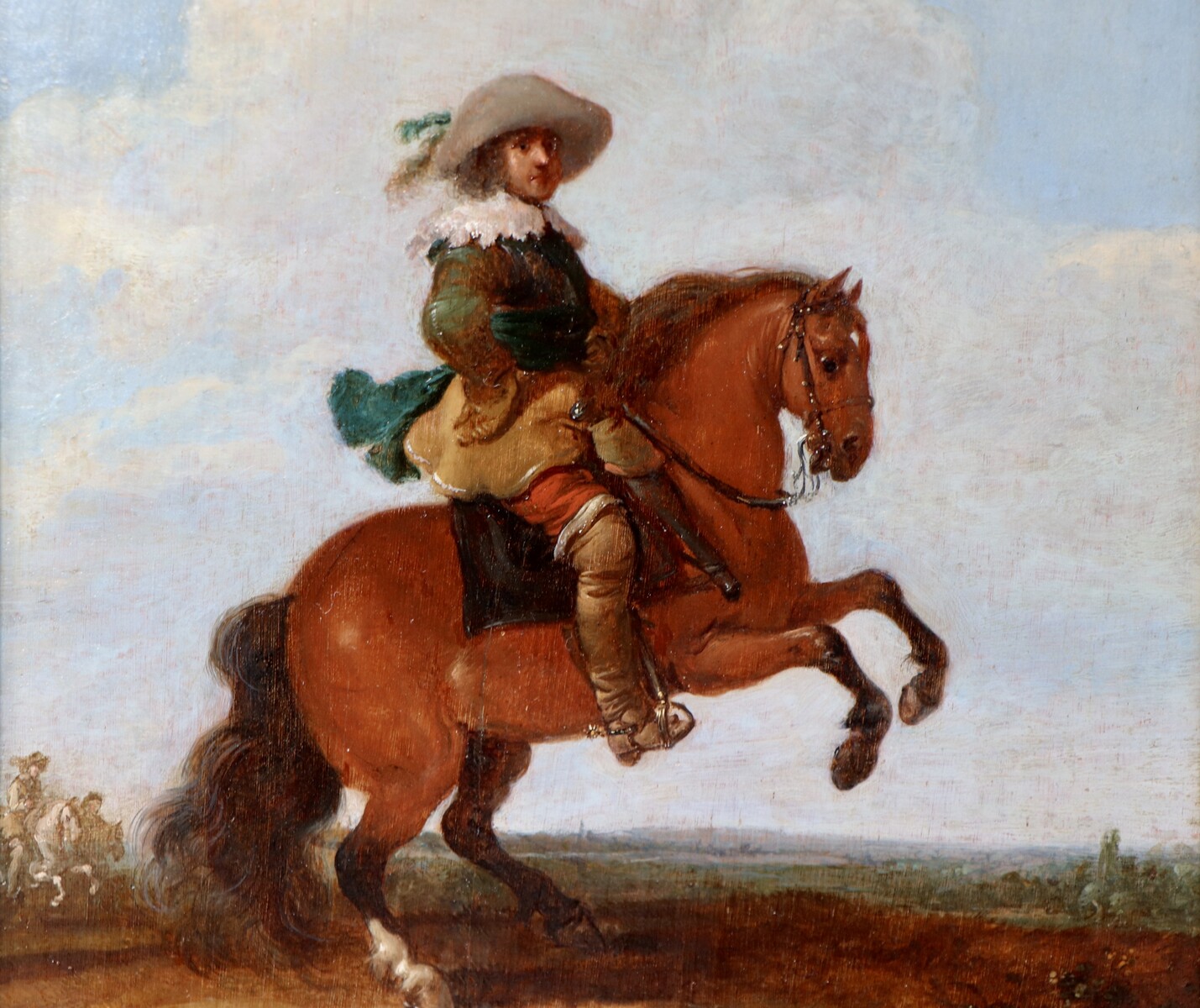
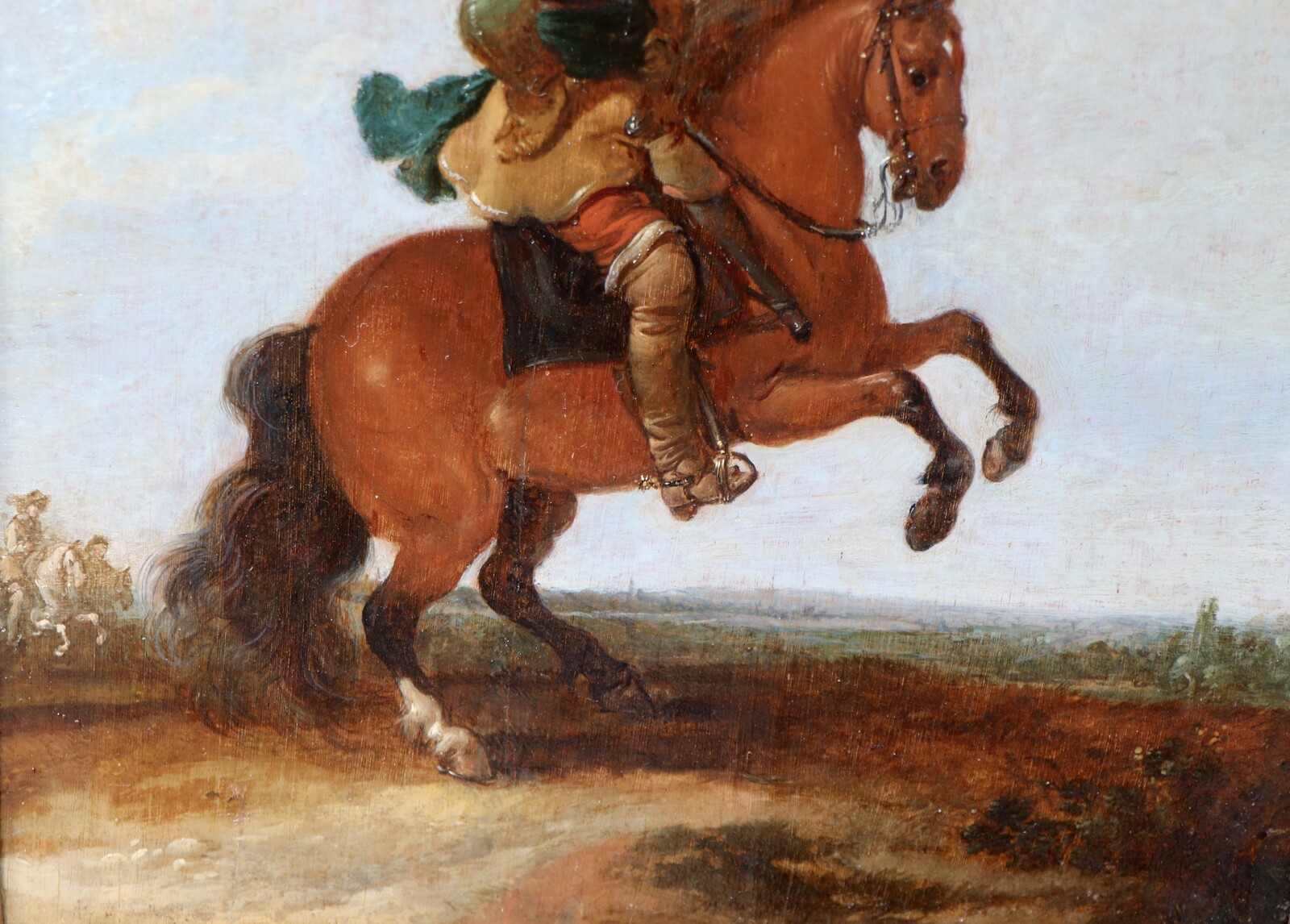
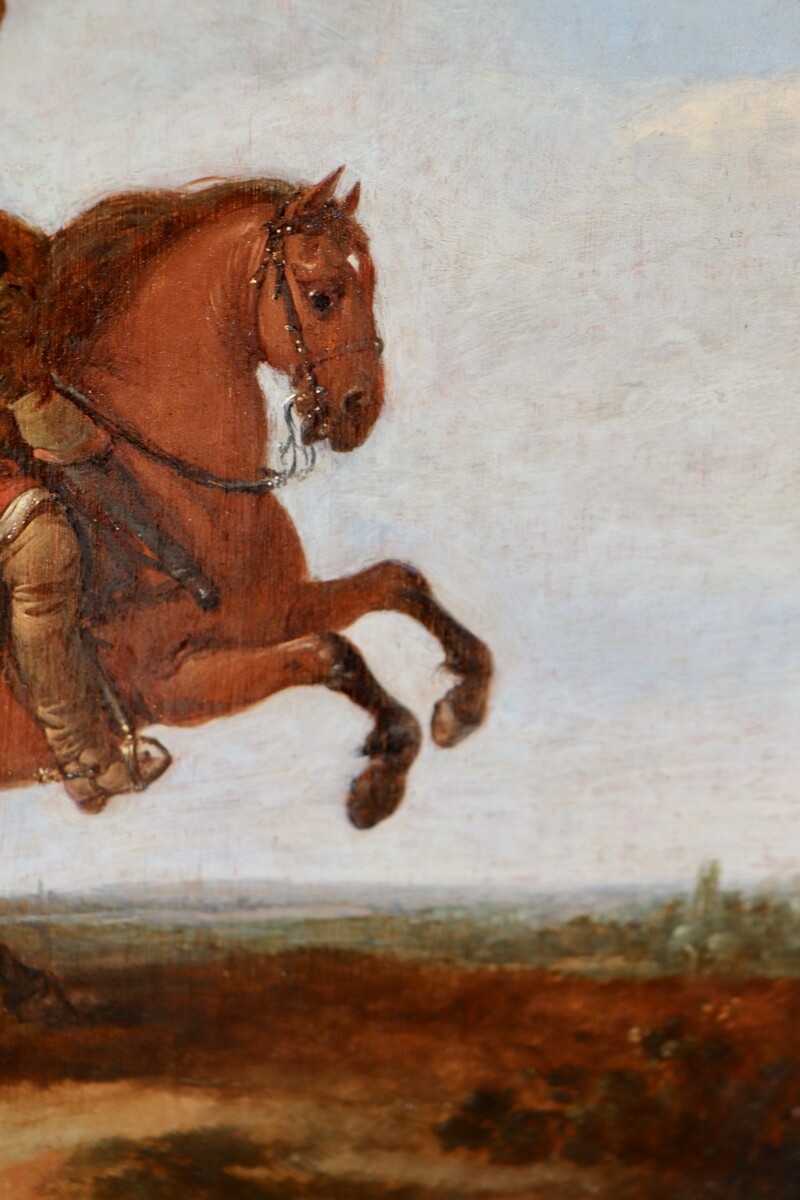
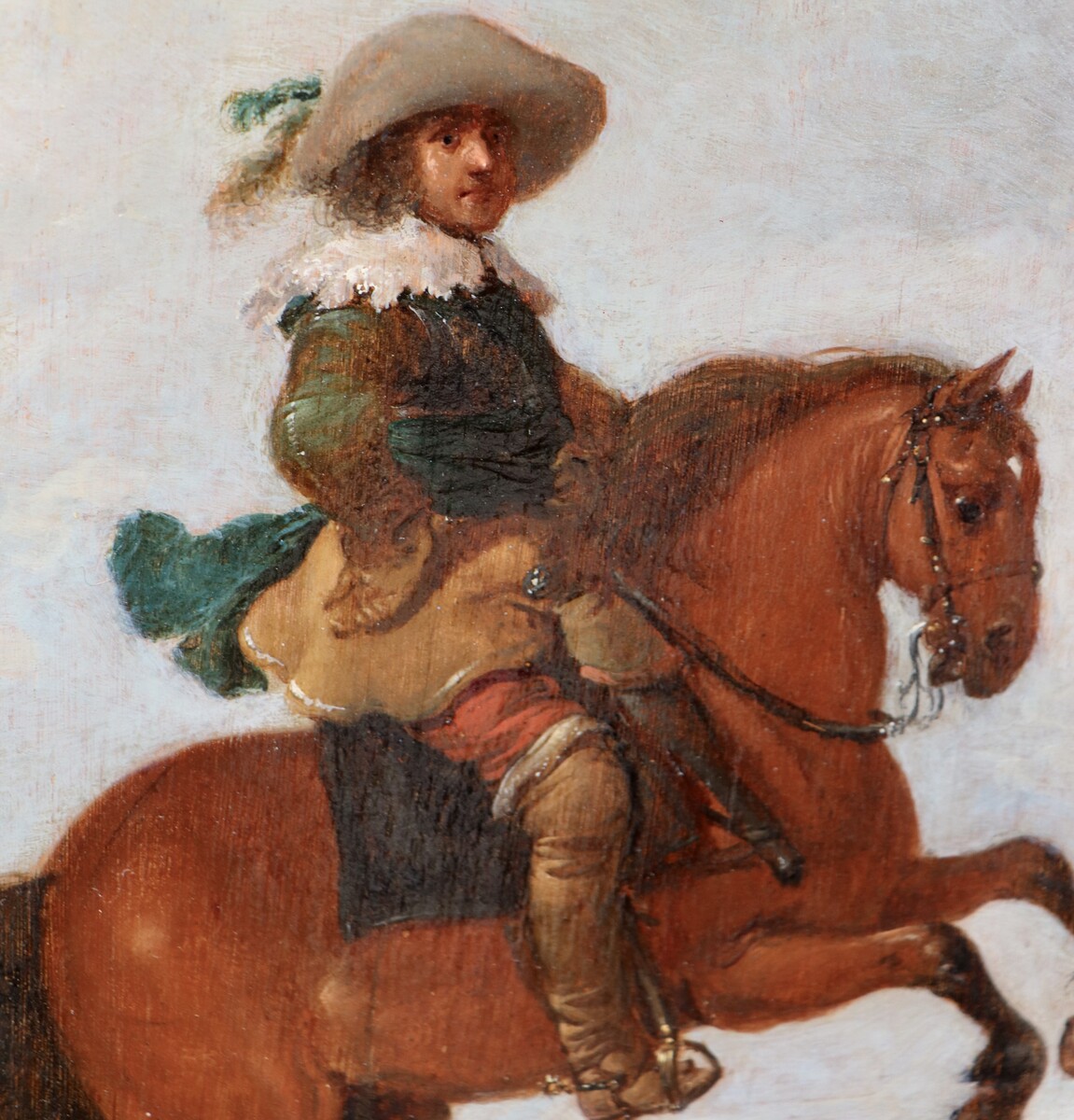
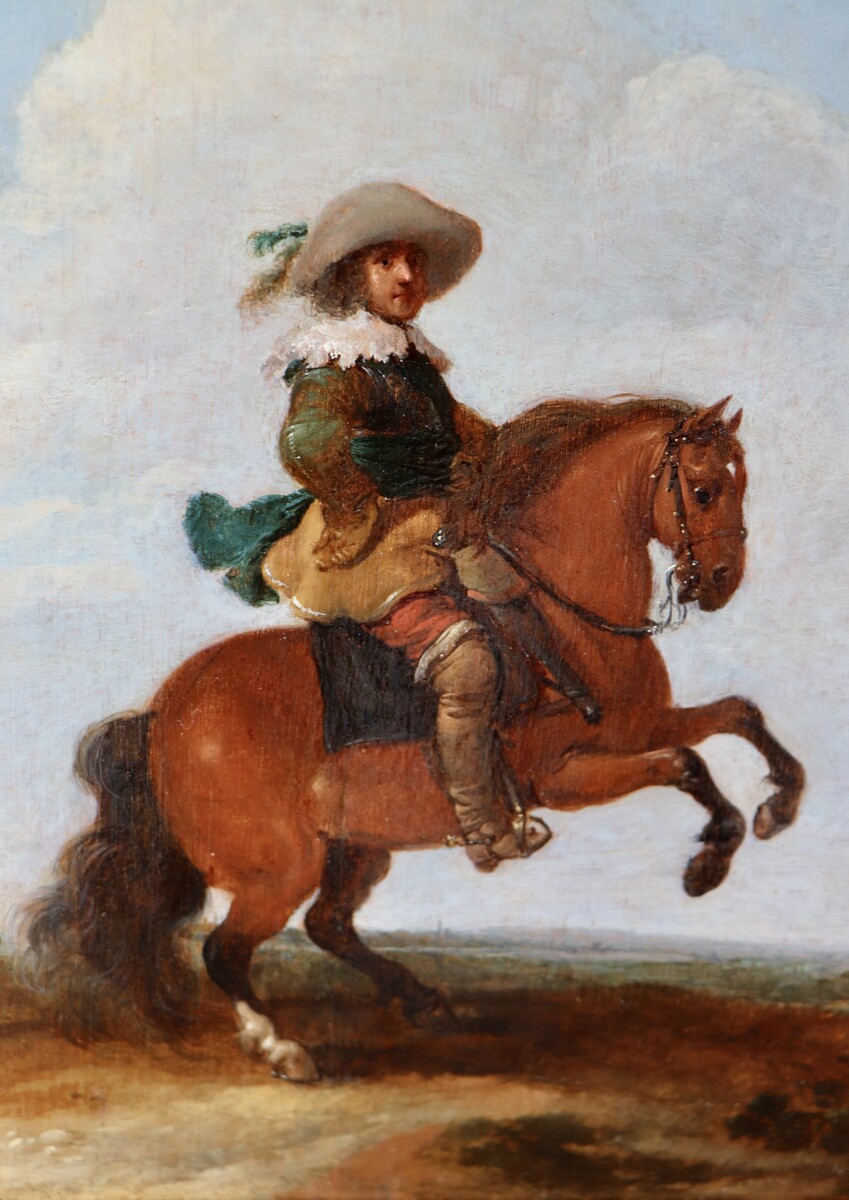
Portrait of a young cavalier executing the levade
Oil on panel : 32,9 X 28,6 cm
Signed and dated middle bottom “JM D Jonge 1634”
Frame 47,1 X 43,3 cm
Absolute transparency: our cost price = 1.445 €
= acquisition price 779 € + restoration 666 €
Our export price 3.806 €
In short
Jan Martsen de Jonge was one of the important witnesses of the succesfull last decades of the Eighty Years’ War, when Stadtholder Prince Frederick Henry led the Dutch to independance from Spain.
Two contemporary Amsterdam painters specialised in such small portraits, mainly of Stadtholders, on horseback: Pauwels van Hillegaert and Hendrick Ambrosius Pax. Our portrait, unique for Jan Martsen, was painted in 1634, when he was living in Amsterdam.
About Jan Martsen de Jonge
Dutch painter
Haarlem circa 1609 – after 1647 Amsterdam
Jan Martsen probably added ‘de jonge’, that is ‘the younger’ to some signatures of his paintings to differentiate himself from his father, who had also been a painter (and his first master), and whose first name Jacob also starts with a ‘J’. It is thought that Jan’s earliest paintings were made in The Hague under his father’s licence.
Jan’s name is also spelled as :
- Jan Martszen de Jonge
In English it is sometimes translated into :
- Jan Martsen or Martszen the Younger
Two authors, George S. Keyes and Jan Briels, call him :
- Jan Martens
Painter and engraver of battle scenes.
His father, Jacob(us) Martsen (Gent 1580 – 1647 Amsterdam) was a painter specialised in portraits and genre scenes. He studied in Haarlem under Karel van Mander.
Our painter was a pupil of his uncle, Esaias van de Velde (1587 – 1630).
Jan’s father, Jacob, married Esaias’ sister Susanna in 1608; three years later Esaias married Jacob’s sister Catelyna.
Van de Velde was born in Amsterdam, where he remained until 1609, from 1609 until 1617 he lived in Haarlem, and from 1618 until his death in 1630 in The Hague.
Jan Martsen remained in Haarlem during his youth until 1625. That year he moved with his father to Amsterdam. In 1626 both father and son moved to The Hague, where Jacob joined the Painter’s Guild. Jan’s new master, his uncle Esaias van de Velde, had been active here since 1618.
In 1629 Jan settled in his birthplace Haarlem. Except for a 5-year stay (following his marriage) in Amsterdam (1633 – 1638) he is documented in Haarlem until 1645.
At some stage Jan must also have been active in Delft.
Jan Martsen’s early paintings, during the late 1620s, were strongly influenced by his uncle, Esaias van de Velde. Later he was influenced by Palamedes Palamedesz., who had also been a pupil of Esaias van de Velde.
All three Esaias van de Velde, Anthonie Palamedesz. (the elder brother of Palamedes Palamedesz.) and Jan Martsen have been painting figures in some of the architectural scenes of Bartholomeus van Bassen (circa 1590 – 1652). Antwerp-born van Bassen was active in Delft between 1613 and 1622 and from 1622 until his death thirty years later in The Hague.
Jan Martsen had one pupil: Jan Asselijn. He studied with Jan Martsen in Amsterdam. His earliest paintings, from 1634 and 1635, are battle scenes, showing the strong influence of his master. Asselijn subsequently dropped this subject, only to paint it briefly again around 1646, when he was active in Lyon and Paris, before returning to Amsterdam. Asselijn is foremost known as an important Italianate landscape and genre painter, a ‘Bamboccianto’ active in Rome between circa 1635 and 1644.
About our painting
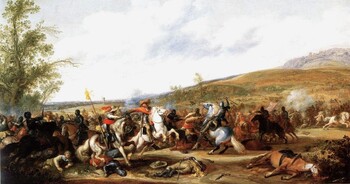
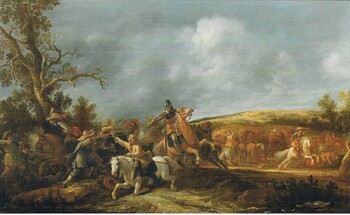
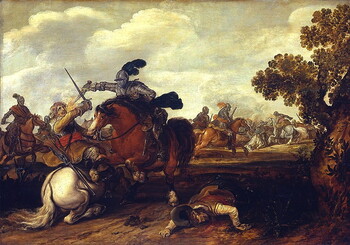
Jan Martsen de Jonge was an important painter of cavalry battle scenes from the Eighty Years’ War.
Our painting dates from 1634, when our painter lived in Amsterdam.
To my knowledge this is the only portrait on horseback painted by him.
Two other contemporary Amsterdam painters did specialise in these relatively small portraits of horsemen:
- Pauwels (Paulus I) van Hillegaert (1595/96 – 1640) regularly portrayed the Stadtholder Prince Frederick Henry, often in the same pose as our sitter.
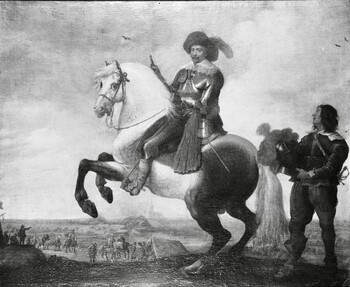
- Hendrik Ambrosius Pax (1602/03 – 1633/34) also portrayed the Stadtholder, accompanied by a squire holding his helmet.
Why should you buy this painting?
Because it is a unique subject within the rather important production of Jan Martsen de Jonge.
Comparative paintings
Click photos for more details