18.700 €
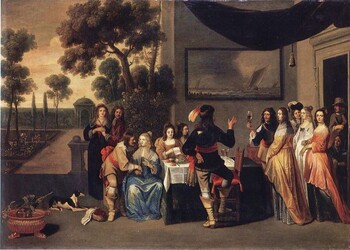
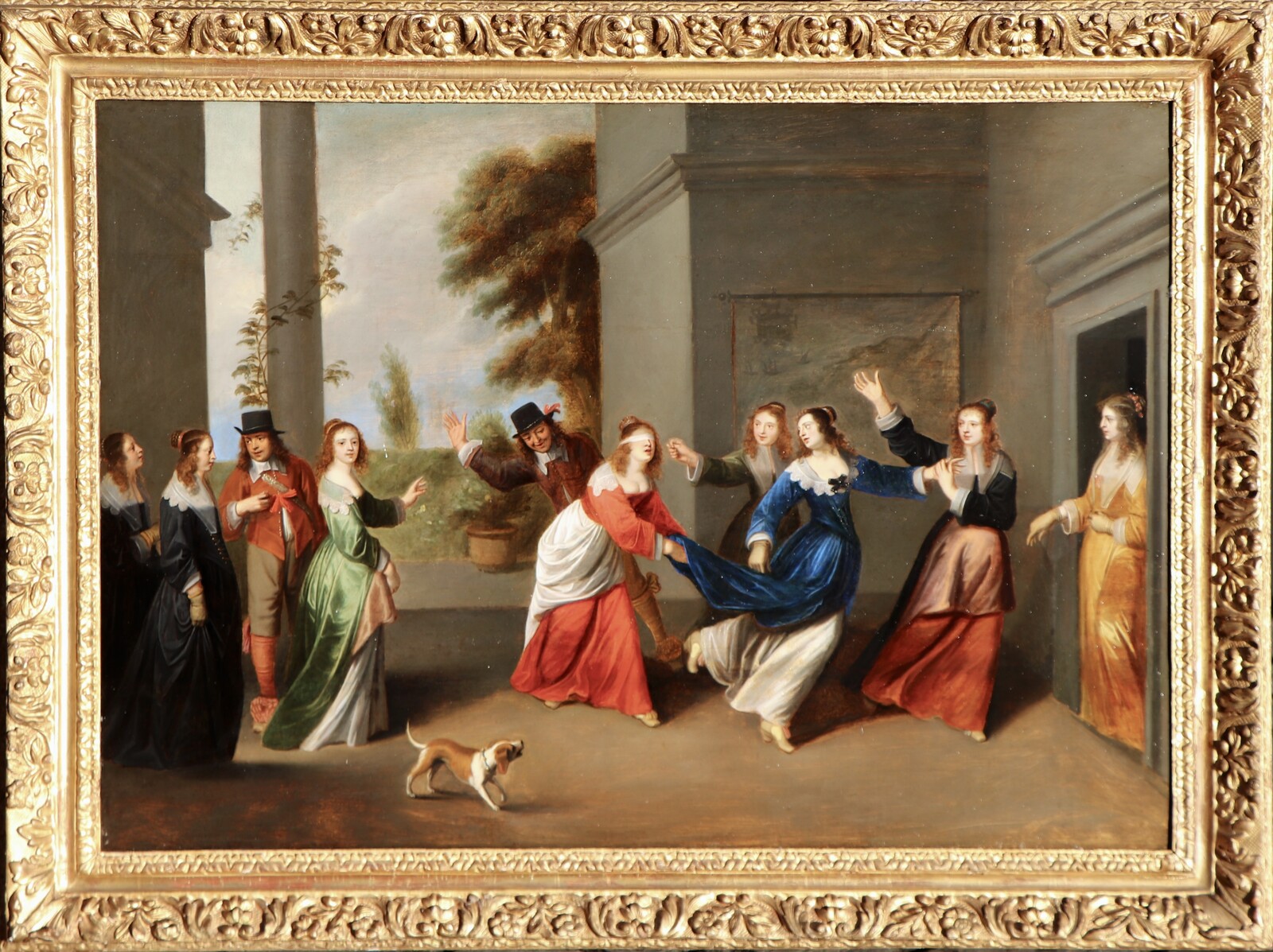
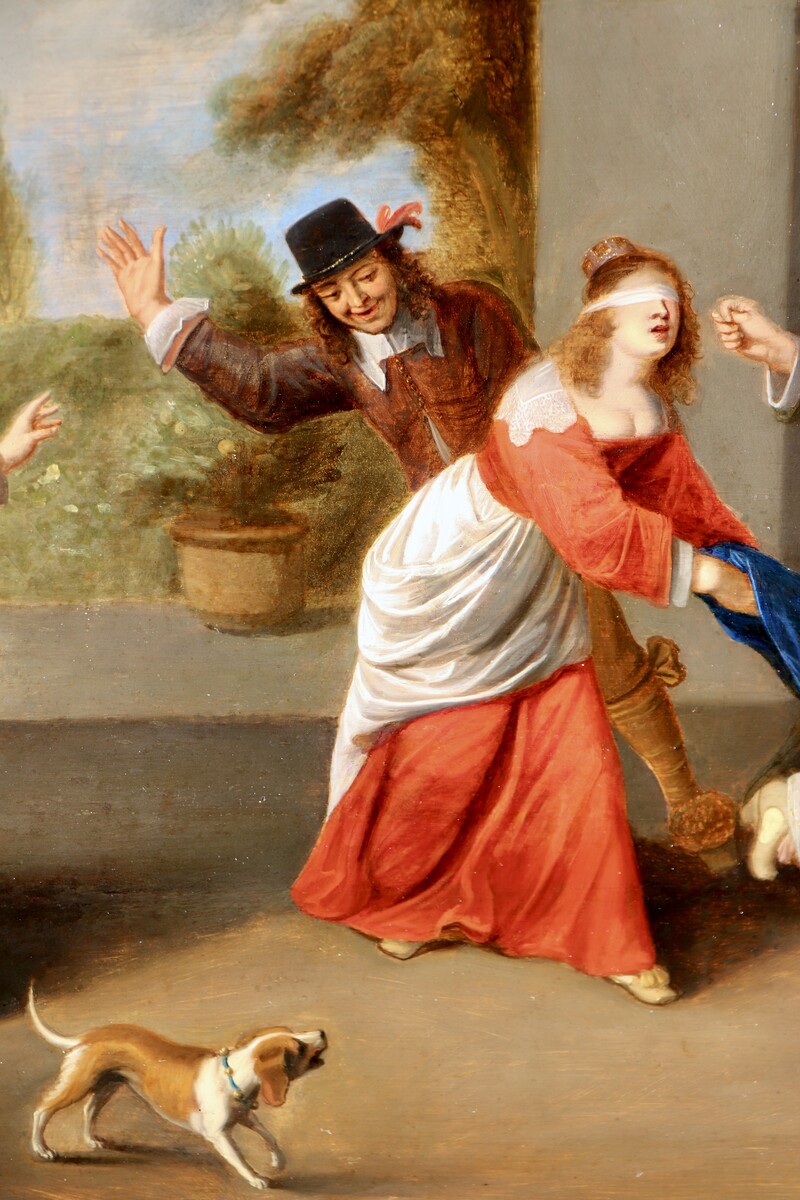
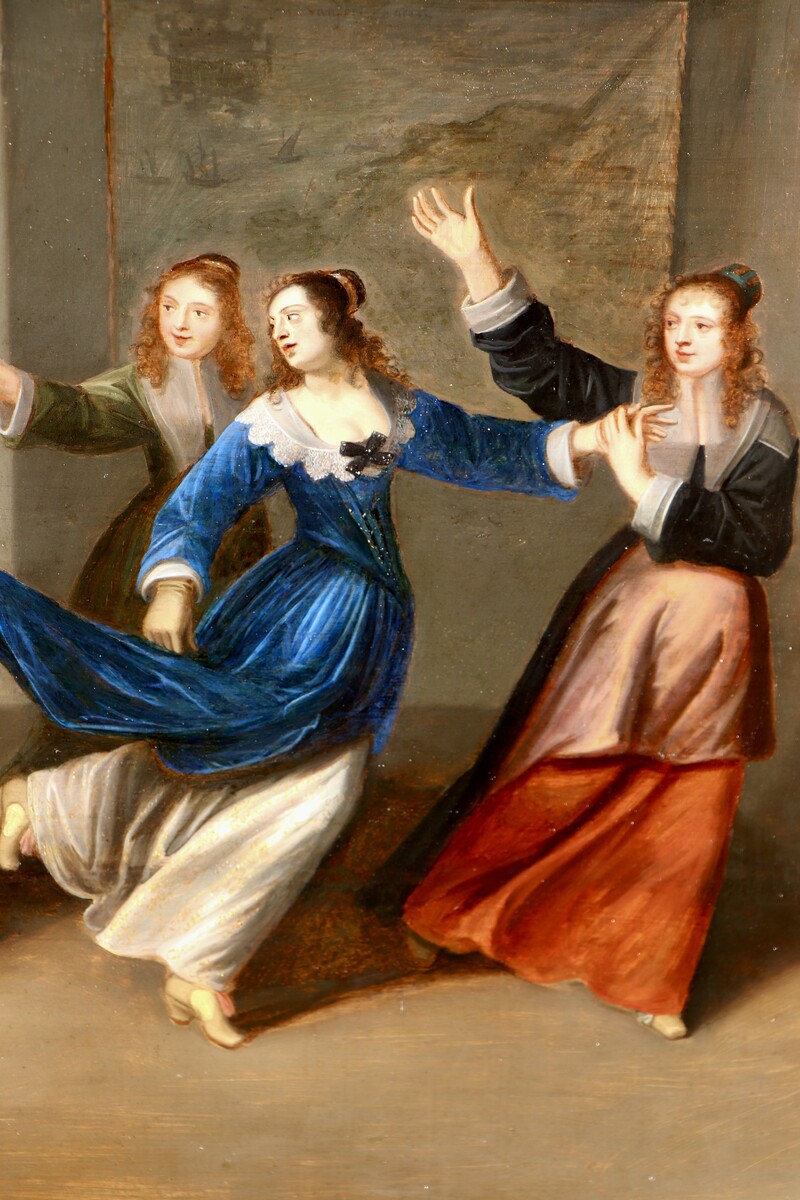
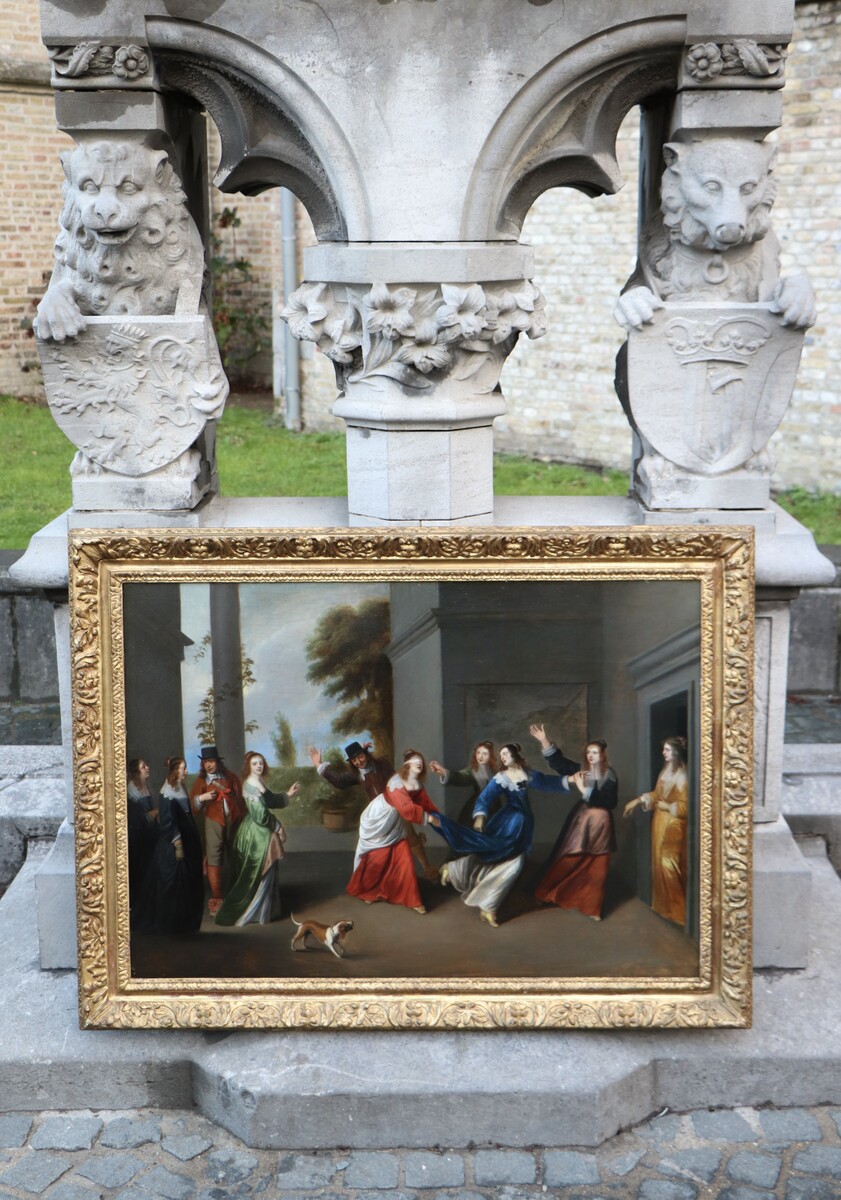
An elegant company playing blind man’s buff
Oil on panel : 73,4 X 105,4 cm
Signed at the top of the map on the wall at right “van der Lamen”
Original wooden sculpted frame : 91,8 X 123,0 cm

In short
Van der Lamen specialised in genre scenes representing gallant companies set on a terrace or in an interior.
He strongly influenced Hieronymus Janssens, nicknamed “le danseur”, who was his pupil.
About Christoffel Jacobsz. van der Lamen
His last name is sometimes spelt “Laemen”
Flemish painter
Antwerp or Brussels 1606/07 – 1651/52 Antwerp
Genre scene painter.
Painter of elegant companies in gallant conversation, playing music, dancing, or playing a game of cards or backgammon. He regularly painted the Prodigal Son spending all his money at the brothel.
Pupil of his father, Jacob, who was also a genre painter, and possibly also a pupil of Frans Francken II. He was definitely strongly influenced by Frans Francken II and, like him, by “The garden of love” painting by Sir Peter Paul Rubens, currently at the Prado, Madrid.
Master in the Guild of Saint Luke in Antwerp in the year 1636-37; being the son of a member-painter he was registered as wine-master. That same year he already enrolled a pupil, Hieronymus Janssens (Antwerp 1624 – 1693 Antwerp). Janssens specialized in dance scenes and was thus named “the dancer”, “le danseur”.
Van der Lamen married in 1642, the couple had six children.
Although there is a clear difference between the style of our Christoffel Jacobsz. van der Lamen and that of Hieronymus Janssens their paintings have often been confused.
About blind man’s buff (not bluff)
Blind man's buff is a traditional game where one player is blindfolded and tries to tag or identify the other players who are trying to dodge them. The game is played by a blindfolded player who has been spun around, with other players calling out or moving around to be caught. Once a player is tagged, they may become the new blindfolded person. The game was also known as "hoodwink" or "hoodman blind".
The game became more popular and thus more often shown in painting during the 18th and 19th century.
Two other society games were more popular during the 17th century:
- “la main chaude”, “handjeklap” in Dutch, “hot cockles” or “slap hands” in English. The “victim” (man or woman) bends forward on the knees of a woman. He holds one hand outstretched on his back; he has to guess who is slapping his hand as hard as possible. As long as he does not know, they will slap his hand again. That is why it is called “la main chaude”, that is “the warm hand”.
- “le jeu de la pantouffle”, “het pantoffelspel” in Dutch or “slap feet” in English, in which one hits not with ones bare hand but with a slipper.
About our painting
Van der Lamen regularly repeated some of his own compositions, of our fully signed painting I do not know of any other version.
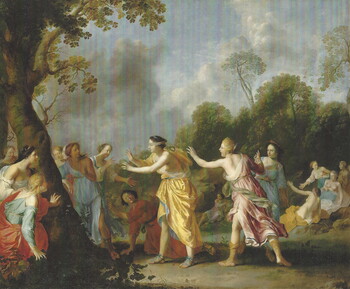
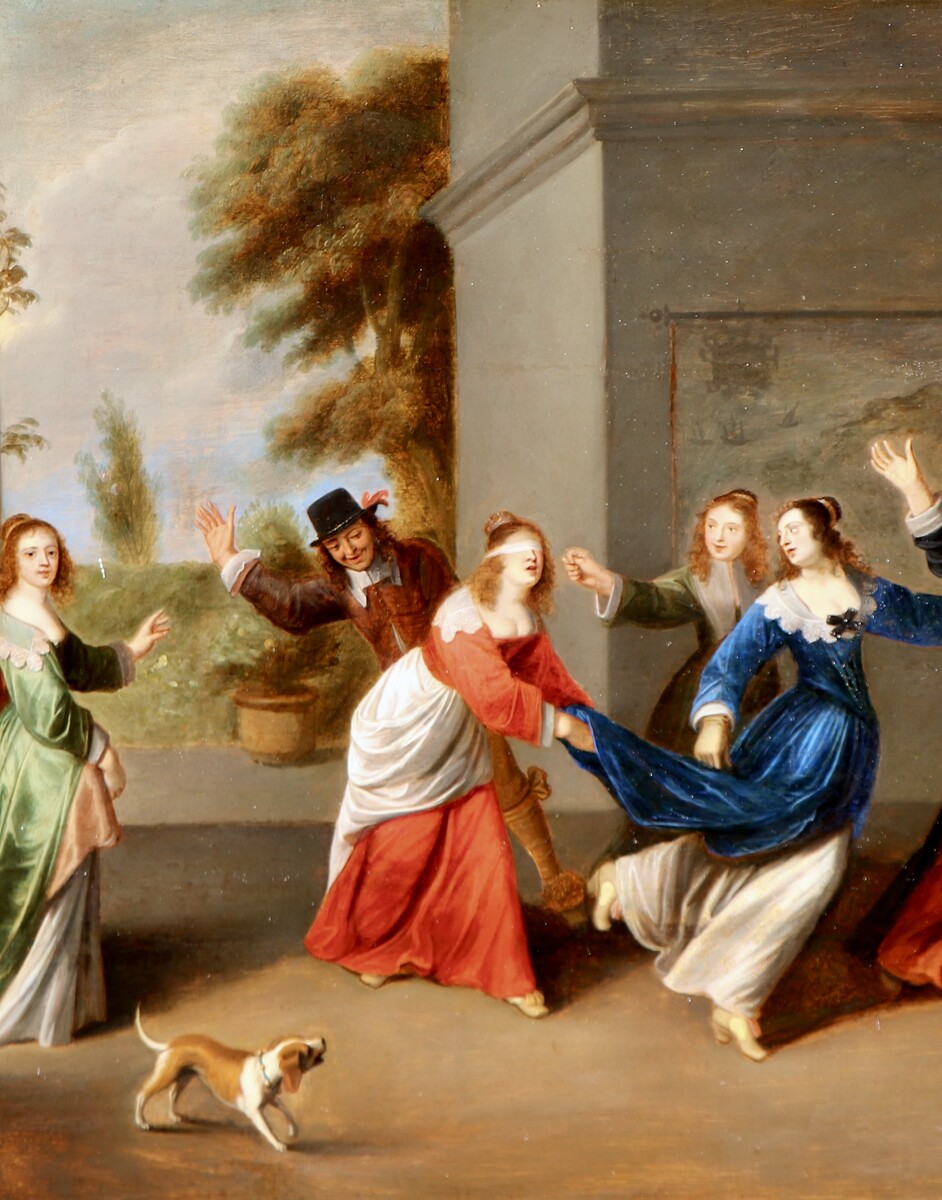
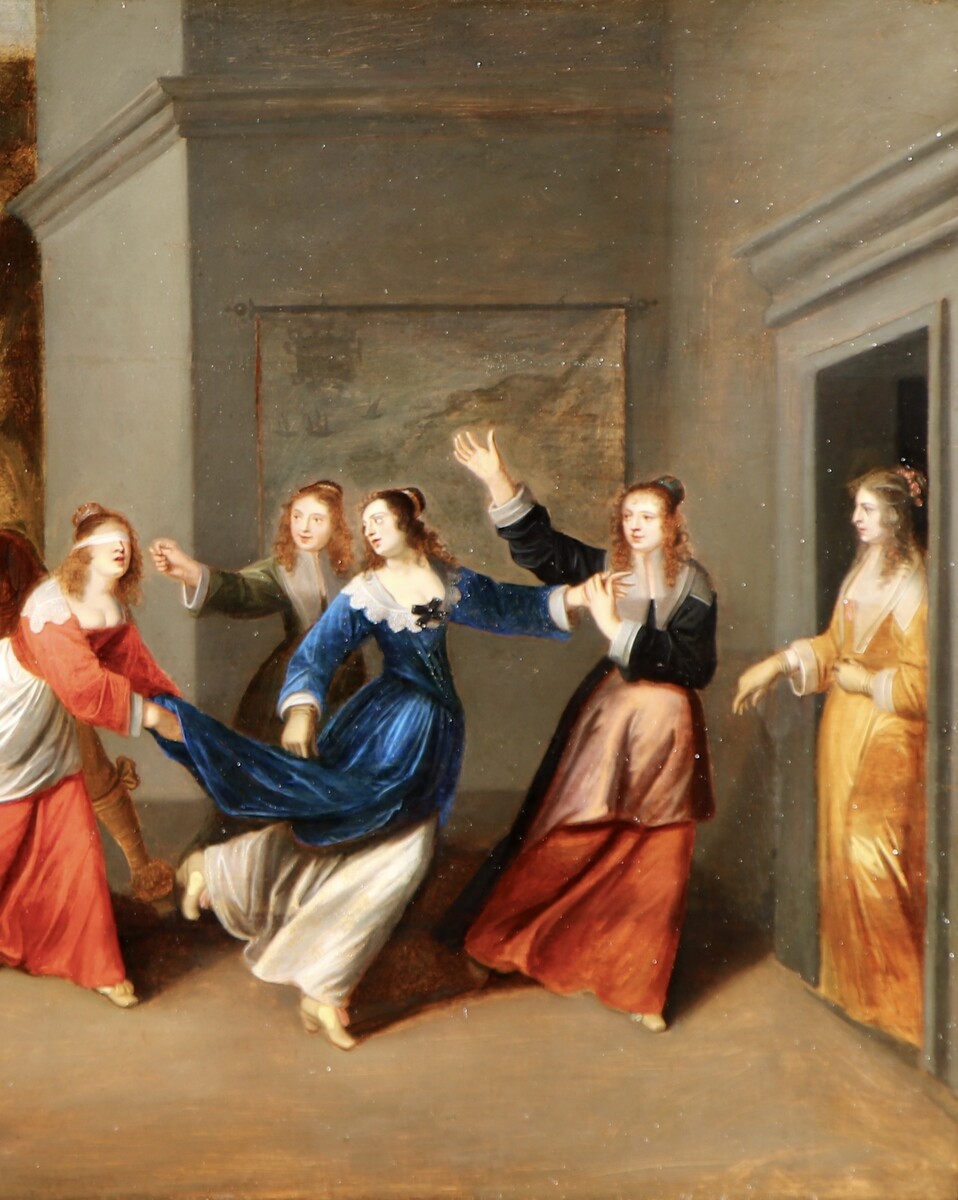
In the 17th century, blind man's buff was played in a rougher, more physical style than today: the players would sometimes taunt or even physically "buffet" the blindfolded player, hence the name of the game. This version could be more boisterous, with players sometimes adding obstacles or teasing the blindfolded person to make the game more challenging. Indeed, the young woman closest to the blindfolded girl makes with her right hand, just in front of her head the fig sign: a thumb wedged in between two fingers. With this obscene gesture, going as far back as Etruscan and ancient Roman times, she insulted the victim.
Why should you buy this painting?
Because it is a charming representation of stylish, well-dressed young women, set in a beautiful frame.
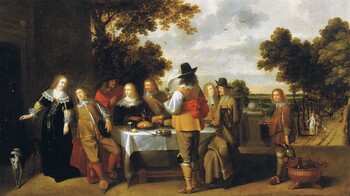
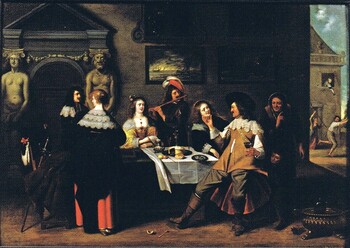
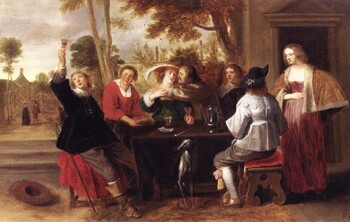
Comparative paintings
Click photos for more details