8.300 €
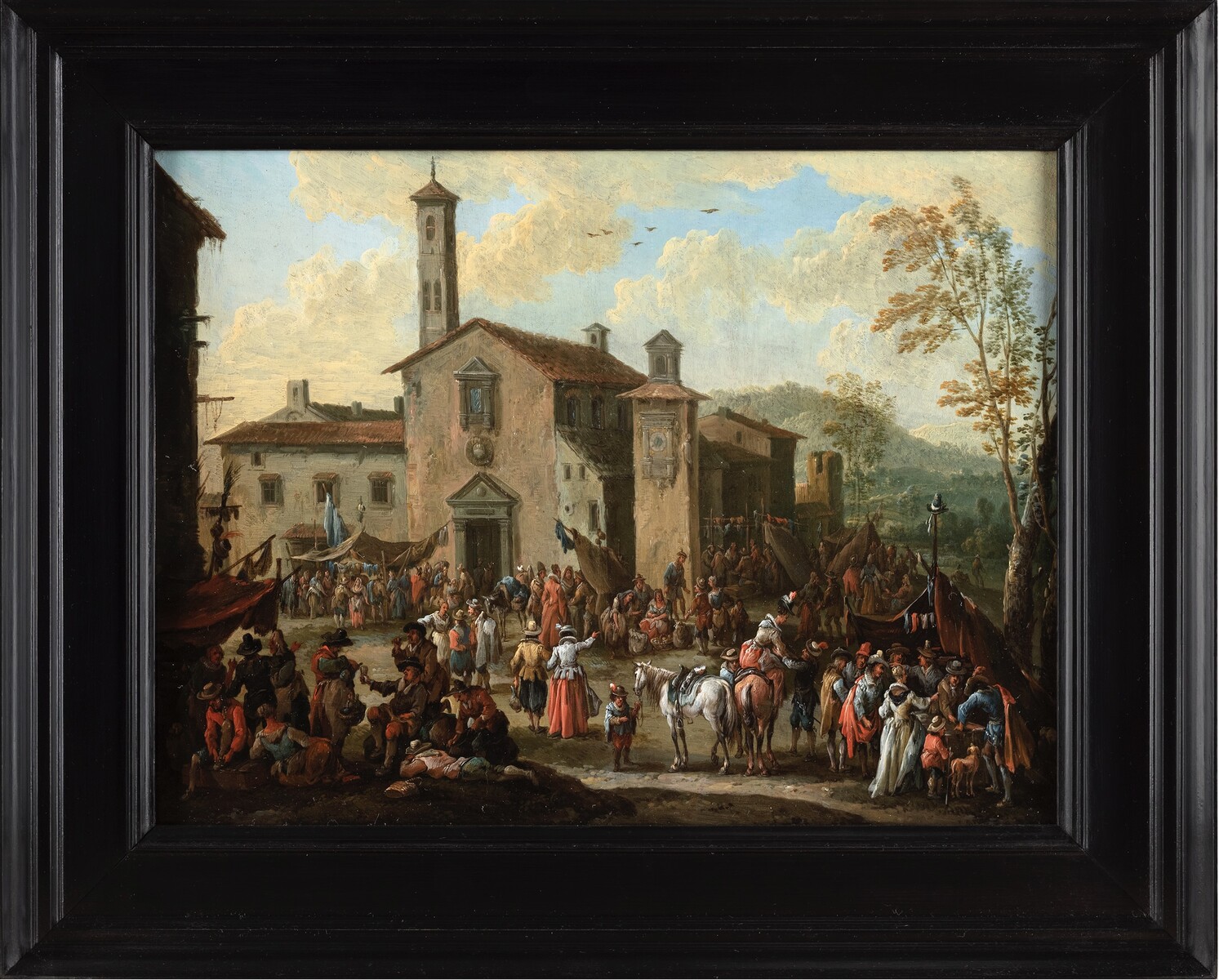
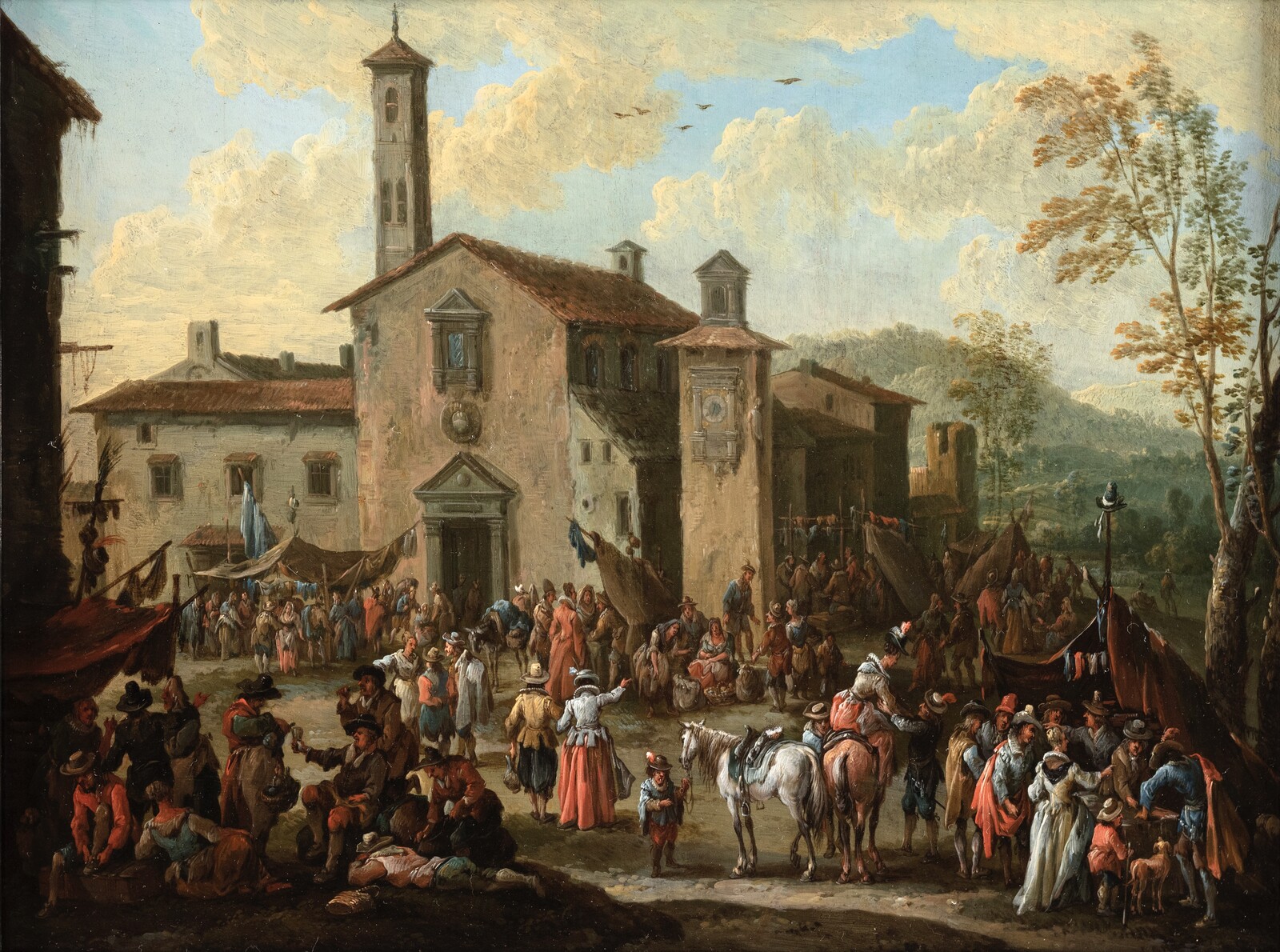
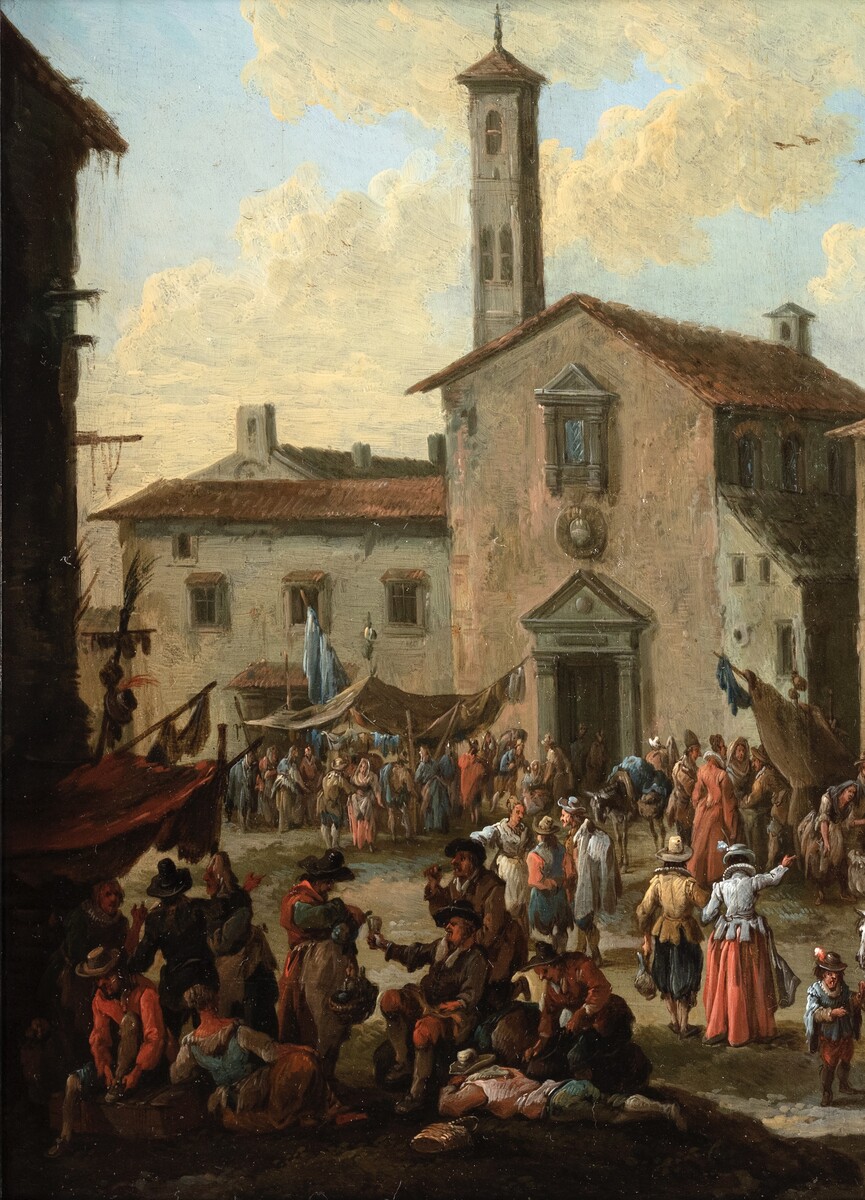
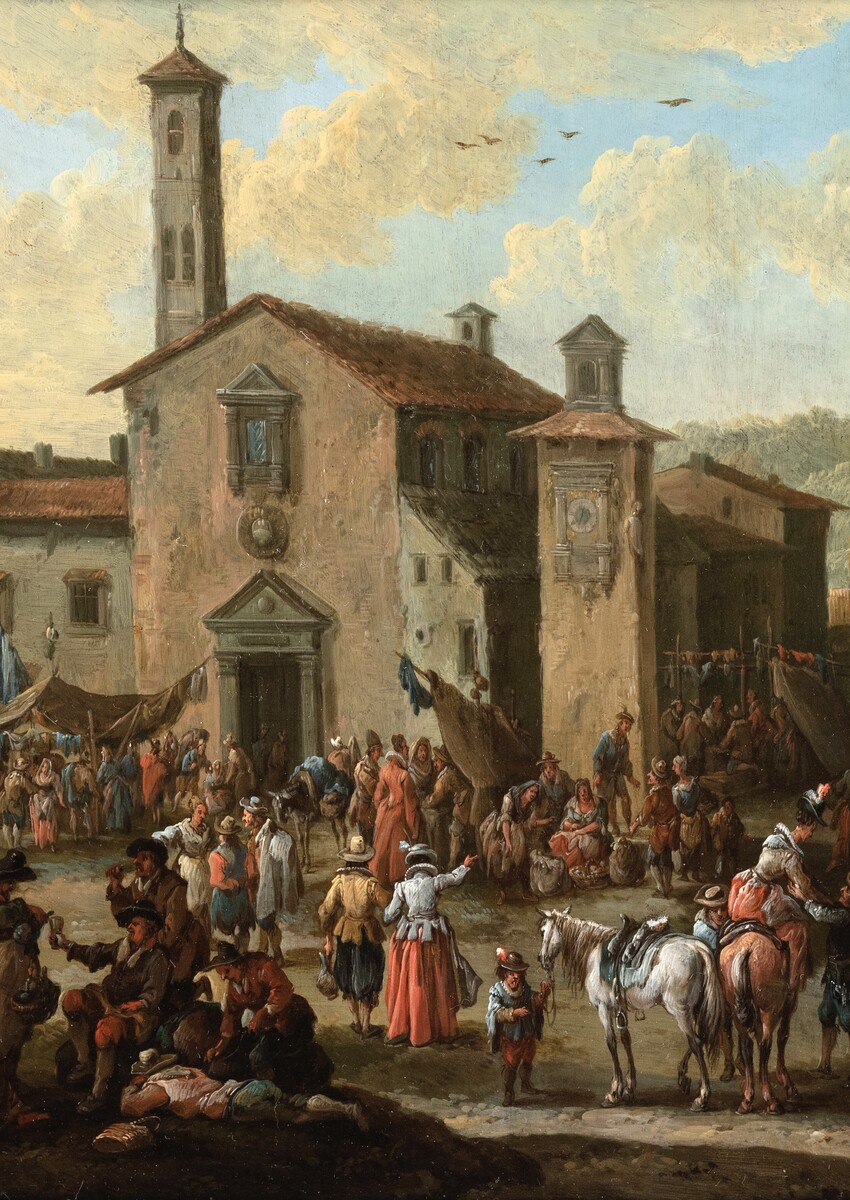
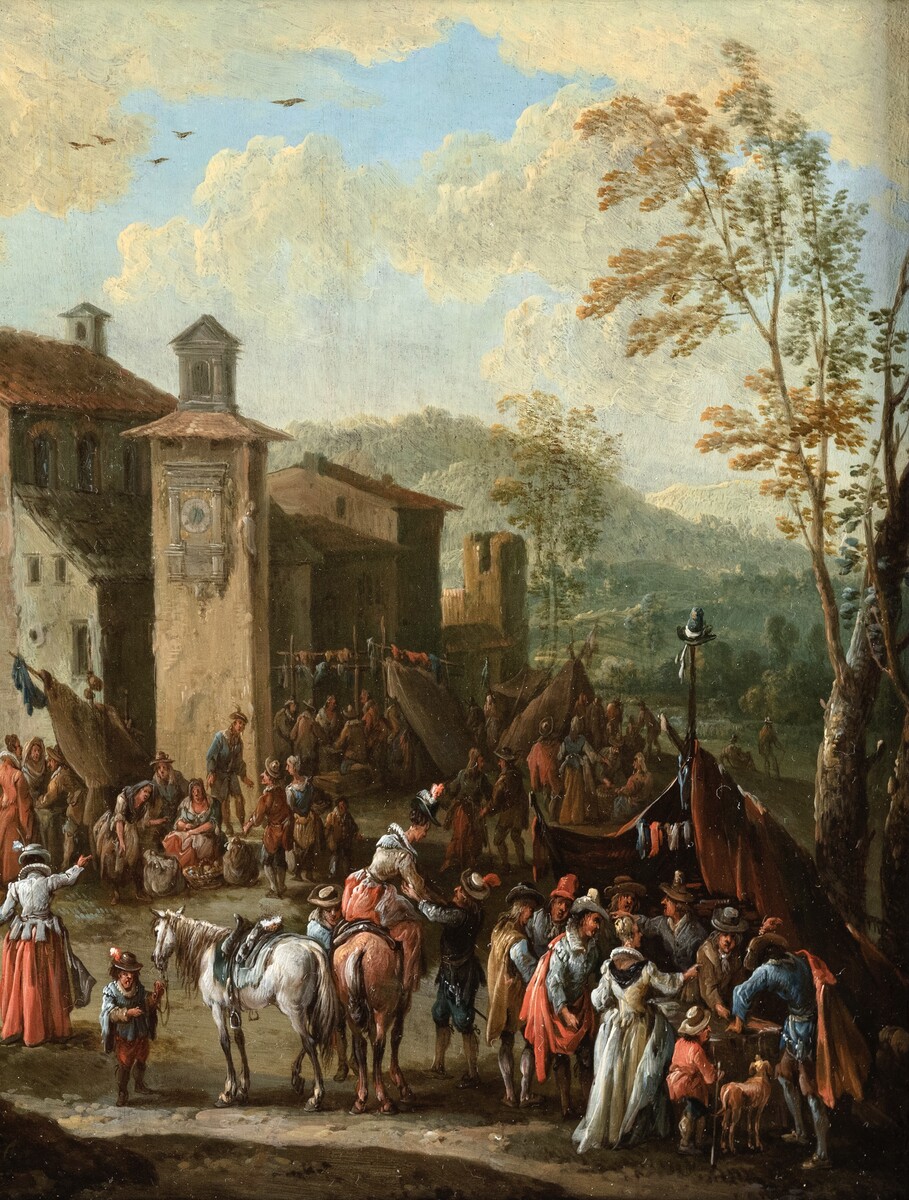
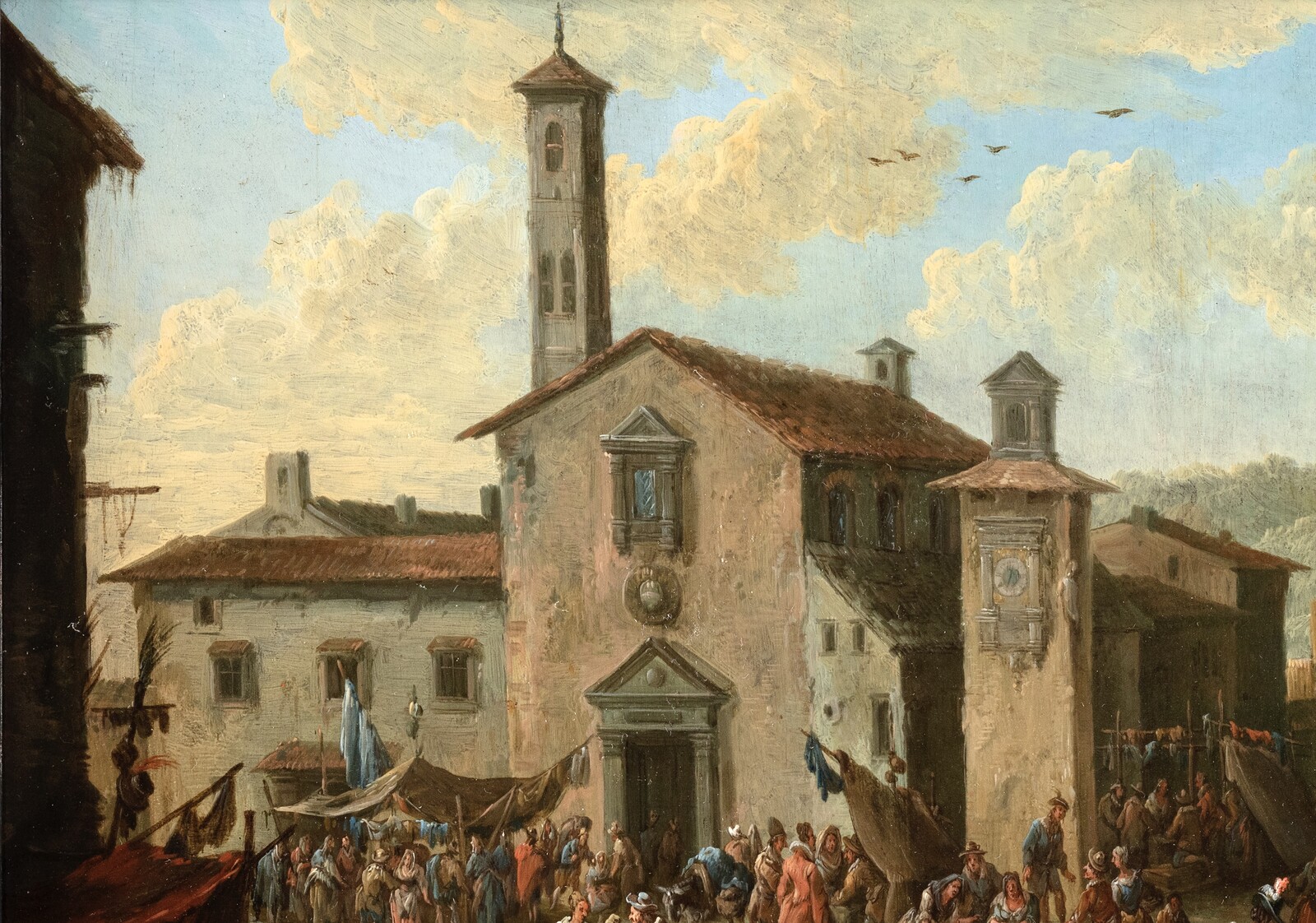
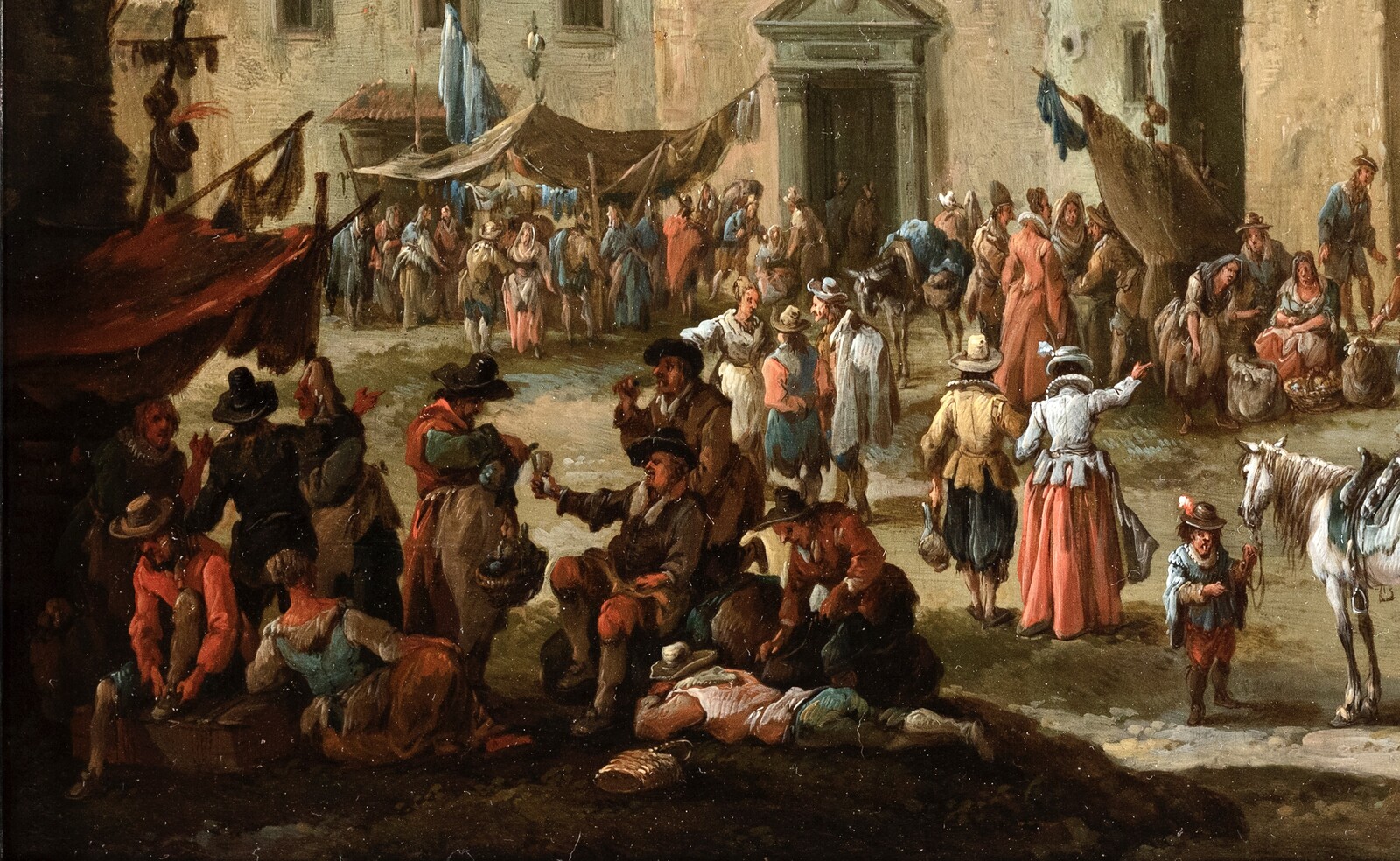
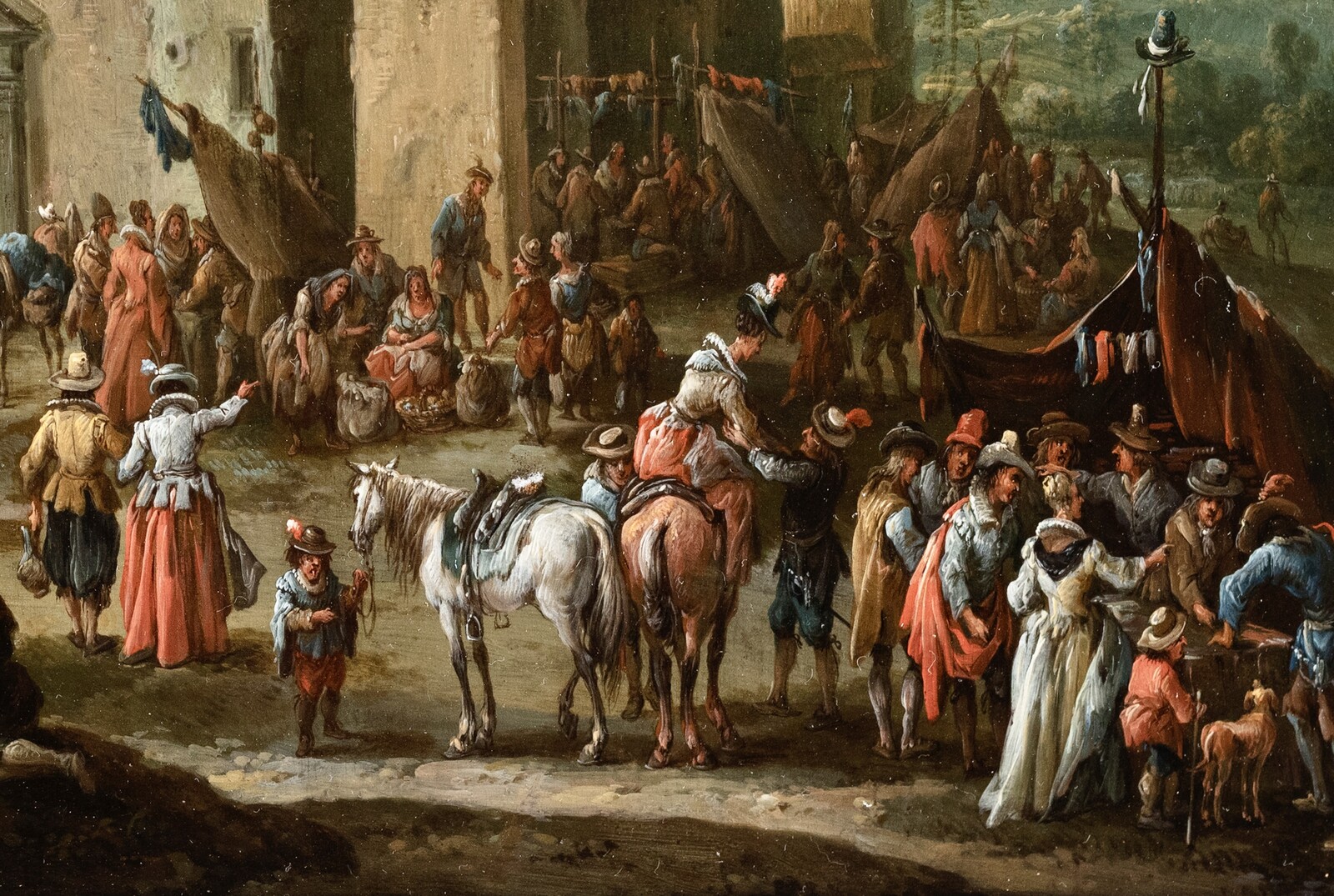
An animated market scene during the Fiera di San Luca in Impruneta (near Florence)
Oil on canvas : 24,2 X 31,8 cm
Unsigned
Frame: 32,5 X 40,3 cm
I am currently documenting this painting
In short
Franz de Paula Ferg was an international painter of fascinating multi-figured genre scenes and landscapes: he worked in Vienna, in several German towns and in London. His attractive market-scenes with complex figure-arrangements were clearly Flemish-inspired.
Here he has painted a detailed view of the famous market of Impruneta, near Florence. His Italian views must have been popular amongst the young English aristocrats who had made a Grand Tour in Italy.
About Franz de Paula Ferg
Austrian painter and printmaker
Vienna 1689 – 1740 London
Painter of compositions combining landscapes with genre scenes.
Ferg studied landscape painting under his father, Adam Pankraz Ferg (1651 – 1729), and under Jozef Orient (1677 – 1747).
He further studied staffage painting (the art of incorporating figures into landscapes) with Johann Graf (1653 – 1710).
One can also see the influence of Ferg having scrutinized the works of some of the most inventive and most detailed French engravers: Jacques Callot (circa 1592 – 1635) and Sébastien Leclerc (1637 – 1714).
In 1718 Ferg left Vienna for Franconia and then for Bamberg, where he remained for a couple of years. From there he moved to Leipzig, which he left after having met the landscape painter Alexander Thiele (1685 – 1752) whom he accompanied to Dresden, where both men worked together for some time. It is possible that Ferg also worked for the famous porcelain manufactory of Meissen.
In Dresden our painter specialized in carefully executed landscapes crowded with many figures, often executed on copper. These paintings display a distinctly German colouring, but they are also indebted to earlier Dutch (Adriaen van Ostade and Cornelis van Poelenburch) Flemish (the Jan Brueghel tradition) and “Italian” (the Bamboccianti”) models in their fusion of landscape and genre.
After Dresden he moved to Lower Saxony.
From around 1724 our painter lived in London until his death in 1740.
He had a lot of work, but an “unfortunate” marriage finally lead to great poverty … and four children to nourish.
Some sources say that in London he made designs for the Chelsea porcelain manufactory, but that is not correct, for that china factory only went into production after his death. They did however base some of their designs on prints made after his drawings.
Ferg died one night, in a street near his lodgings, in absolute misery.
In his late works, dating from his English period, the compositions are simpler, holding fewer figures and with a greater attention towards light and atmosphere.
His works signed “FV” are supposed to date from his London years: the F stands for Ferg, the V for Vienna (Wien in German).
About the subject of our painting
Every year on the feast of Saint Luke (18 October) an important market was held in Tuscany, in the small town of Impruneta, 15 km S. of Florence.
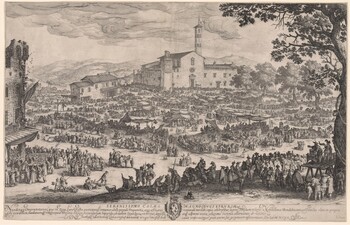
In 1620 the famous French etcher, Jacques Callot, made a very popular engraving of it holding 1.138 people. Callot (1592 – 1635) was born in Nancy, the capital of the independent Duchy of Lorraine, which later became part of France. He worked in Florence at the service of Cosimo de Medici II and later in Nancy. The production of this keen observer of reality was huge, as was his influence, though he died at the age of 42.
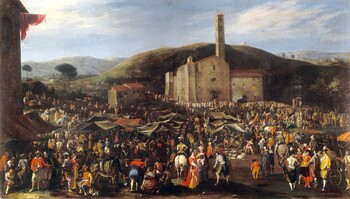
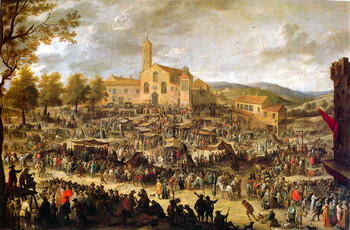
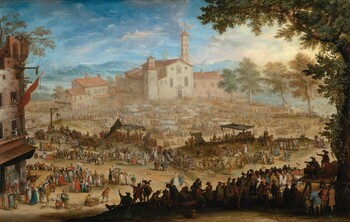
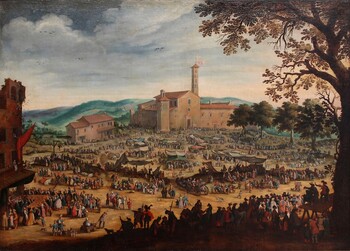
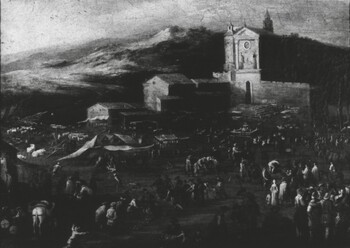
During the 17th century several paintings, often copied after or occasionally inspired by Callot’s engraving were made in Italy and in Flanders. You may see these in my comparative works.
Our painting dates already from the early 18th century. it is younger than these versions, but in contrast to these it is a genuine, original composition, not a pastiche copying the famous engraving. Just as Callot, Ferg has masterly portrayed an attractive mix of simple peasants selling their goods to rich townsfolk strolling on the market.
Why should you buy this painting?
Because it is such an attractive, detailed, happy view of rural Tuscany.
Comparative paintings
Click photos for more details