5.800 €
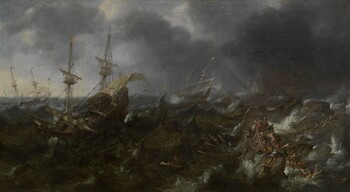
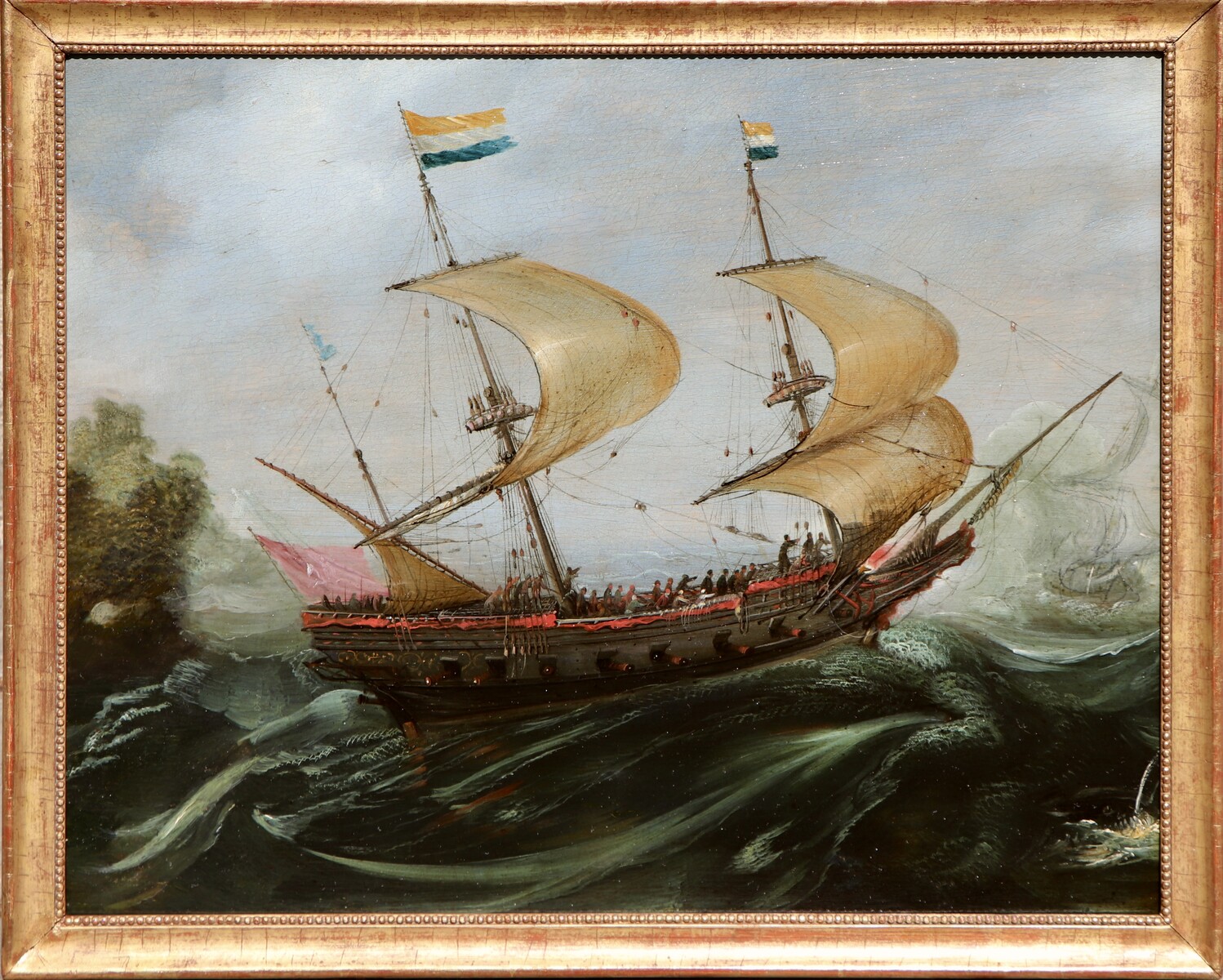
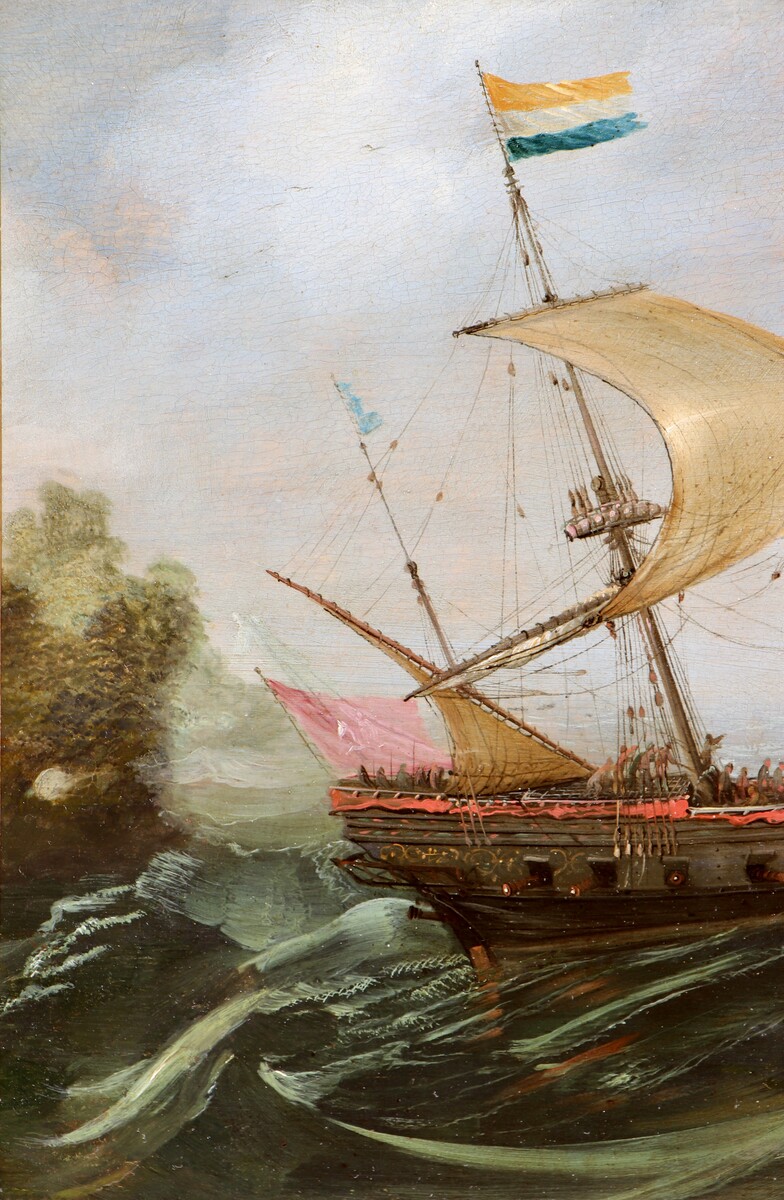
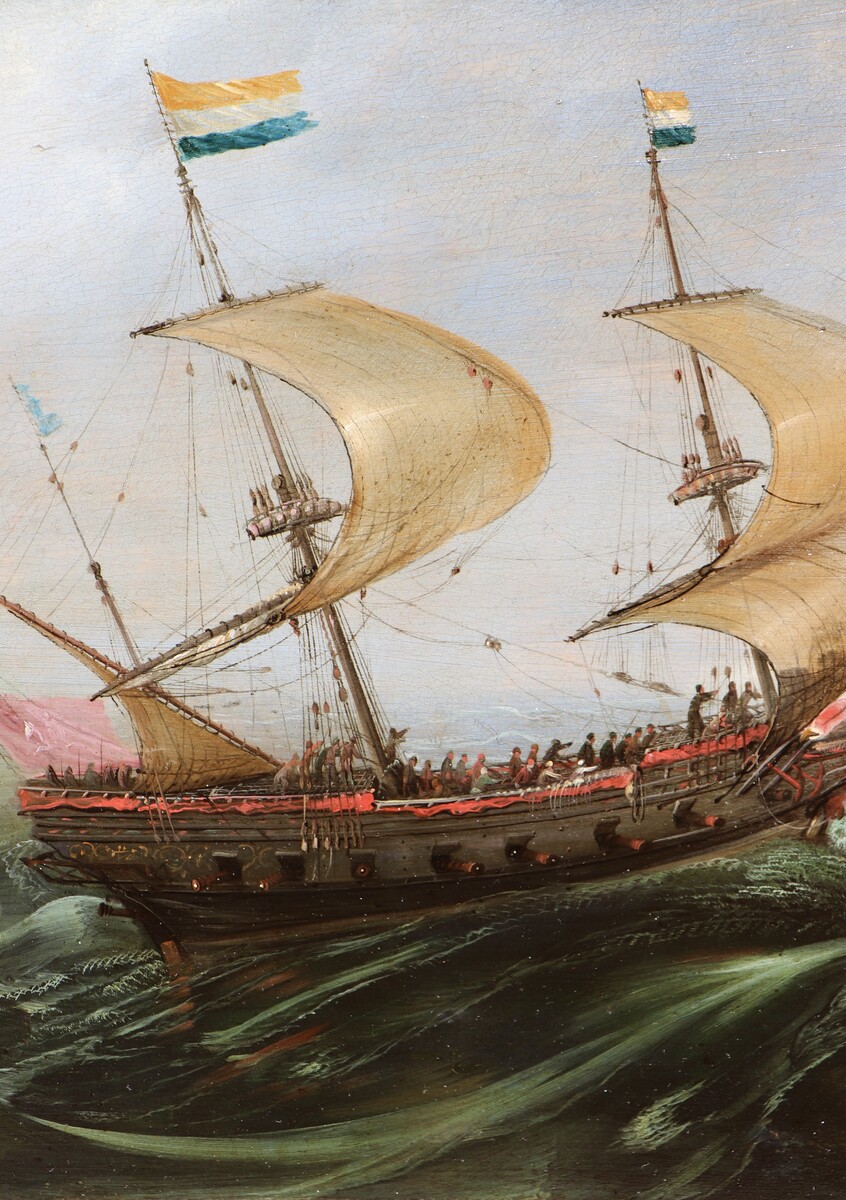
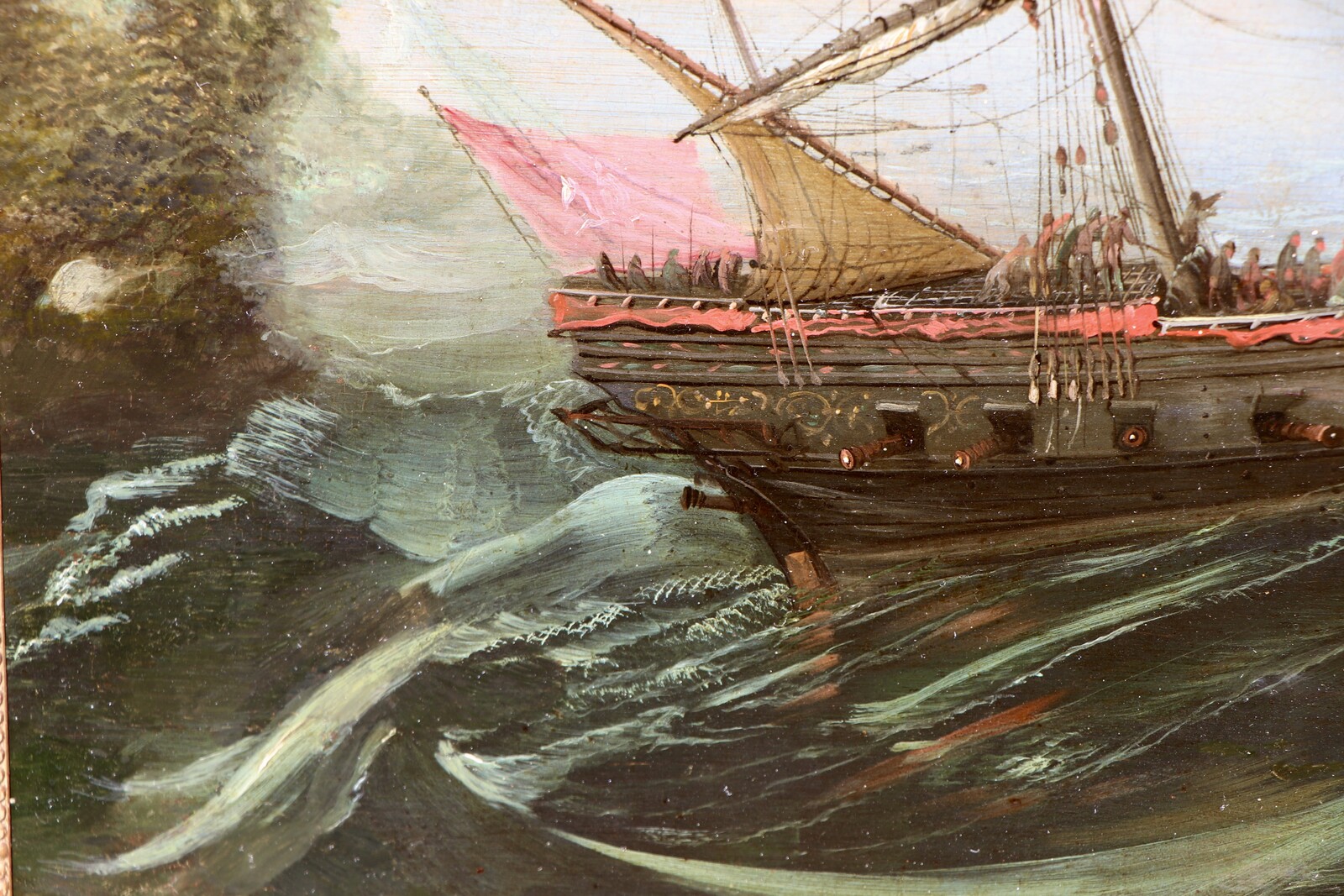
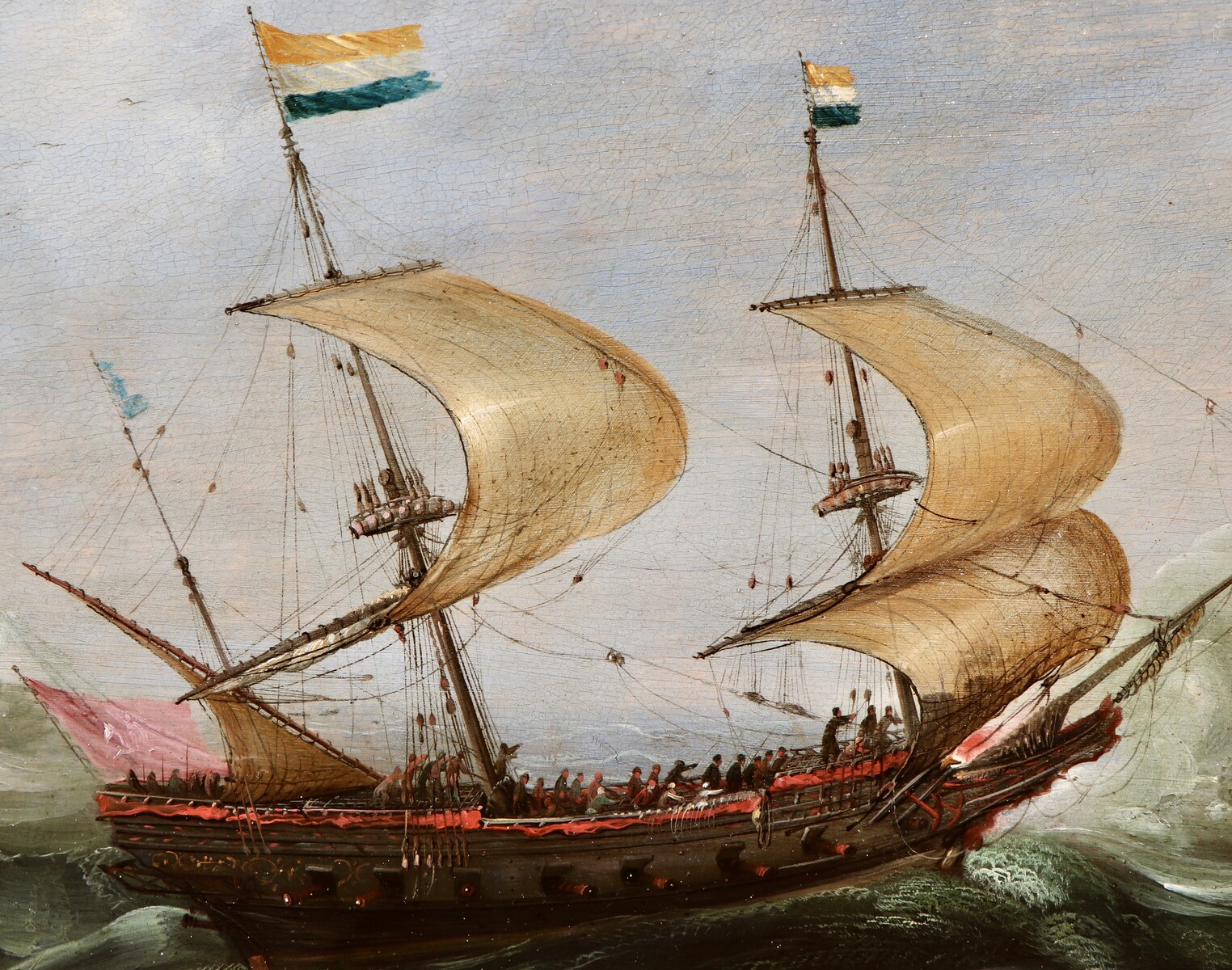
A Dutch ship in choppy waters
Oil on panel : 38,5 X 50,7 cm
Unsigned
Frame : 53,6 X 66,3 cm
Absolute transparency: our cost price = 2.114 €
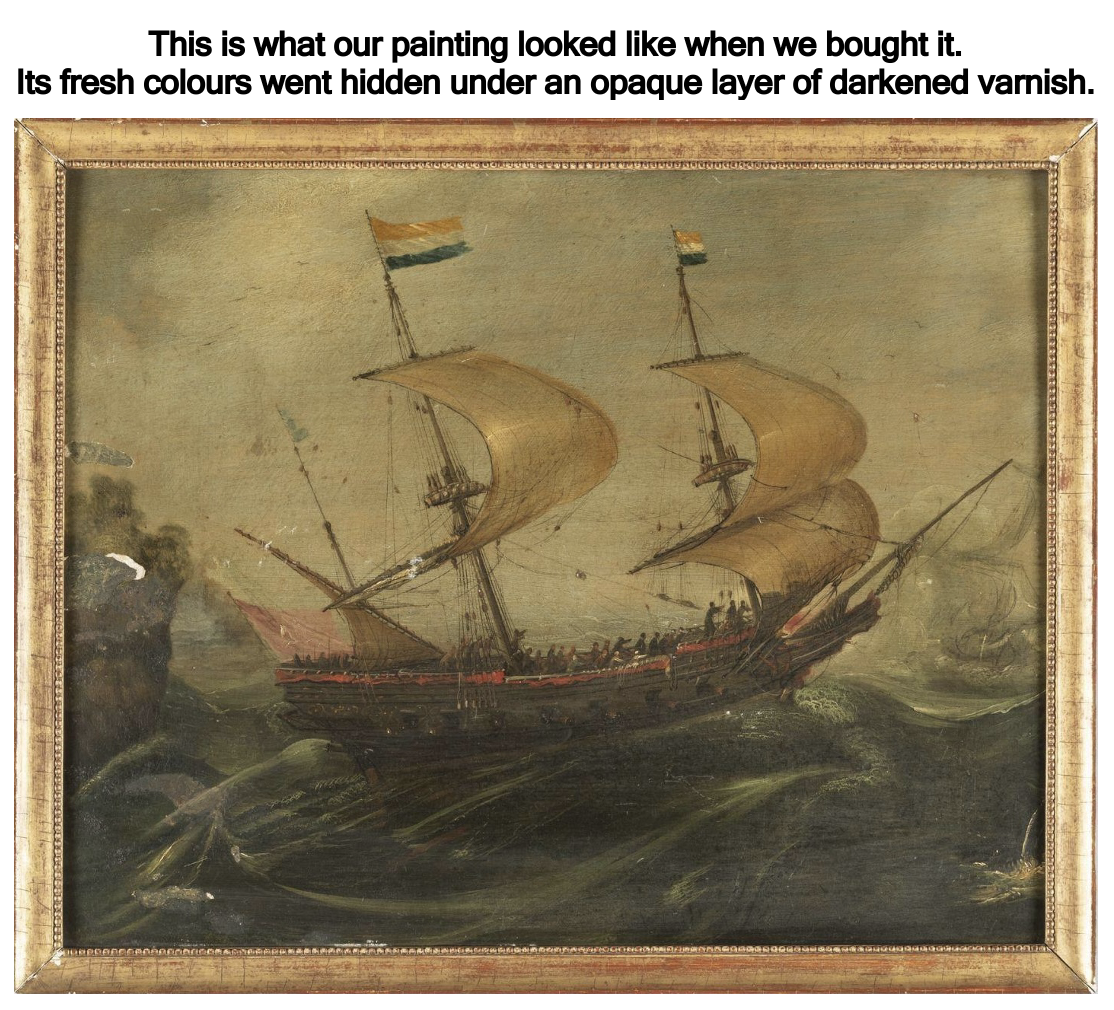
= acquisition price 1.191€ + shipment 100 € + restoration 823 €
Our export price 5.160 €
In short
Andries van Eertvelt was the very first Flemish specialist in marine paintings. He had a successful career and died a rich man.
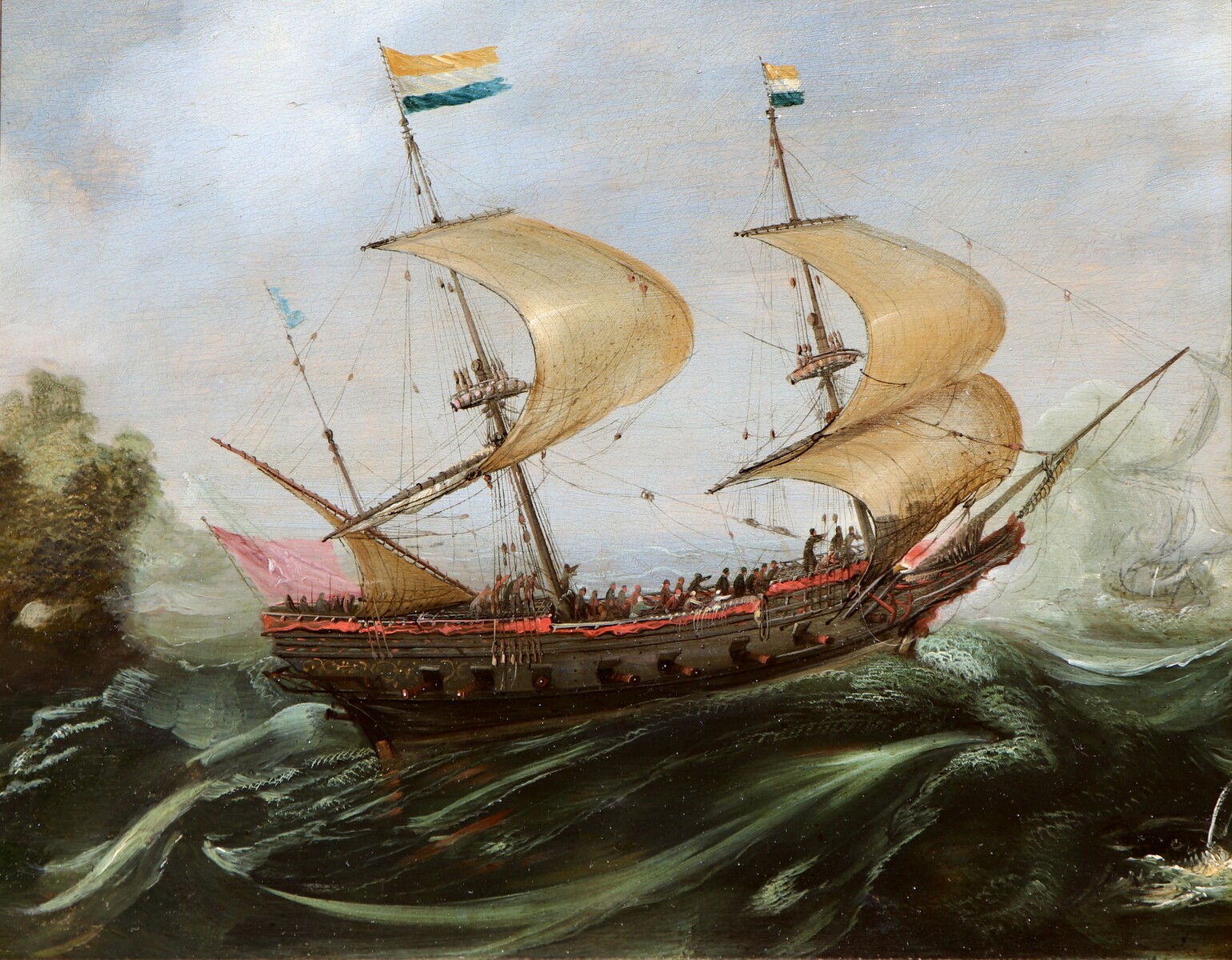
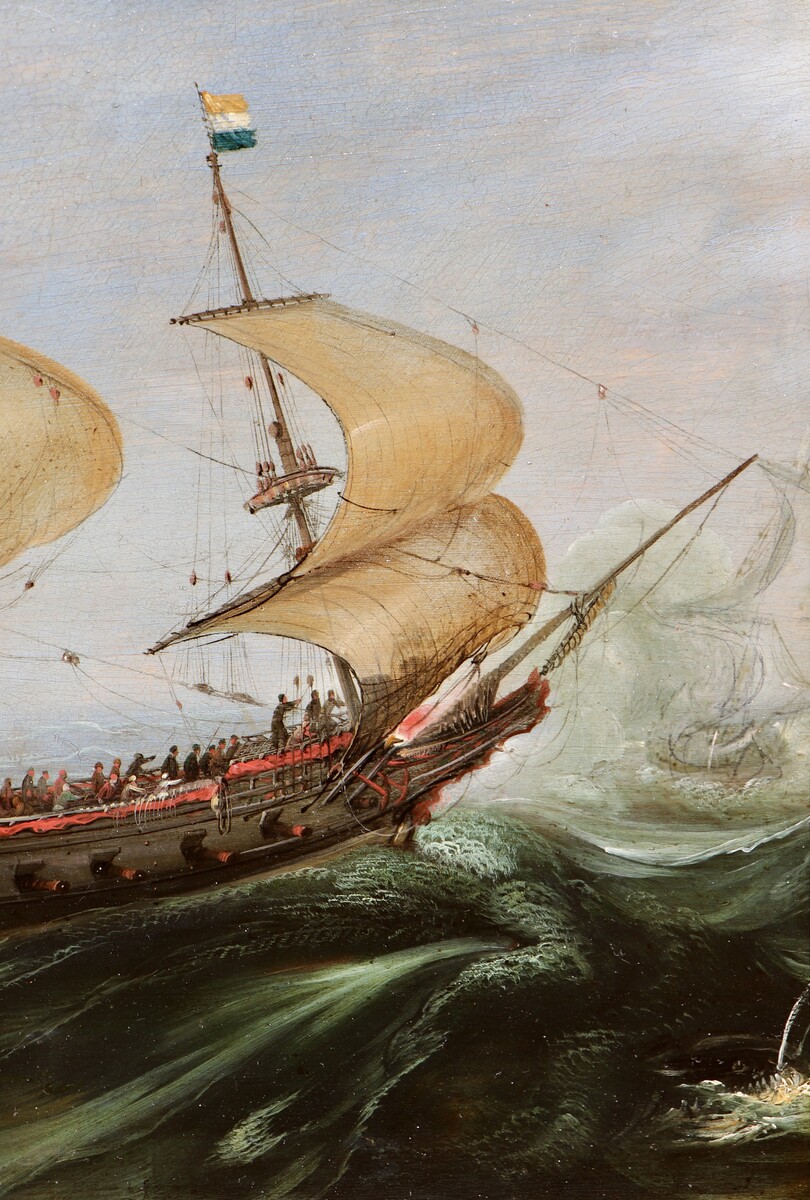
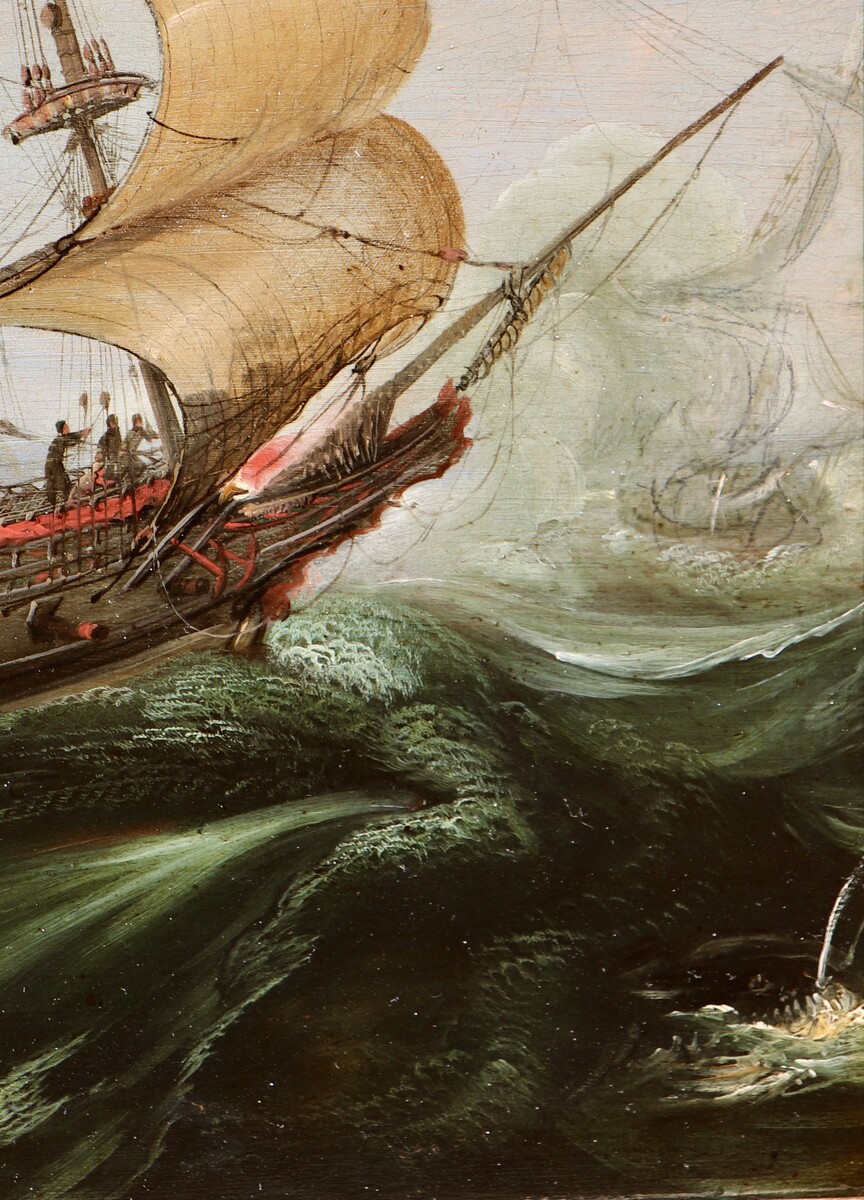
This is probably an early work dating from before the end of the 1620s. It was painted in Antwerp, when van Eertvelt still worked in a late Mannerist style. The stormy weather conditions and the scary sea monster at the lower right are menacing the ship of life.
At right, in front of the ship one sees a faded under drawing of another ship, that van Eertvelt decide not to paint. As the paint layer has become thinner after 400 years its contours have appeared.
About Andries van Eertvelt
Flemish painter
Antwerp 1590 – 1652 Antwerp
Marine painter.
Van Eertvelt was strongly influenced by Pieter Brueghel the Elder and by the Dutch marine painter Hendrik Cornelisz. Vroom (1566-1640); some have even suggested that he may have been Vroom’s pupil.
Van Eertvelt became a member of the Painters’ Guild of Saint Luke in Antwerp in 1609/10. He had several pupils, amongst them Matthieu van Plattenberg, Hendrick van Minderhout, Willem van Overdyck, Sebastian Castro and Kaspar van Eyck.
Following the death of his first wife in 1627, he travelled to Italy, where he worked with Cornelis de Wael in Genoa. During this stay he actually lived in de Wael’s house.
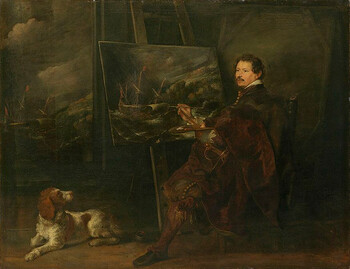
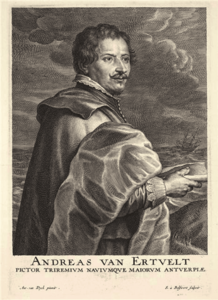
He returned to Antwerp around 1630, where he was to remarry. He sat for Anthony van Dyck who painted his portrait in 1632.
Van Eertvelt was the first marine specialist in Flanders. He worked for local Flemish and for Spanish clients (as Flanders was part of the Spanish Netherlands). From 1568 until 1648 the Dutch war of independence from Spain, the so-called Eighty Years’ War, was fought. And rather strangely enough van Eertvelt’s paintings were very popular with Dutch clients. This was not that exceptional for later in the 17th century, during the Anglo-Dutch Wars, both Dutch painters Willem van de Velde the Elder and the Younger, also worked for both enemy sides.
The career of Andries van Eertvelt can be divided in two parts: before and after his return from Italy. Up until circa 1630 our painter specialised in stormy seascapes and in dramatic representations of sea battles, often against Ottoman and Barbary galleys. Most of these are imaginary naval engagements, but he also painted historic actions, such as the Battle of Lepanto. These early, rather Mannerist marine subjects were painted in darker tones, often with white, spidery highlights on the rigging against a dark, green sea.
His later works, after his return from Italy (circa 1630) generally became lighter, much calmer in feel and larger in size, focusing instead on Southern views and using softer tones and a subtler palette.
Andries van Eertvelt’s paintings were highly admired within his lifetime, and exported as far as Seville and Lisbon. Cornelis de Bie (1627 – circa 1715) praised him in a verse in his 'Het Gulden Cabinet van de Edel Vry Schilderconst' (The Golden Cabinet of the Honourable Free Art of Painting) as “a son of the seas”.
About our painting
Our storm at sea clearly belongs to van Eertvelt’s early works, it was painted in Antwerp, before his departure for Italy circa 1627/1628. This composition is rather theatrical with long, dramatic waves; a strange sea creature surges in the bottom right corner. That wale-like creature appears regularly in the early Flemish and Dutch marine paintings. It is a metaphor for the dangers threatening the ship of life (or even the ship of the state).
Why should you buy this painting?
Because it is a good example of early Flemish marine painting, holding the infamous sea monster.
Comparative paintings
Click photos for more details