
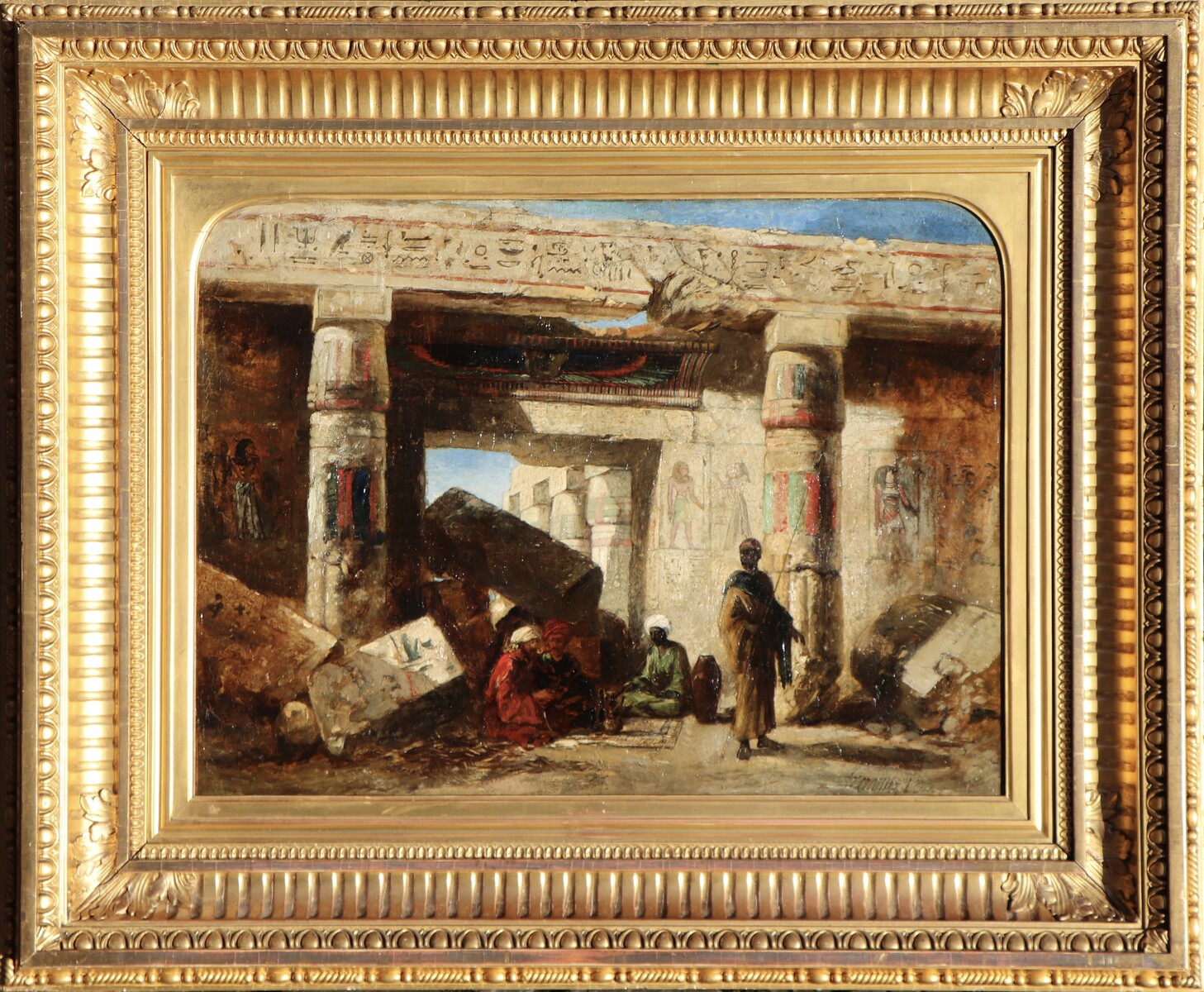
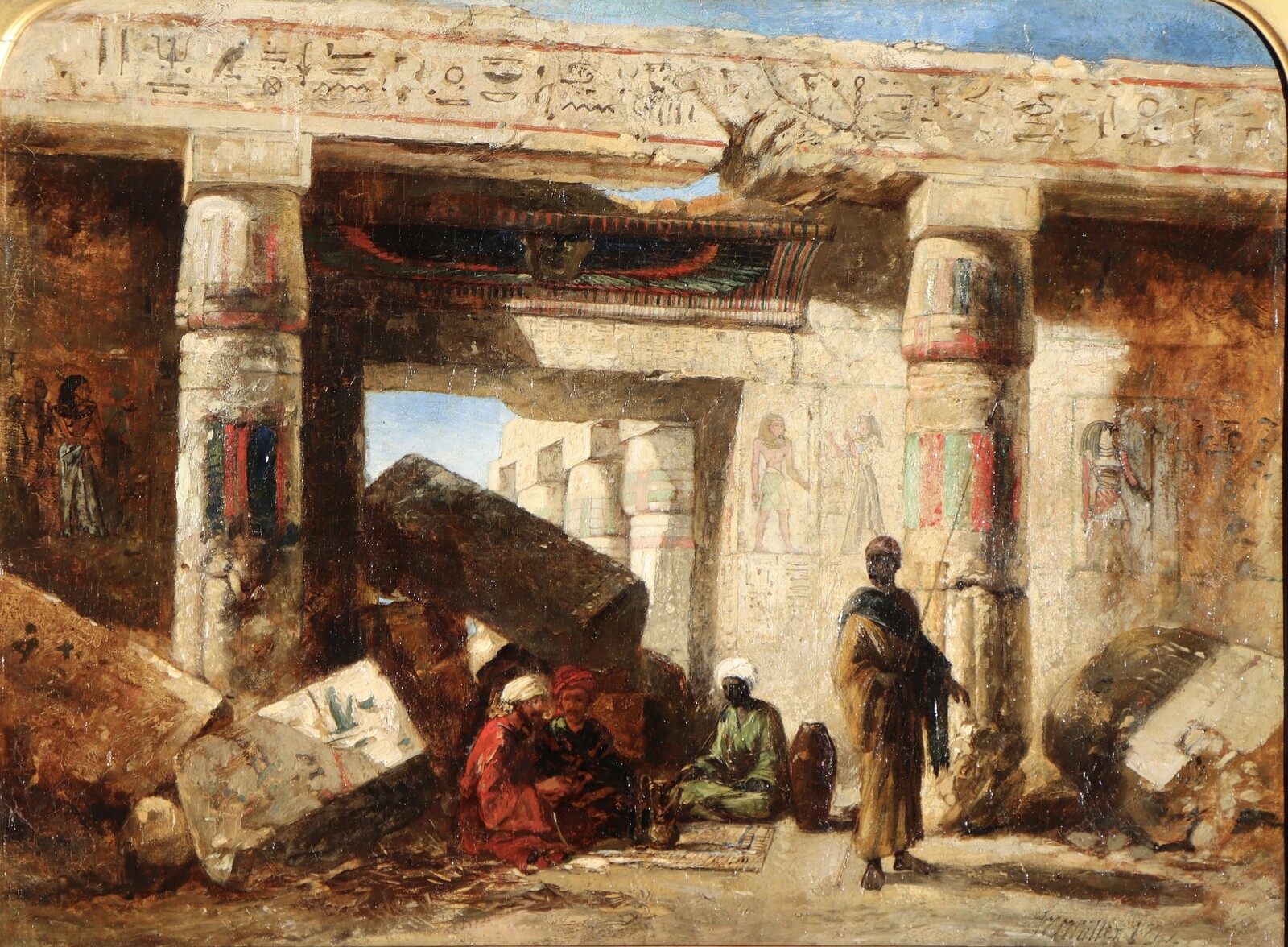
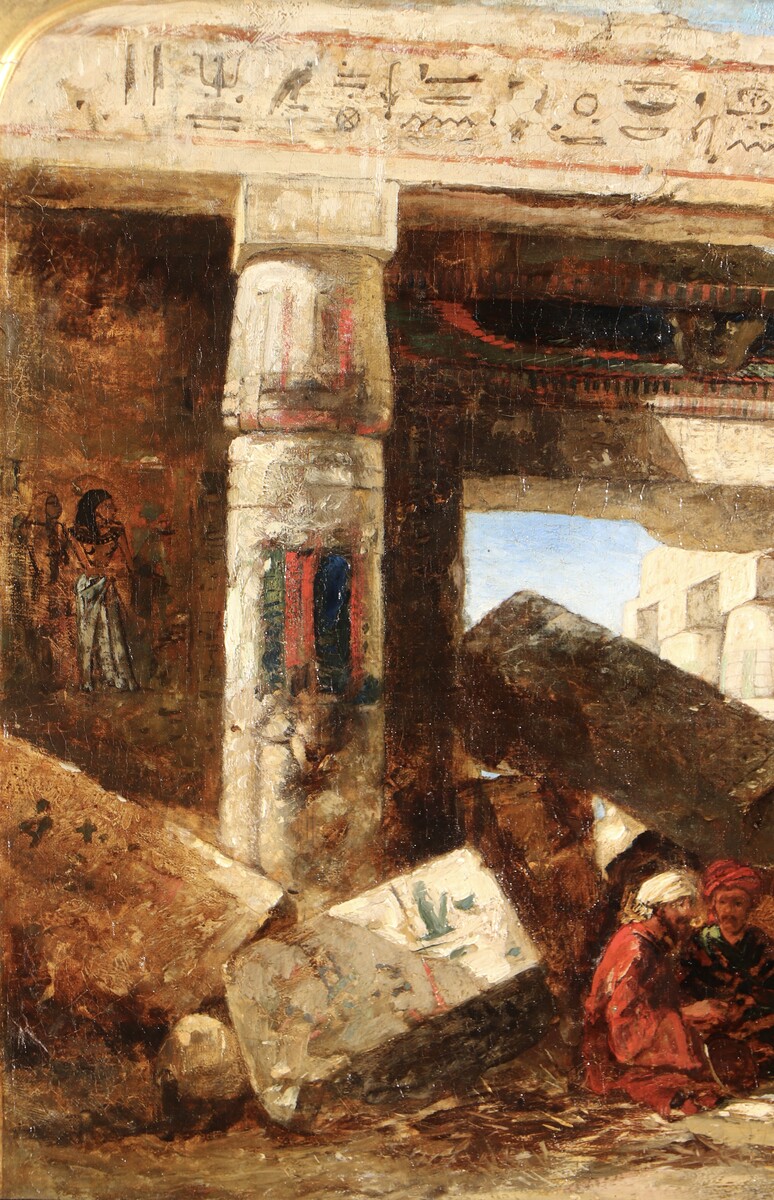
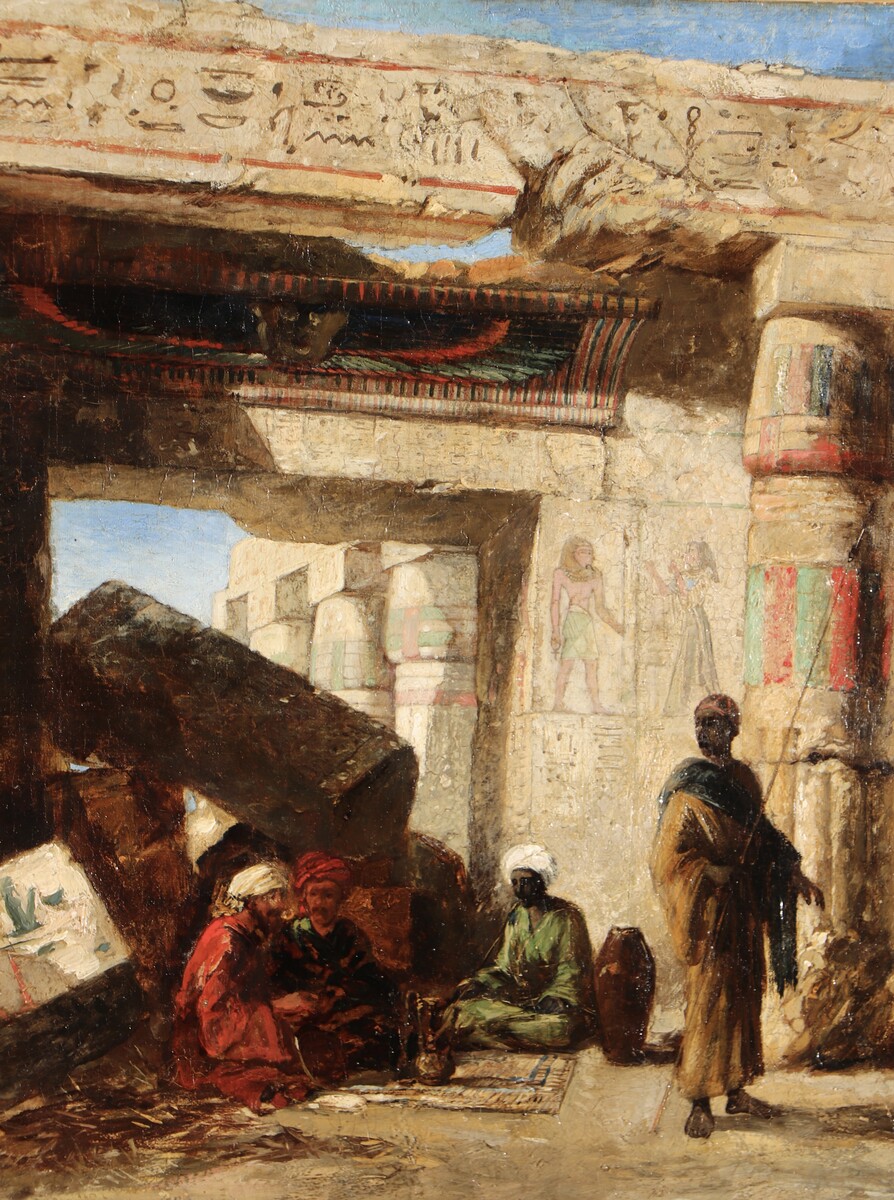
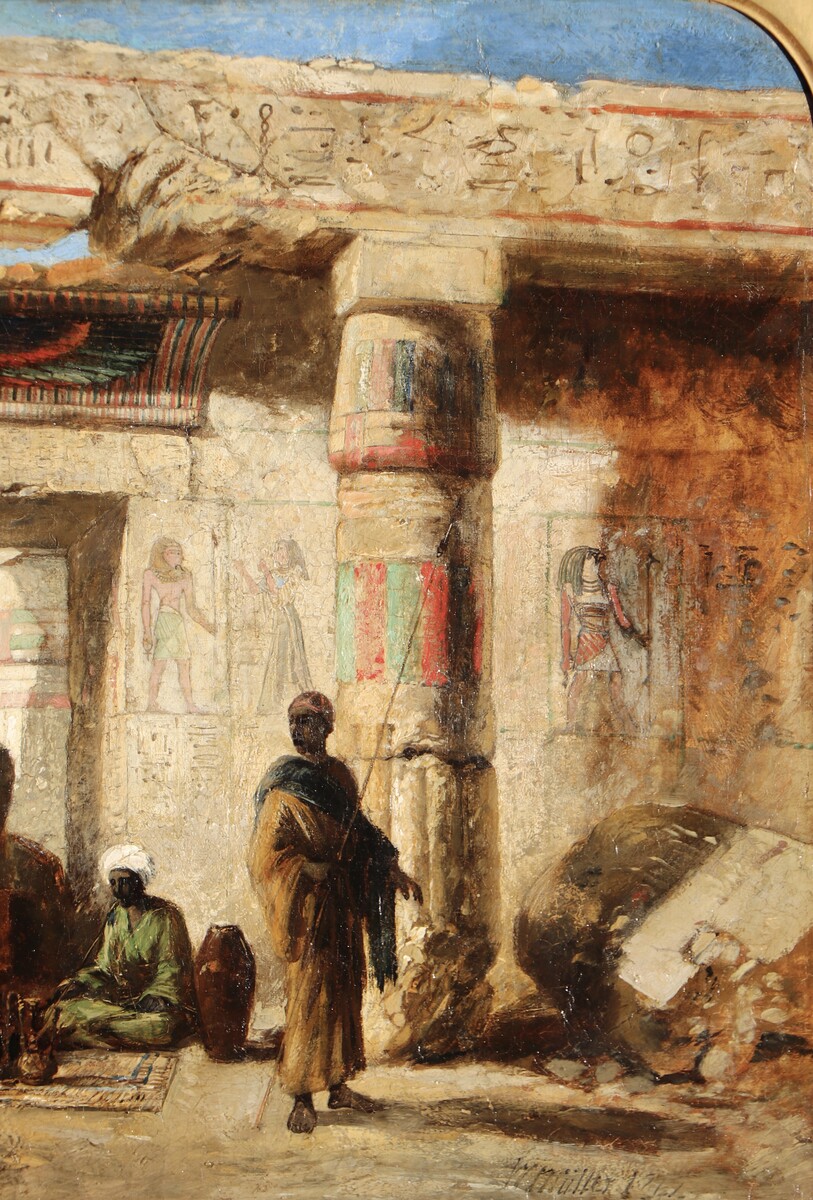
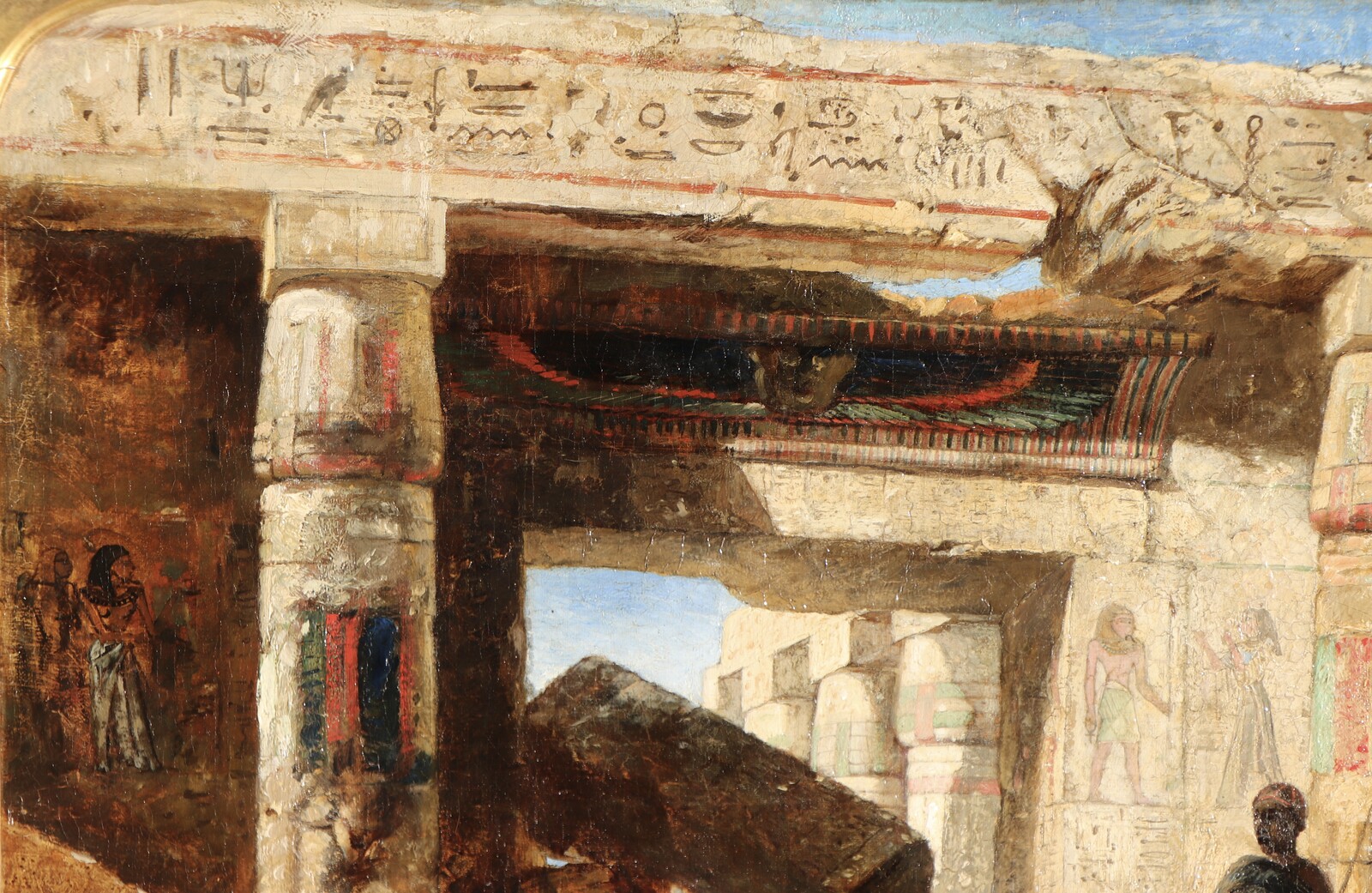
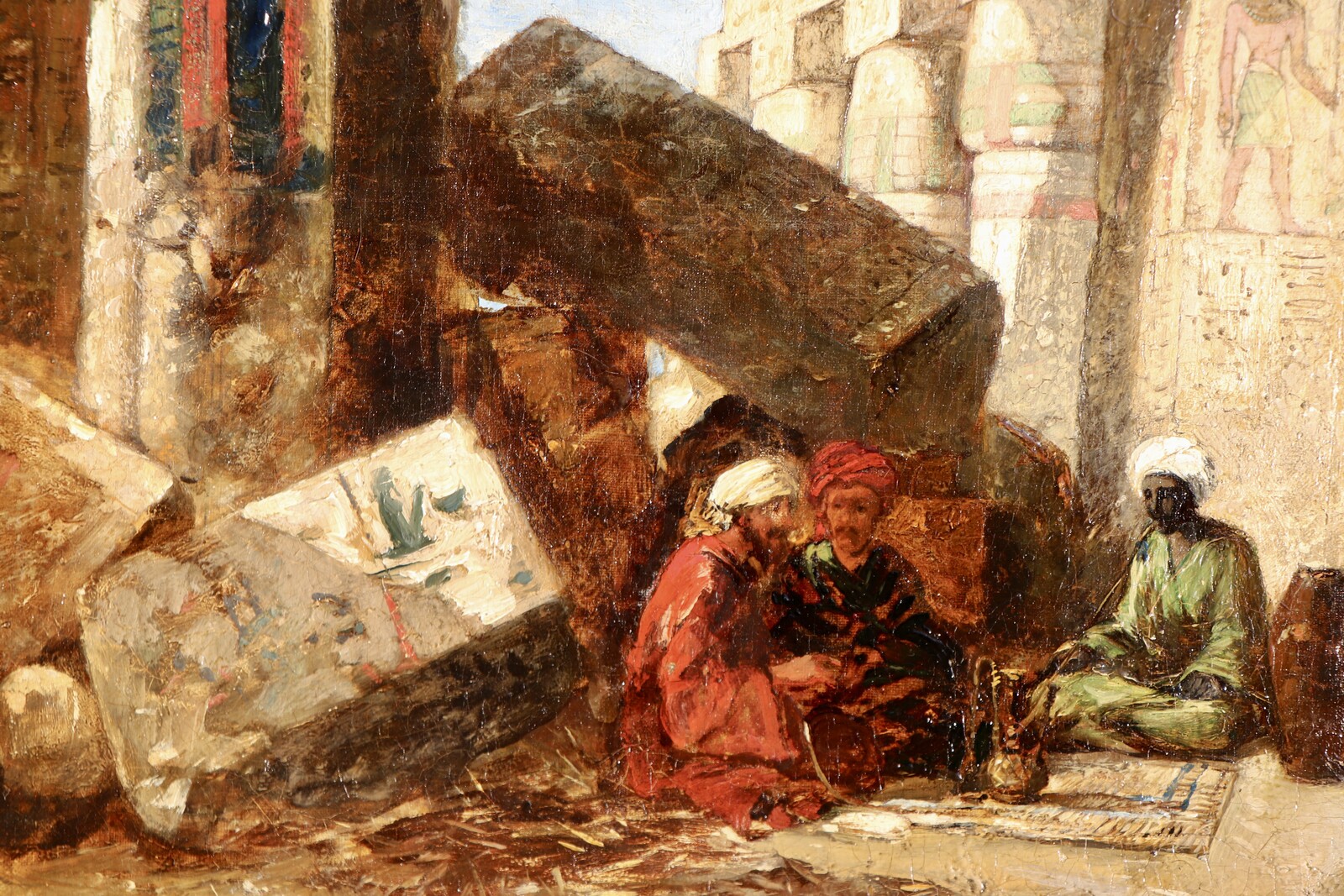
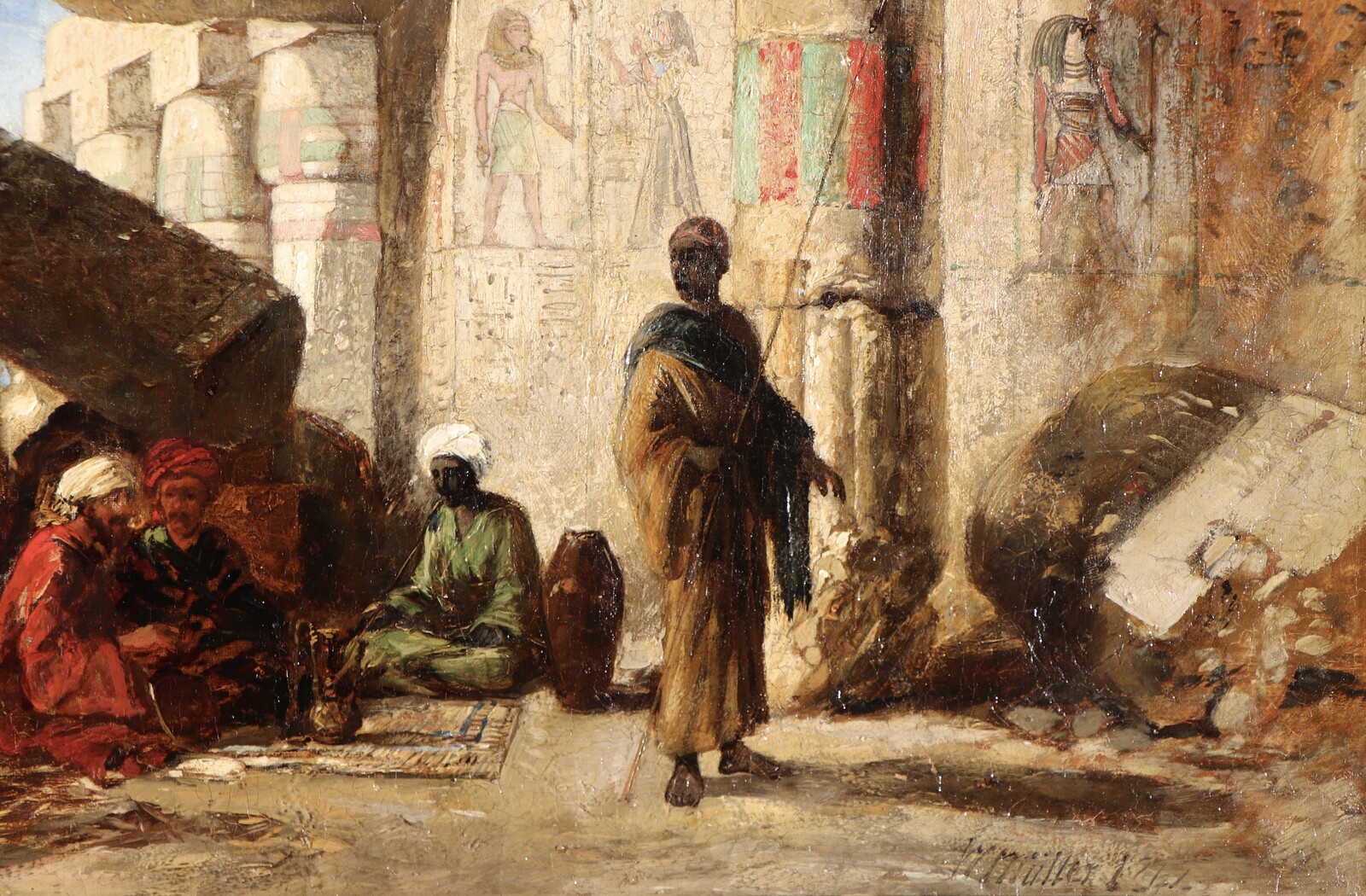
At the Temple of Ramses III in Medinet Habu
Oil on canvas : 42,3 X 56,2 cm
Signed bottom right "W Müller 1841.”
Frame : 68,0 X 82,7 cm
Provenance : sold at Lhomme Liège, 6/12/08
For 6.000 € (+ buyer’s premium)
"All paintings are fully documented with texts and photographs of comparative items. All this information is removed from our website once the painting is sold".
SOLD
In short
Sadly, William James Müller passed away at the age of 33. In his short, but very productive life he made two important journeys to the Eastern Mediterranean:
- in 1838/1839 to Athens and Egypt,
- in 1843/1844 to SW Turkey, to Xanthus.
He was one of the first independent and professional British artists to experience the Orient at first hand.
He arrived in Luxor (ancient Thebes) January 1st 1839. The Temple of Medinet Habu stands on its W. bank of the Nile. Based on his sketches drawn in Egypt Müller made his paintings at his return in England: mostly views of the busy town of Cairo, its inhabitants and its slave market. He did not paint that many views of archaeological sites. You may see these in my comparative works. Our painting dates from 1841.
About William James Müller
British painter
Bristol 1812 – 1845 Bristol
Orientalist town, landscape and figure painter and draughtsman.
Müller is the best-known artist of the Bristol School. However, it is only in his early career that he can be considered a Bristol School artist when he painted some local landscapes romanticised with imaginary details.
Müller was the second son of John Samuel Müller, a Prussian naturalist from Danzig, the first curator of the Bristol Institution, the forerunner of the Bristol Museum and Art Gallery.
At the age of 16 he studied painting for a year under the Bristol landscape painter James Baker Pyne in the late 1820s. In 1833 Müller was one of the founders of the Bristol Sketching Club. In July 1834, a the age of 22, Müller set off with a friend for a 7-month discovery of Europe to Belgium, Germany and Italy.
He visited the Middle East twice.
The first visit was in 1838-39, when he visited Athens, and travelled onwards by steamer to Alexandria in November 1838. Then he travelled to the bustling metropolis of Cairo, where he spent two weeks, particularly intrigued by the slave market. He continued up the Nile via Giza and Denderah to Luxor, where he made drawings of the ruins and landscapes before returning to Cairo in mid-January 1839.
Müller was one of the first established European artists to visit Egypt. He was there at at the same time as the famous Scottish Orientalist draughtsman David Roberts (1796 – 1864), although neither knew of the other’s presence there.
Shortly after his return in the UK, Müller left Bristol and settled in London in late Autumn 1839, where he exhibited regularly. He set about completing paintings from sketches he made during his long Egyptian journey. These scenes of Egyptian streets, markets and monuments proved especially popular.
His second visit was to Lycia in south west Turkey in 1843-44 when the archaeologist Charles Fellows was removing the Xanthus Marbles for the British Museum in Lycia. His journey was at the request of Fellows, but at his own expense.
He spent most of the rest of his life, after his return to England, working on watercolours, and a few oils, of Lycian subjects.
Müller fell ill in early 1845. He died September 8th 1845 at the age of 33, probably exhausted due to overworking, after an extraordinary productive life.
Why should you buy this painting?
Because it is a great and very early view of the then still very colourful ruins of the mortuary temple of Pharaoh Ramses III (1186 – 1155 BC) at Medinet Habu.