5.300 €
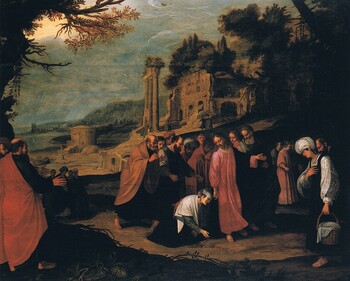
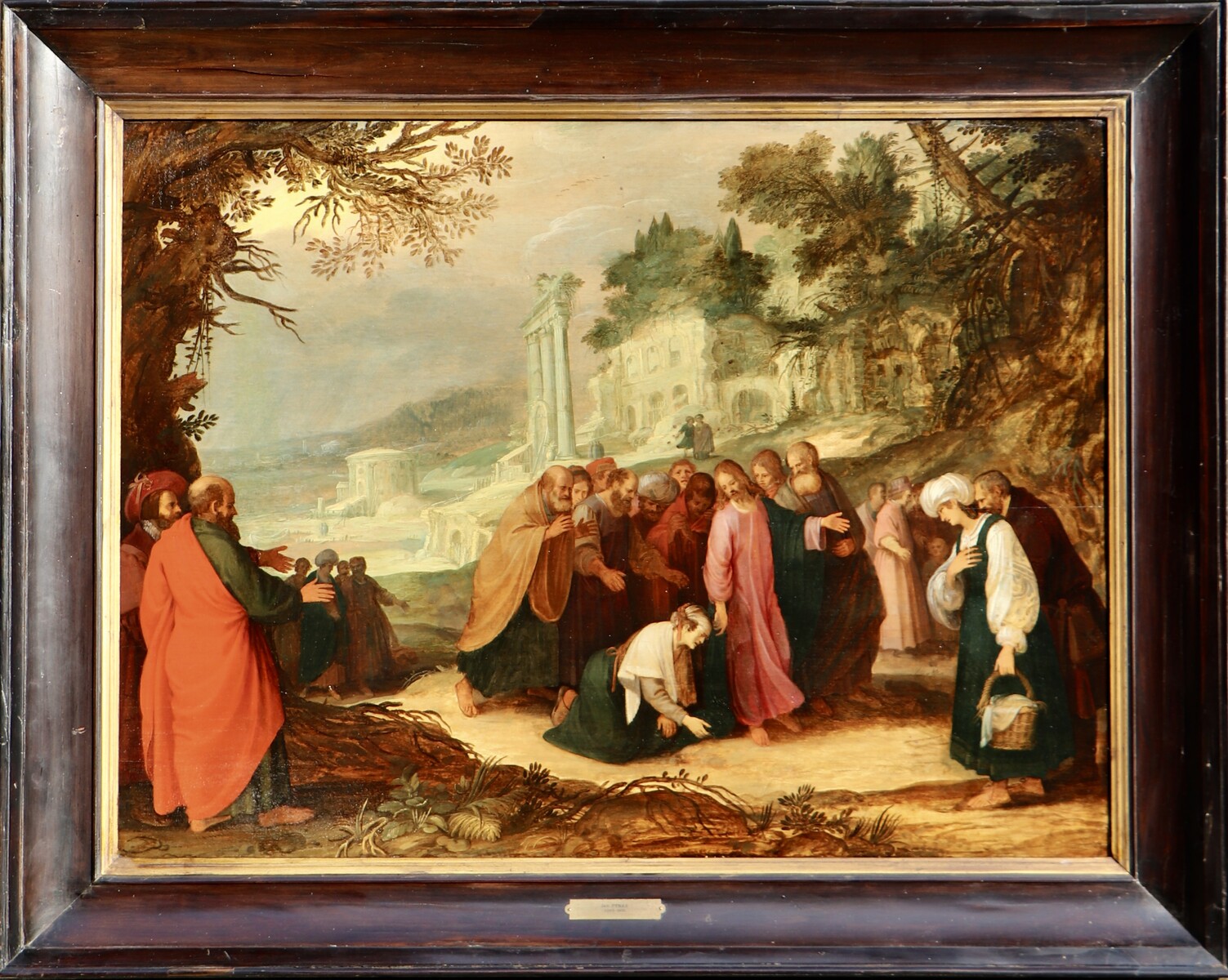
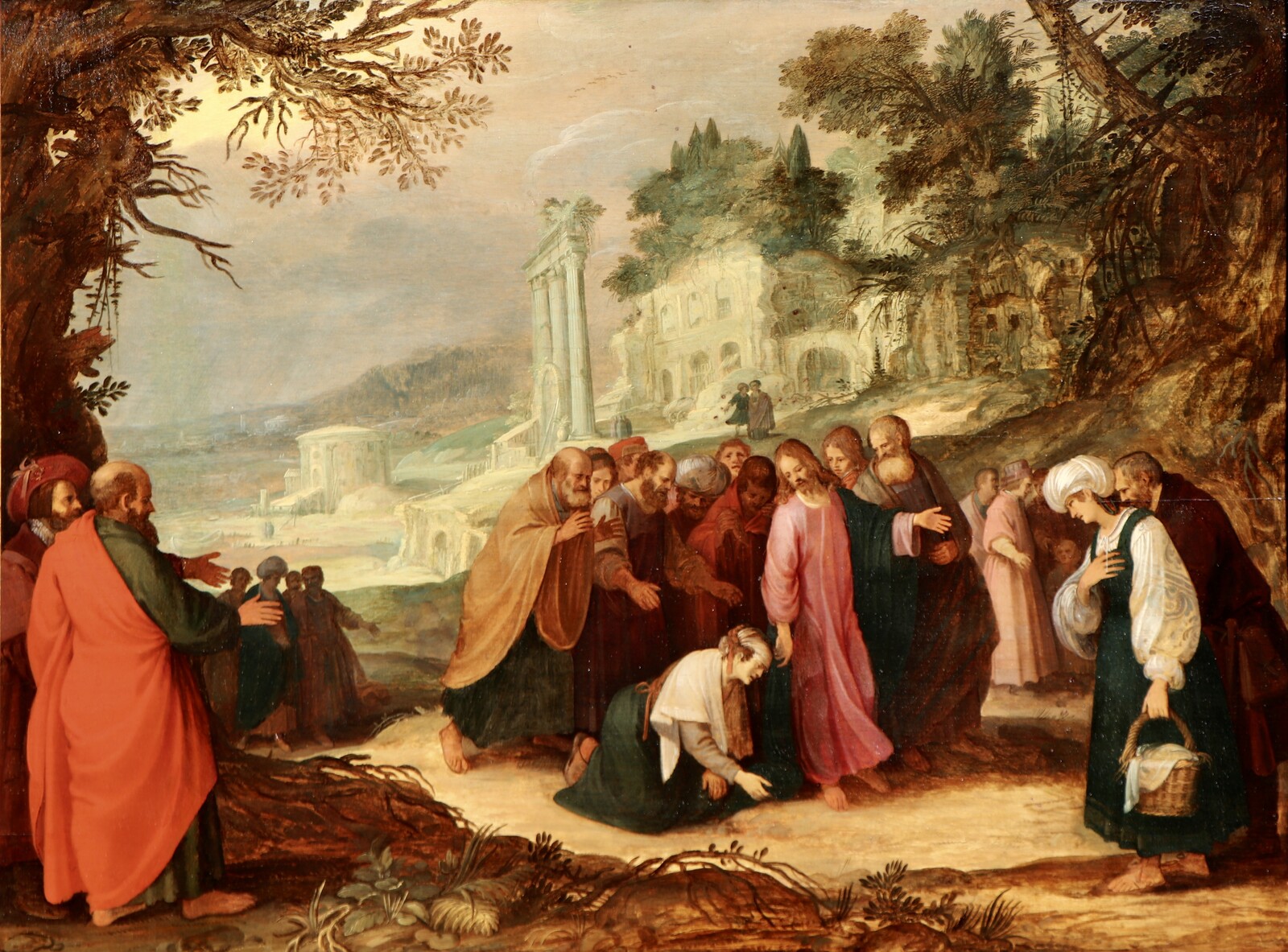
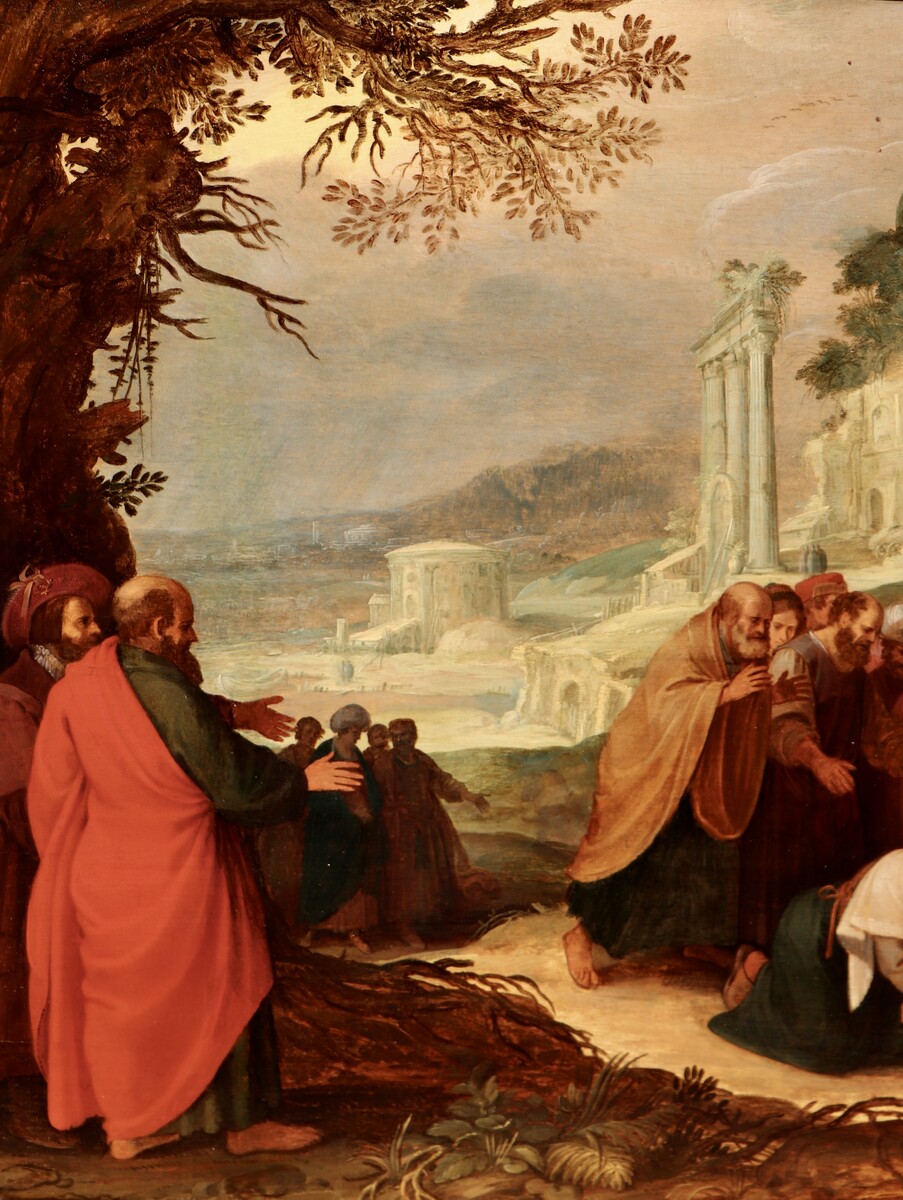
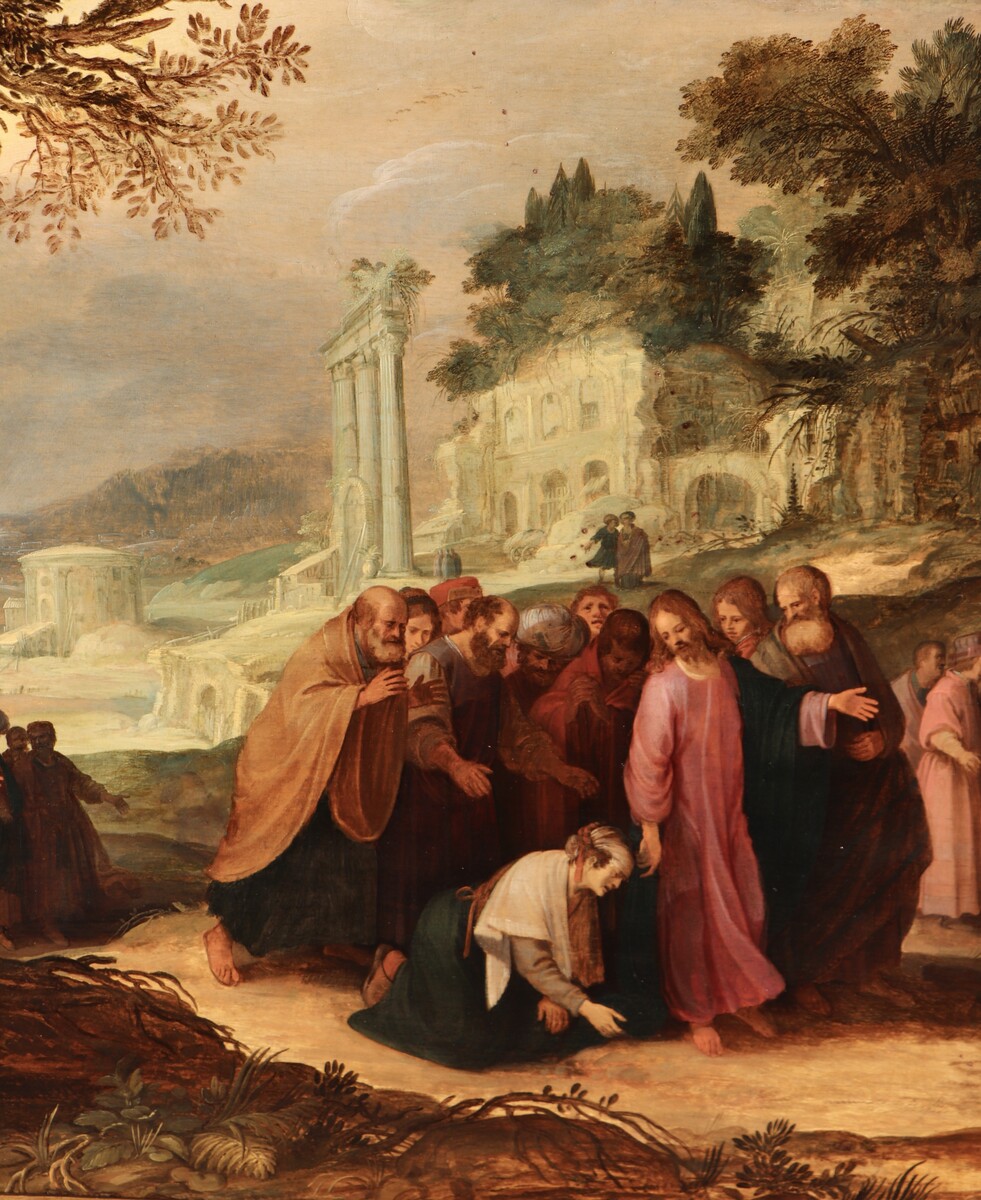
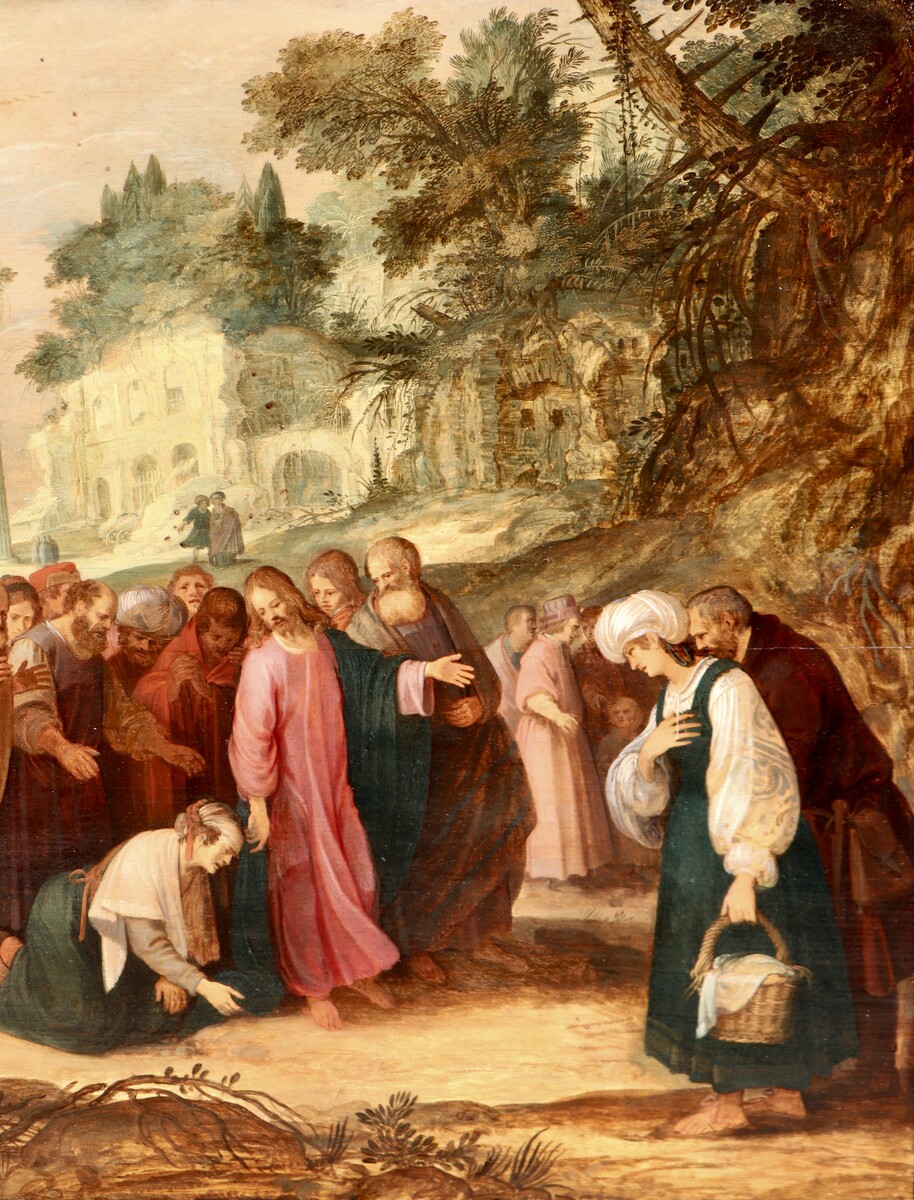
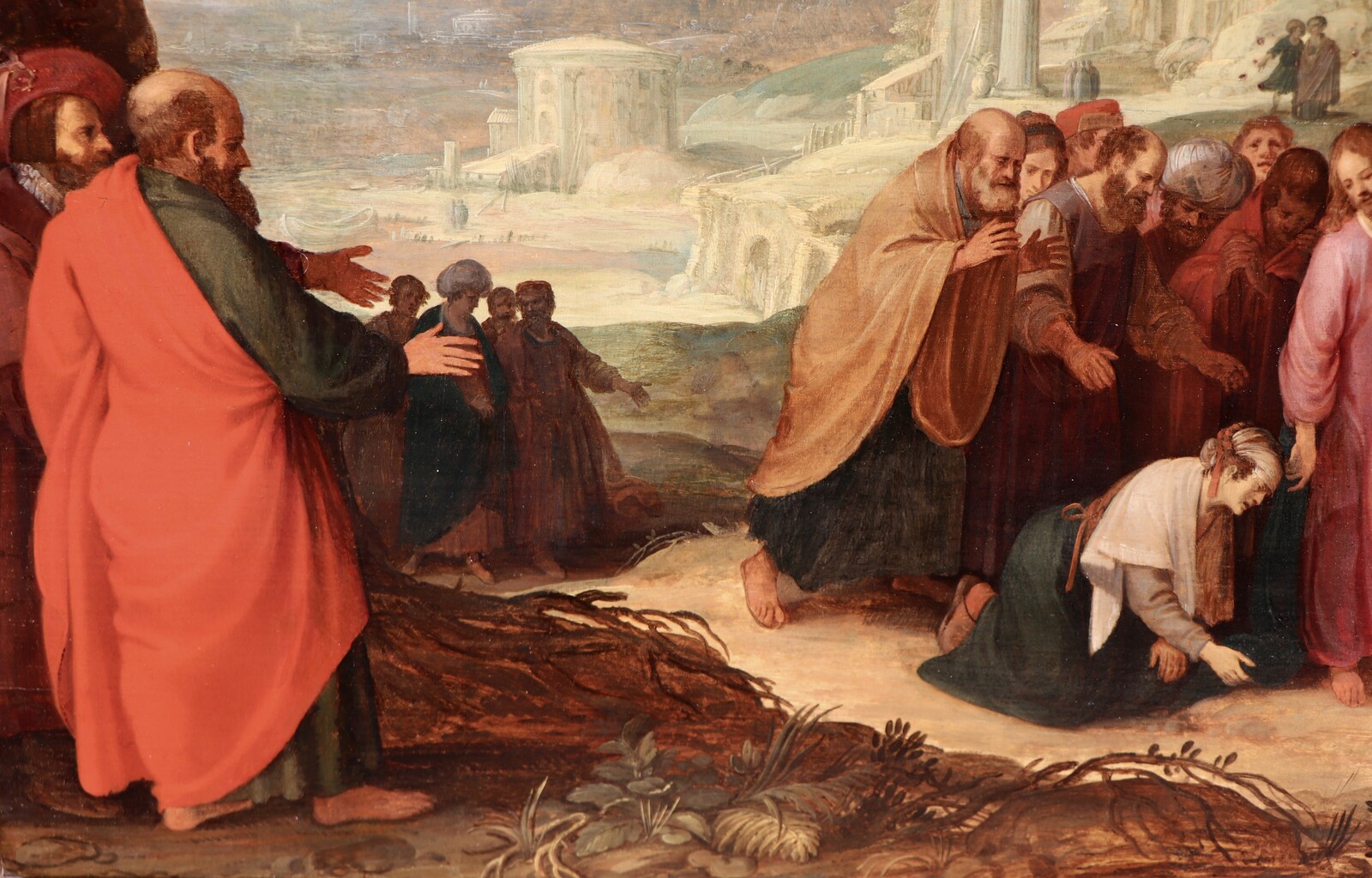
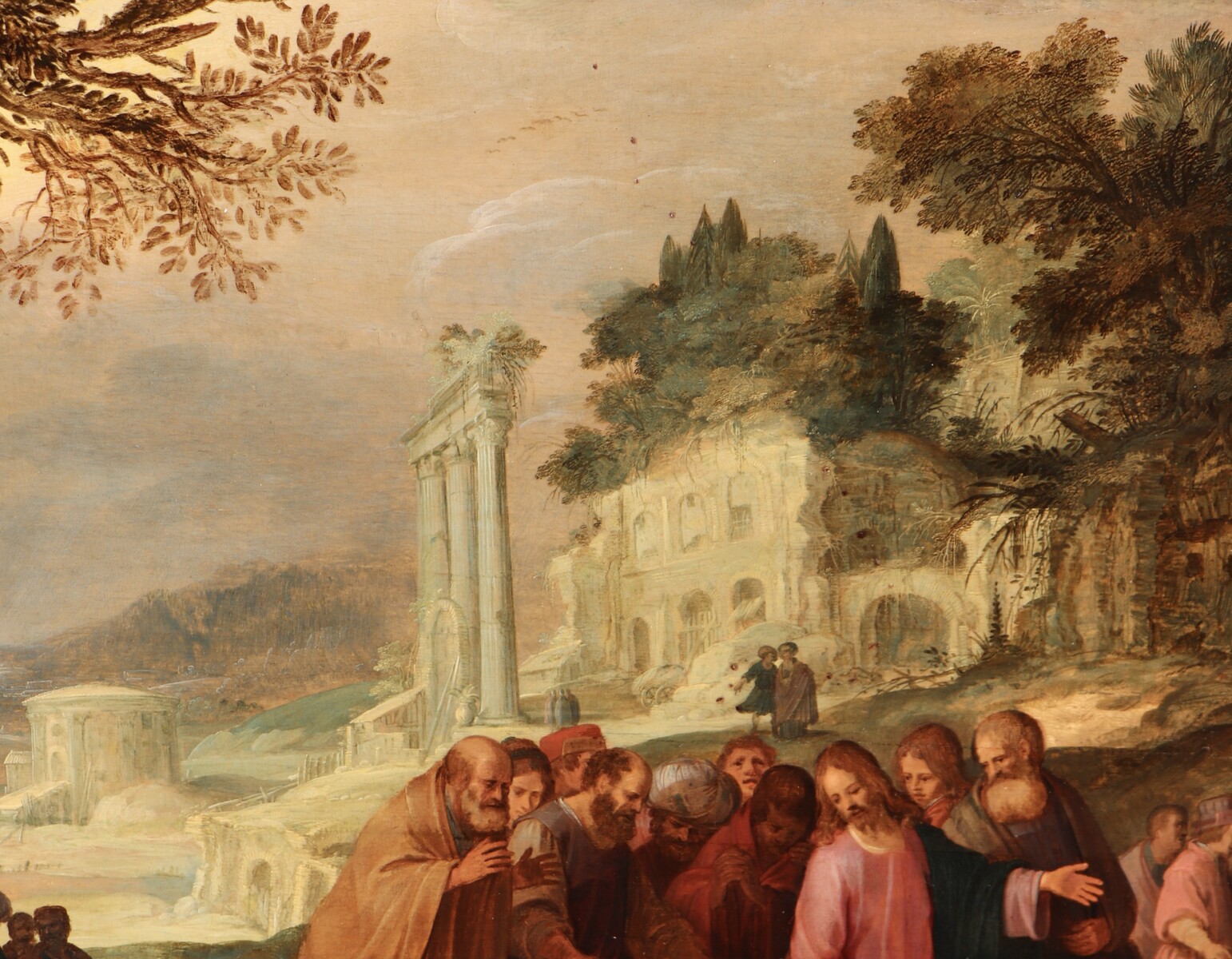
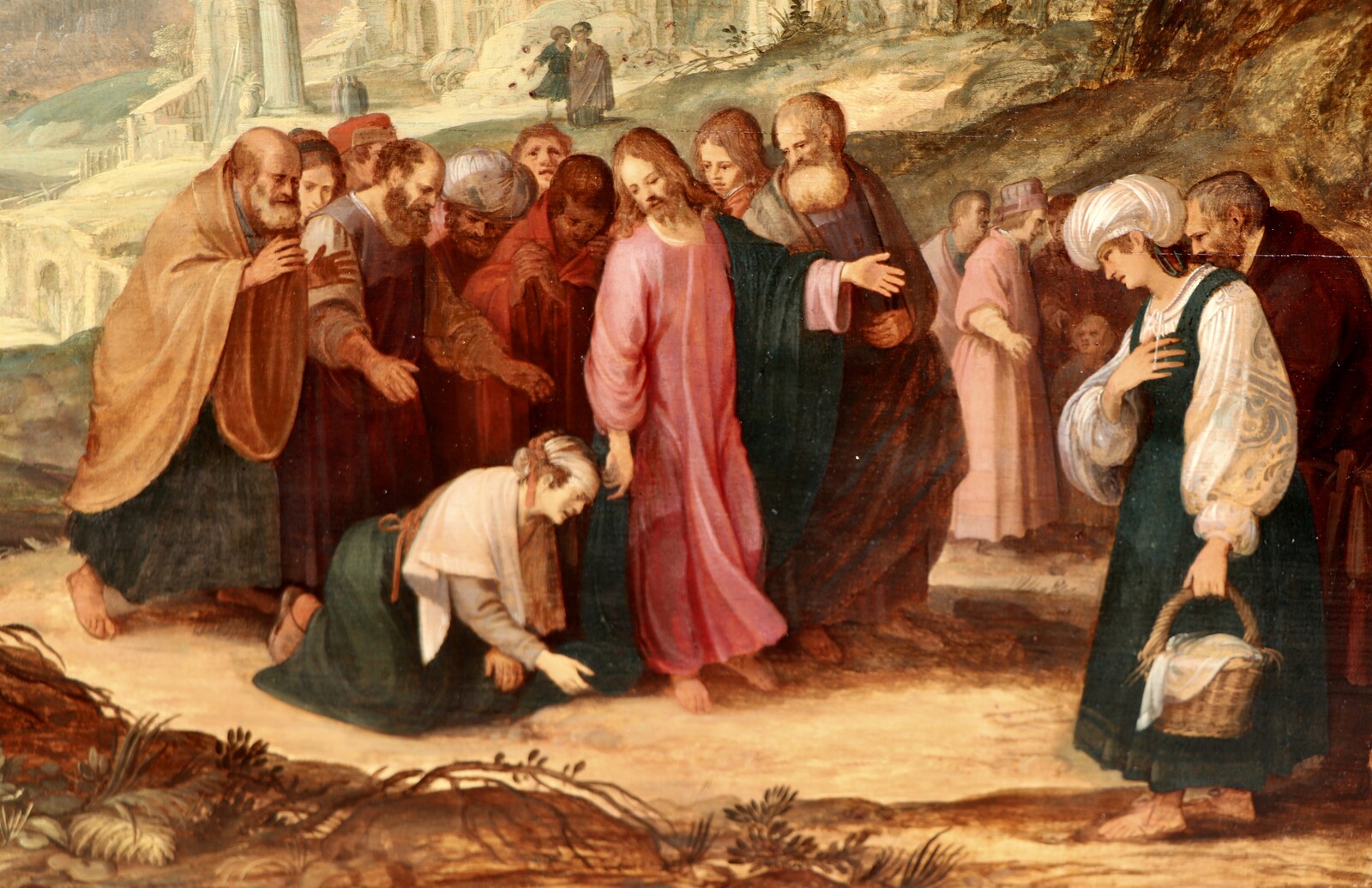
Christ healing a woman with an issue of blood
Oil on panel : 57,4 X 75,8 cm
Unsigned
Frame 72,9 X 92,1 cm
Our painting is recorded at the RKD, The Hague under the number 122915 as by Jan Symonsz. Pynas
Absolute transparency: our cost price = 2.895 €
= acquisition price 2.623 € + shipment 72 + restoration 200 €
Our export price 4.883 €
In short
Jan Pynas is one of the so-called Pre-Rembrandt History Painters: early 17th century Dutch painters of Biblical and mythological subjects who had an important influence on Rembrandt in his early years.
Our painting represents a woman who had suffered from a hemorrhage for twelve years. Despite the social stigma of being considered unclean and despite the fear for the crowds surrounding Jesus she reached out to Him, touching his cloak, and she was immediately healed.
About Jan Pynas
Dutch painter
Alkmaar 1581/82 – 1631 Amsterdam
Painter of biblical subjects set in a landscape.
Elder brother and Master of the painter Jacob Pynas (Amsterdam or Haarlem 1592/93 – after 1650 Delft?). He was also the Master of Rombout van Troyen and probably of Bartholomeus Breenbergh.
Their father, Symon Brouwer, was born in Alkmaar, but settled in Amsterdam. He was a dealer in salt who had a signboard at his house on the Nieuwendijk of a pinnace, a vessel used to transport salt (especially from Portugal), hence his surname “Pynas”. It is thought that Symon Brouwer belonged to the Mennonite Church, where baptism is reserved for adults only.
Circa 1605 our painter, Jan Pynas, travelled with Pieter Lastman to Italy, first to Venice and then to Rome, where they stayed for two years. Several sources still mention that Jan’s younger brother, Jacob, made this journey with them, although at their departure he was just 12 or 13 years old.
All three painters, Lastman, Jan and Jacob Pynas were influenced by Jacopo Tintoretto and by Adam Elsheimer, the Pynas brothers, in particular by the Venetian painter Carlo Saraceni, who had himself fallen under the Elsheimer spell a year or two earlier.
Both Pynas brothers were active in Lastman’s Amsterdam workshop in the Saint Anthonisbreestreet. It still remains plausible that Jan and Jacob Pynas travelled to Rome in 1616/17.
The Pynas brothers, Jan Tengnagel (who married in 1611 with their sister Meynsjen), Claes Cornelisz. Moeyaert and Pieter Lastman are considered the most important Dutch history painters, prior to arrival of Rembrandt in 1631 in Amsterdam. They are therefore called the “Pre-Rembrandt” school of history painters. They specialised in subjects from the Old and the New Testament and in mythological subjects. Their post-Mannerist landscapes were strongly influenced by Adam Elsheimer.
After his return from Italy Jan lived in Amsterdam. Typical of Jan is his inclination towards simplicity, the reduction of narrative devices and the depiction of his protagonists in profile.
In June 1630 Jan married the daughter of an Antwerp maker of musical instruments. He passed away a year and a half later. He was buried 31 December 1631 in the Nieuwe Kerk.
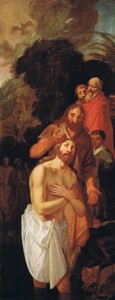
His younger brother, Jacob never married and lived in different Dutch towns; he is documented in Amsterdam in 1608 and in 1641- 43, in The Hague in 1622, in Leiden before1626 and in Delft between 1631 and 1639. He is the only Pre-Rembrandtist painter to have worked in two different compositional styles : pictures with figures so small they seem like mere staffage (standing close to Elsheimer) and later pictures with relatively large figures. Because he influenced the young Rembrandt through the use of a warm, unified brown tone earlier scholars thought Rembrandt had been for a short while his pupil, after he left the workshop of Pieter Lastman. But except for the not always trustful Arnold Houbraken (1680 – 1719) there are no other written sources confirming this. On the other hand, there is the clear influence, stylistic and in the choice of this subject, of Jacob Pynas on Rembrandt’s earliest painting known, The Lapidation of Saint Stephan.
About the subject of our painting
The story of Christ healing a woman with an issue of blood is described three times in the Bible, by Matthew 9:20-22, Mark 5:25-34 and Luke 8:43-48.
For 12 years, a woman had suffered from a hemorrhage. She had spent all her money on doctors, only for her condition to worsen. Under Levitical law, her condition made her ritually unclean, leading to social and religious isolation. She believed touching only the edge of Jesus' cloak would heal her, bypassing the need to directly interact with Him. Upon touching the tassels of his prayer garment (tallit), she felt immediately healed. Though in a crowd, Jesus felt power exit him, and inquired who touched him. The woman, realizing her action, came forward "fearing and trembling" and confessed the truth. Jesus addressed her as "daughter," validating her faith and telling her to go in peace.
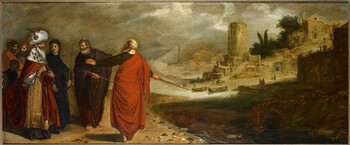
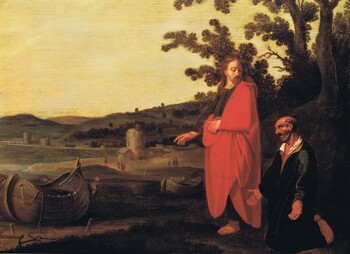
Jan Pynas, who had travelled to Rome, has set the scene amongst the ruins of Rome. He painted this scene three times. The second version is very similar to ours. Sadly of the third version (RKD number 47680) there exists only a blur black and white photograph from the 1930s. In that painting the trees at left and right have a lush foilage, while the ruins in the background are also different.
Why should you buy this painting?
Because this magnificent history painting, set amongst the ruins of Rome, announces the art of Rembrandt.
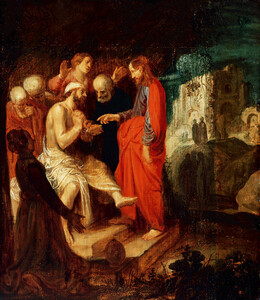
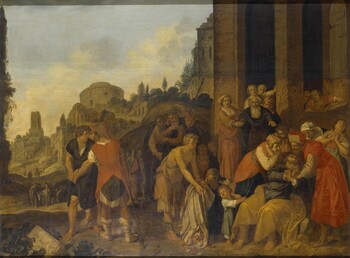
Comparative paintings
Click photos for more details