17th century Flemish and Dutch paintings

Jordaens, Hans III
8.700 €

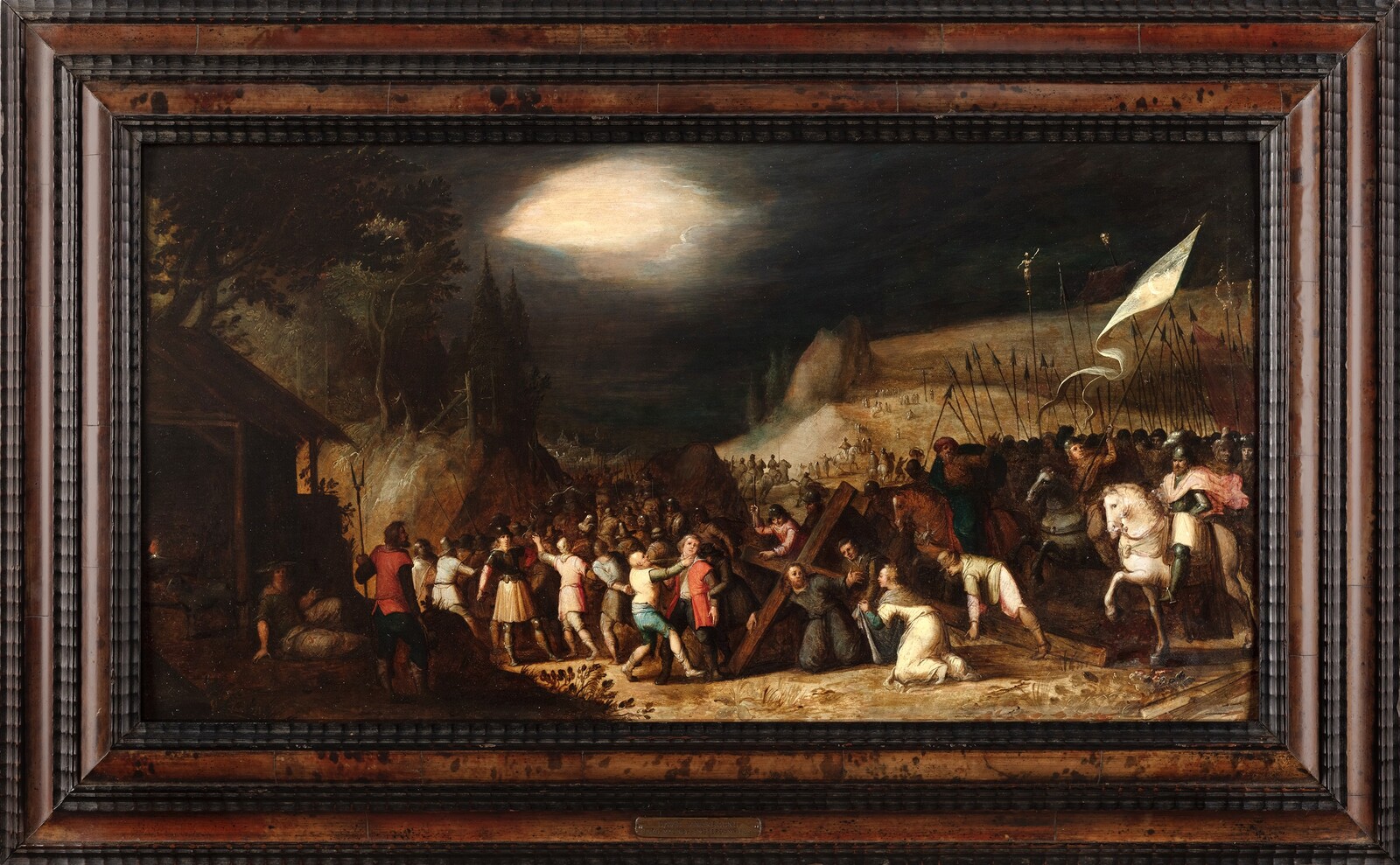
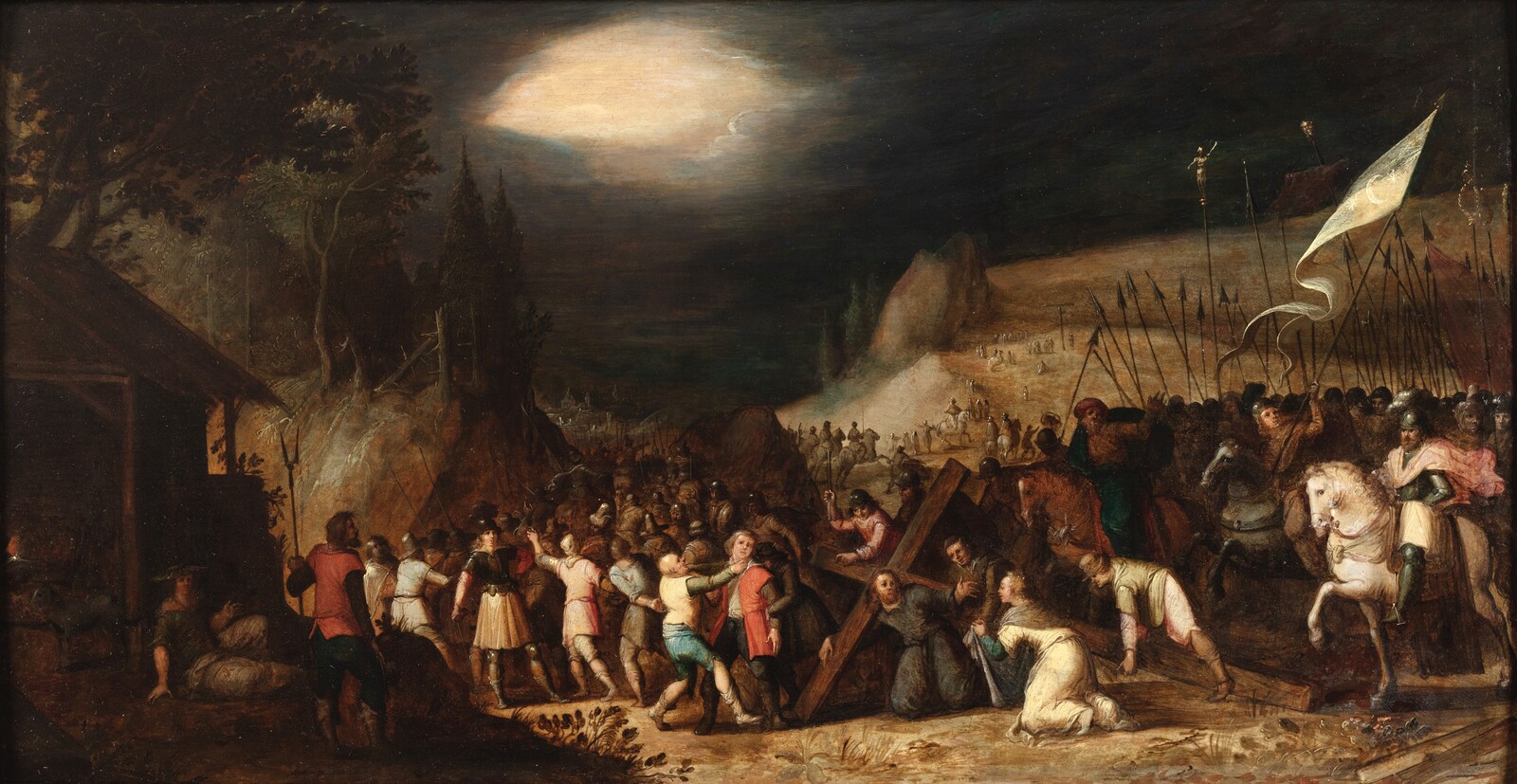
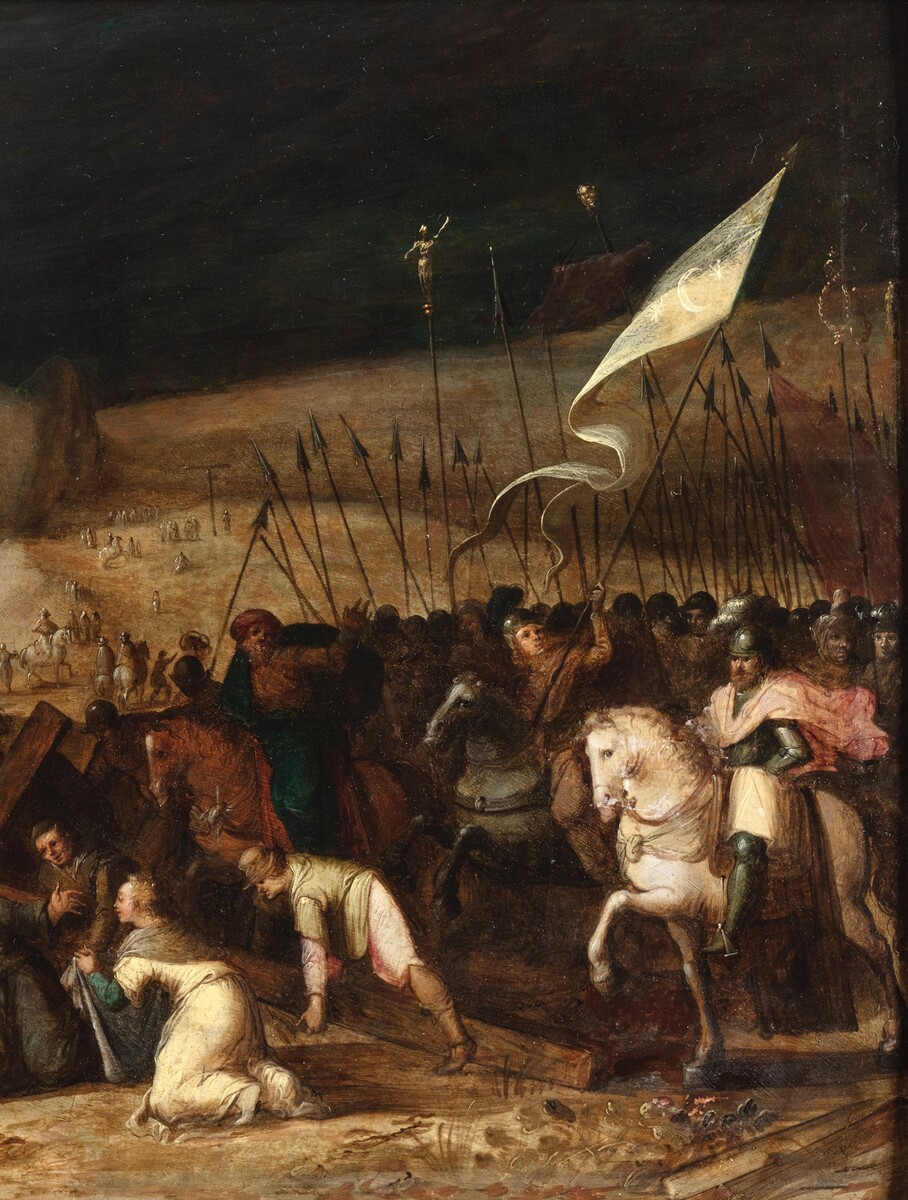
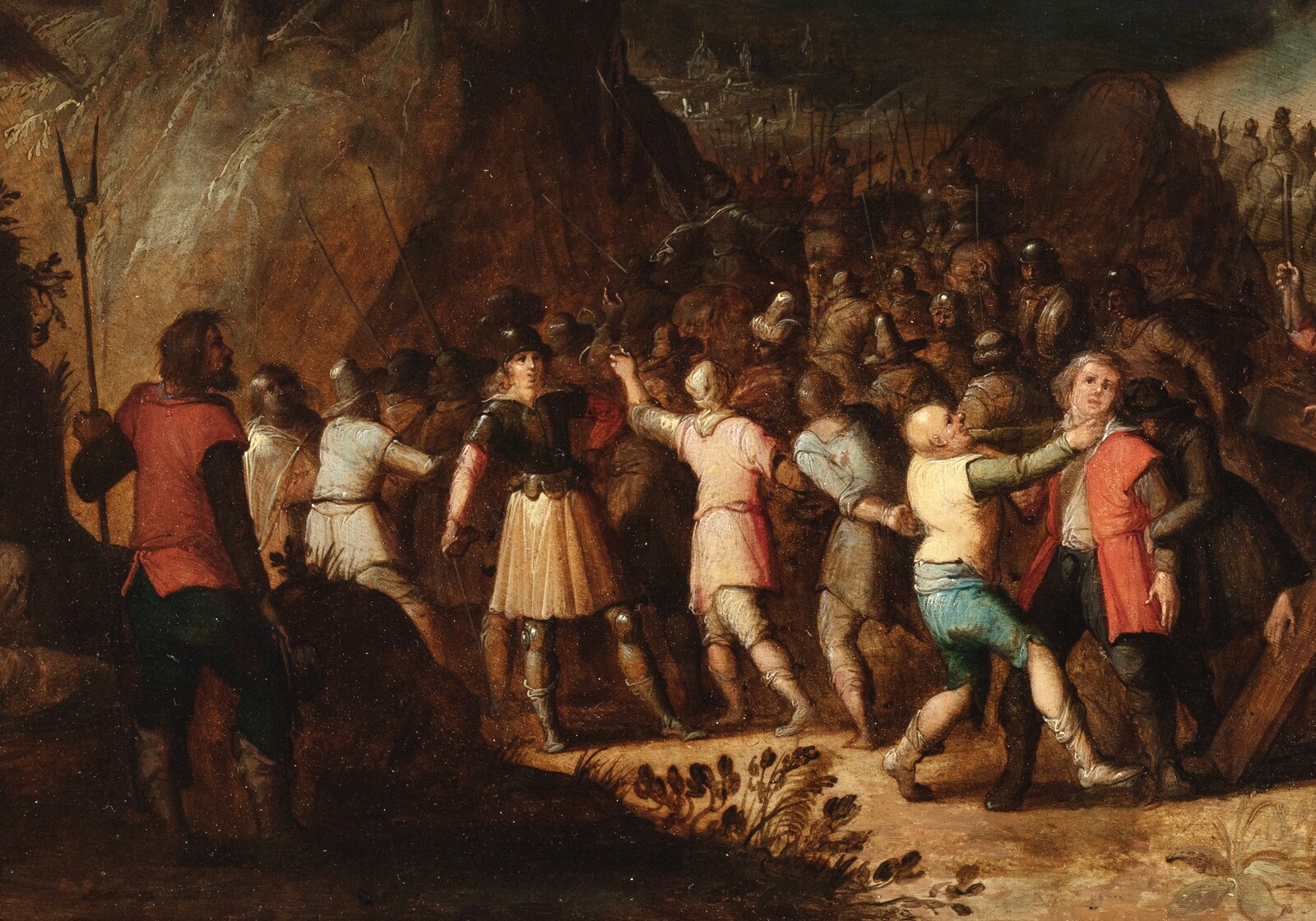
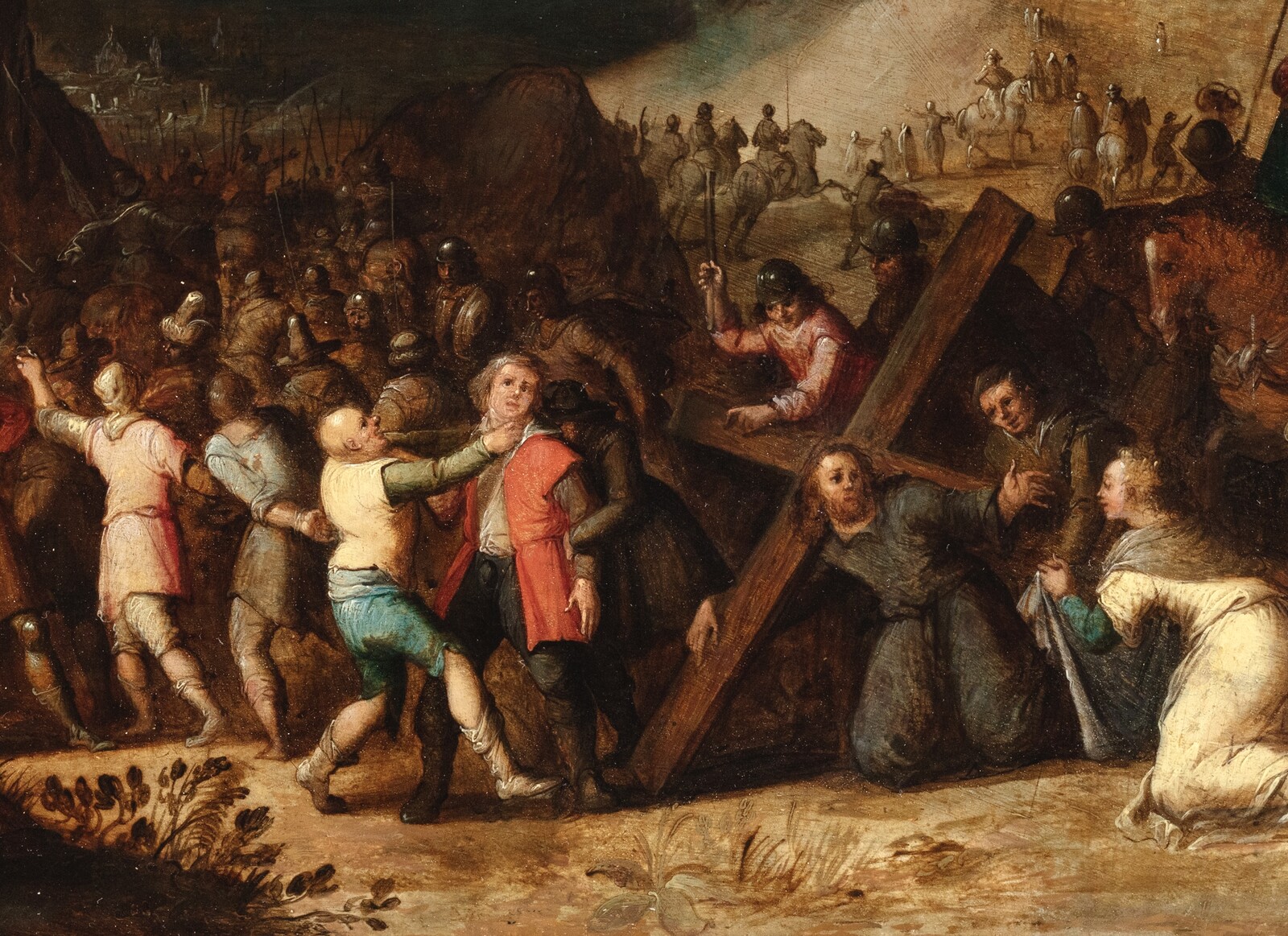
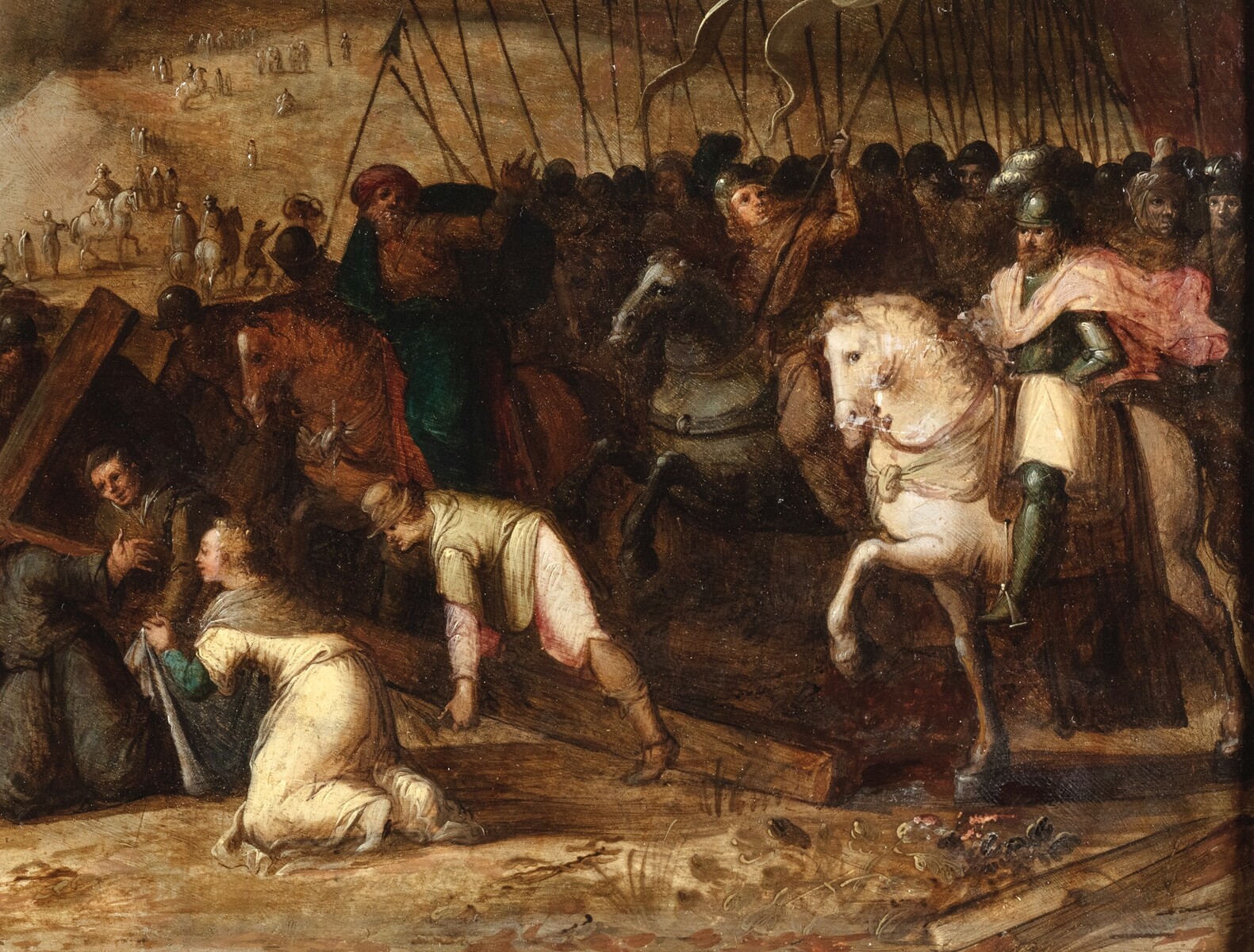
Saint Veronica offering her veil to Christ, who is carrying his cross
Oil on panel : 35,9 X 69,0 cm
Unsigned
Frame : 53,7 X 86,8 cm
 
Certificate by Joost Vander Auwera, 30/10/25

In short
 
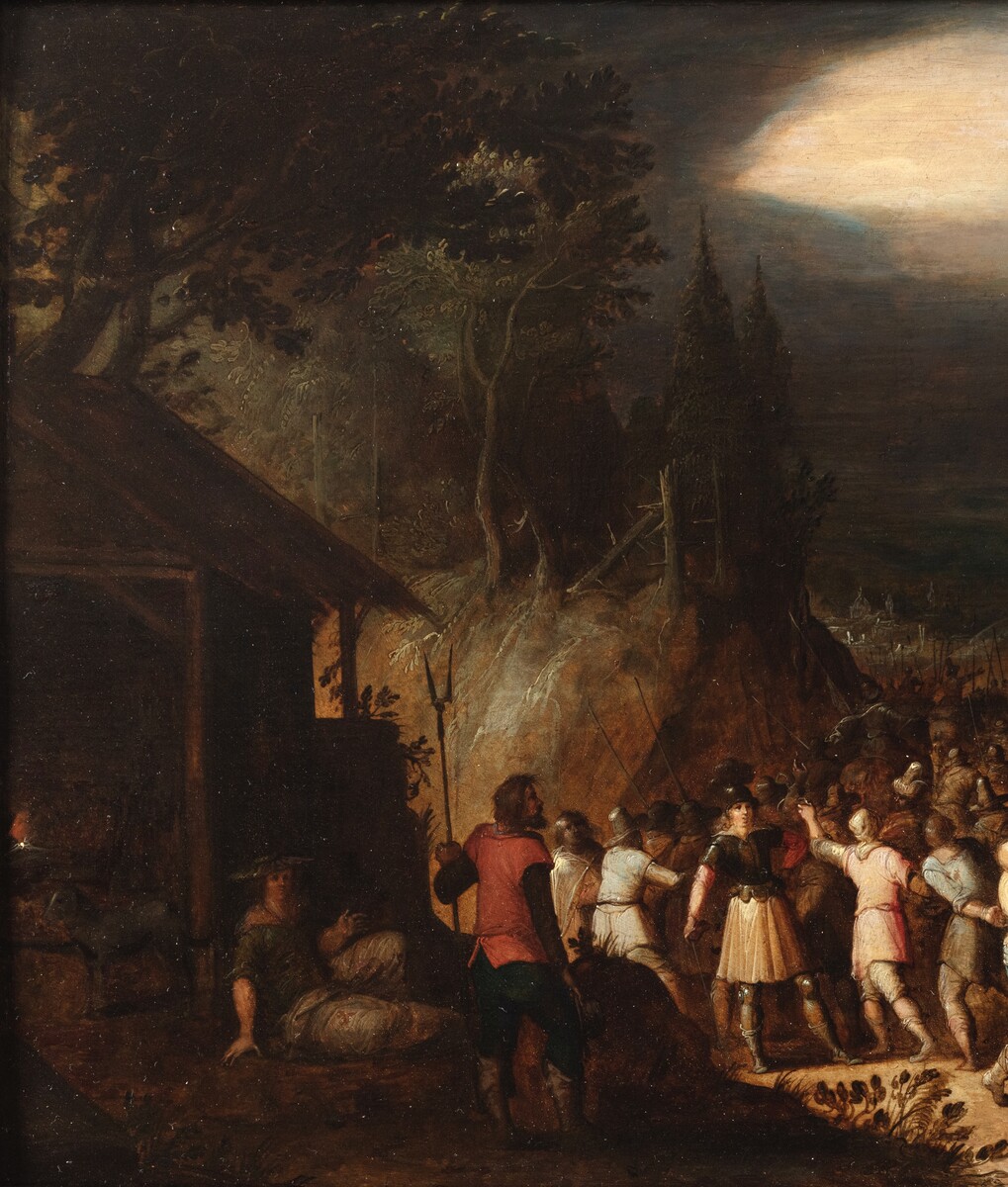
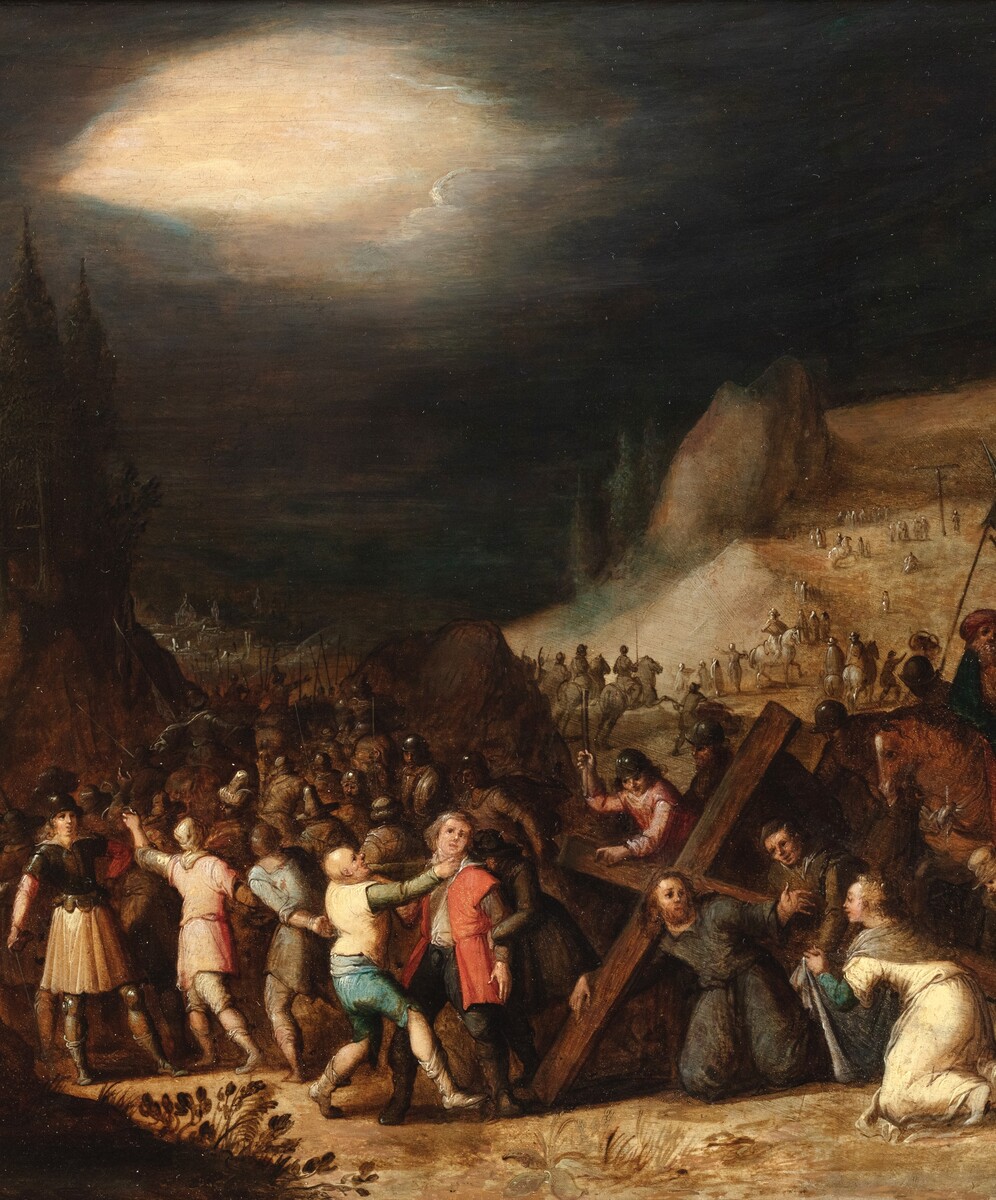
Under a dramatic dark sky and surrounded by a multitude of figures Christ is carrying himself his cross to Mount Golgatha, where he will be executed. Saint Veronica kneels in front of him, offering her veil so that he can wipe his bleeding, sweaty head.
 
About Hans Jordaens III 
 
Flemish painter 
Birthplace unknown (probably Antwerp) circa 1595 - 1643 Antwerp. 
He was nicknamed "Lange Jan", "Tall Jan".
 
Painter of history scenes, of genre scenes and of representations of collector’s galleries.
 
Pupil of his father, Hans Jordaens II (Antwerp 1581 - Antwerp 1635). 
Hans III became a master in the Antwerp Painters’ Guild of Saint Luke around 1619/1620.
 
On 26 November 1617 Hans III married Maria van Dijck, by whom he had five children. 
He appears to have been a fairly successful painter: although his father is said to have been a poor man, Hans III was living in a large house by 1624. 
 
Jordaens worked not only as an individual painter, he was also active as a staffage painter: he painted figures in other specialists’ paintings, for example in the landscapes of Joos de Momper II, in the perspective views (architectural scenes) of Paul Vredeman de Vries and probably also in the landscapes of Alexander Keirincx.
After the sudden death of the landscape painter Abraham Govaerts in September 1626 he was one of the painters responsible for finishing some of the latter’s works.
 
Arnold Houbraken, himself a painter, published between 1718 and 1721 3 volumes of his reference work describing the lives of a large number of the painters of the previous centuries, called "De Grote Schouburgh der Nederlandsche Konstschilders en Schilderessen". In his entry upon “Hans Jordaans” he confuses three painters, Hans I, III and IV.
 
About the subject of our painting
 
The last days of Christ, the so-called Passion, started with his triumphal entry into Jerusalem. But soon after Jesus was arrested in Jerusalem by the Temple Guards of its local council, the Sanhedrin. This Jewish assembly condemned him to death for his claims that he was the son of god. They took Jesus to Pontius Pilate, the Roman prefect of the province of Judaea, where they accused him of tax resistance and of calling himself a king, crimes for which he was, according to Roman law this time, also to be sentenced to death. 
Because Pilate was reluctant to have Jesus crucified he let the Jewish crowd choose, because of Passover, between Christ and Barabbas, who was to be granted life. The people chose for Barabbas. 
Jesus was first scourged by the Roman soldiers, then given three fake royal symbols and mocked by them before being shown again to the crowd.
Like other people condemned to be crucified Christ had to carry, to drag his own cross to the place of his execution, Golgotha.
 
The gospels of Matthew, Mark and Luke mention how a man, Simon of Cyrene, was compelled by the Romans to help Christ to bear his cross.
 
The woman kneeling in front of Christ is Saint Veronica. A traditional story, not found in the Gospels, describes how this pious woman of Jerusalem, filled with compassion for this suffering, gave him her veil to wipe his sweating face. When Jesus handed it back to her an image of his features was miraculously transferred to the fabric.
Many Catholic churches claim to have this Sudarium or early or later copies made after it. The most famous relic is kept at St Peters at the Vatican in Rome. Veronica is said to have travelled to Rome to present her “Holy Image” to the Roman Emperor Tiberius, healing him from a severe illness.
Many critics have questioned the name "Veronica," which seems to be a lexical deformation of the Greek and Latin words "vera icona" ("real icon" or "authentic image"), used in the Middle Ages about miraculous images of Christ.
 
Why should you buy this painting?
 
Because it is typical of Jordaens. These crowded compositions representing Christ on the road to Calvary are quintessential of Flemish painting and go as far back as Pieter Brueghel the Elder and the Younger.
Comparative paintings
Click photos for more details