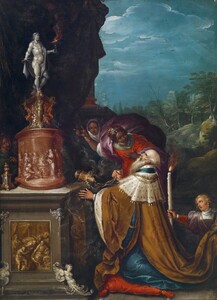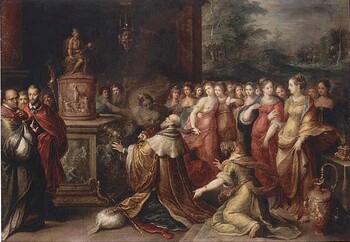
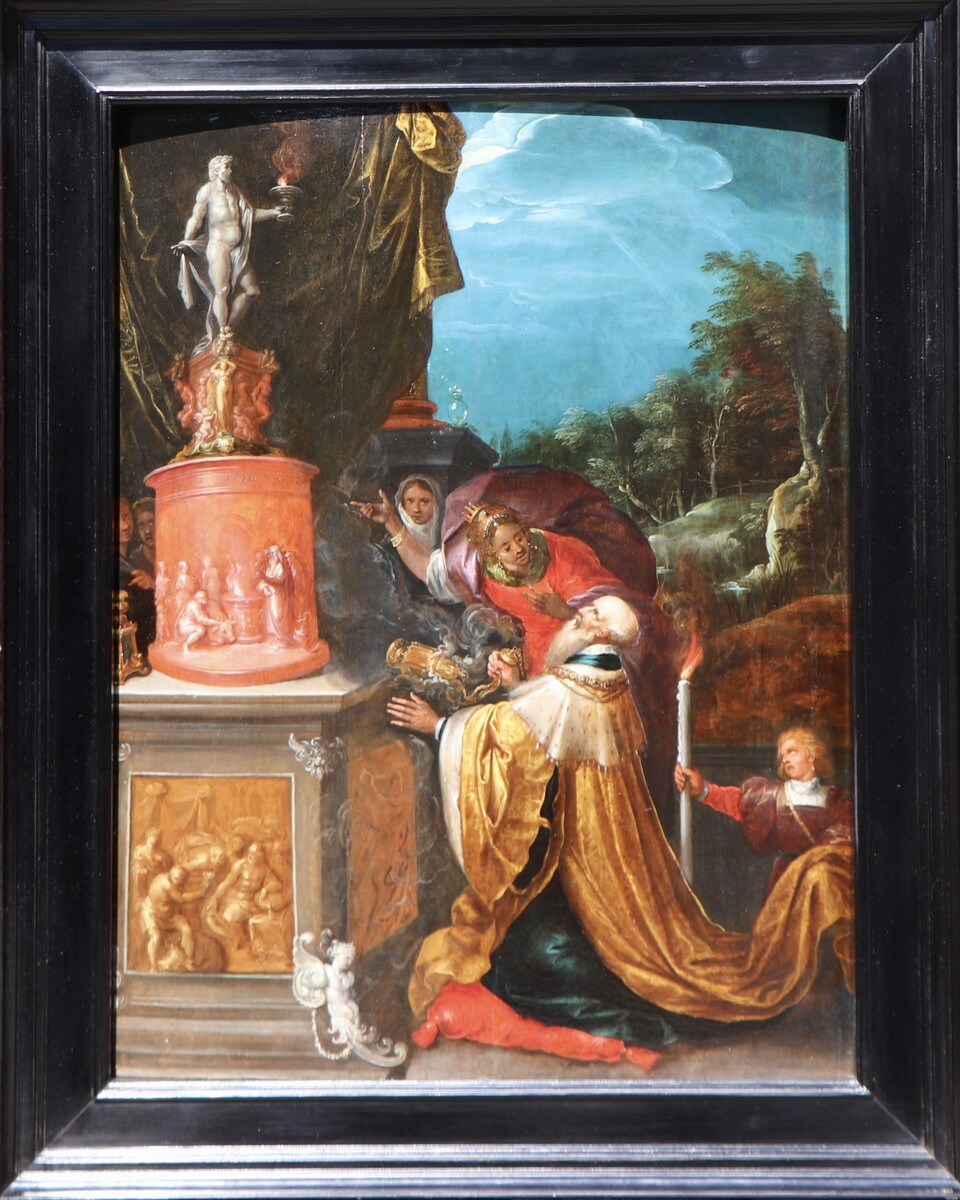
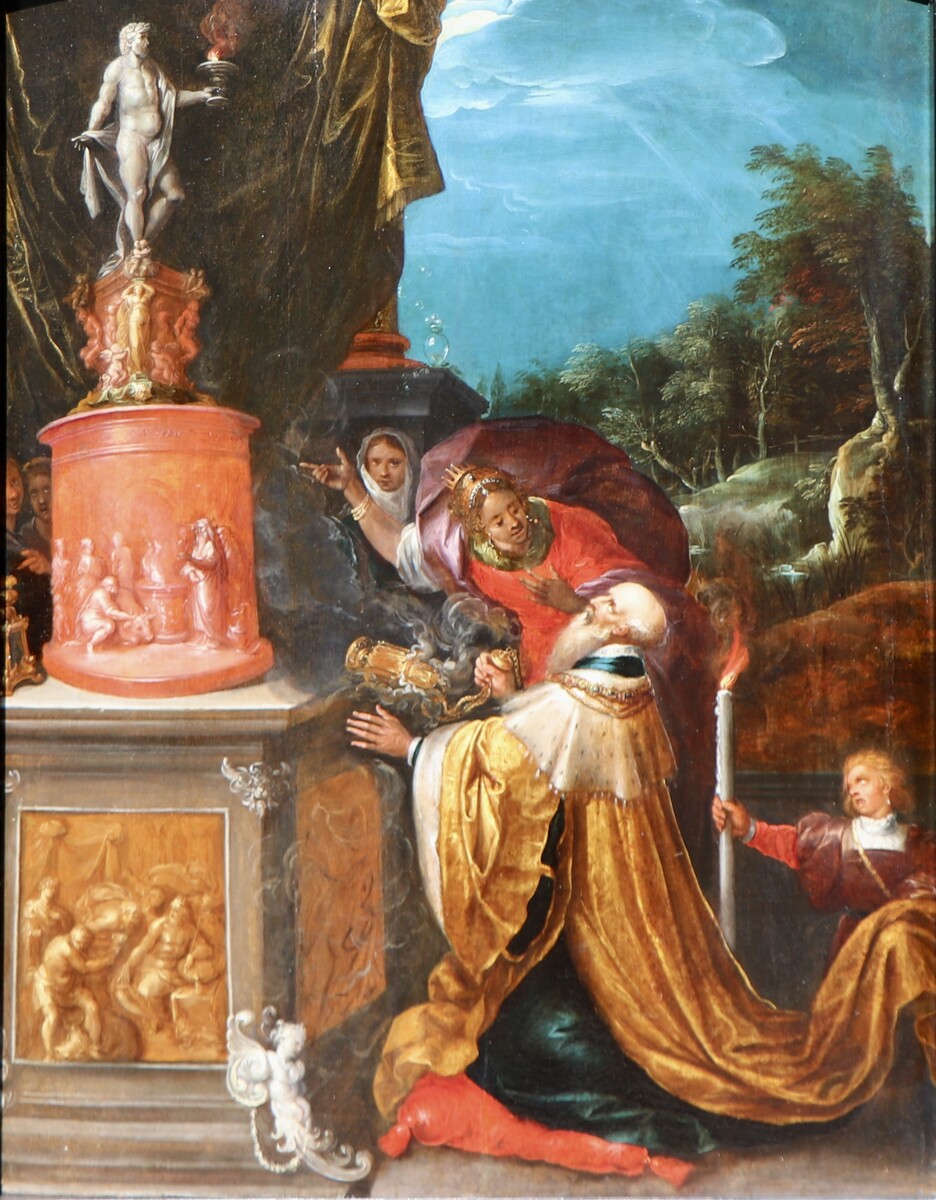
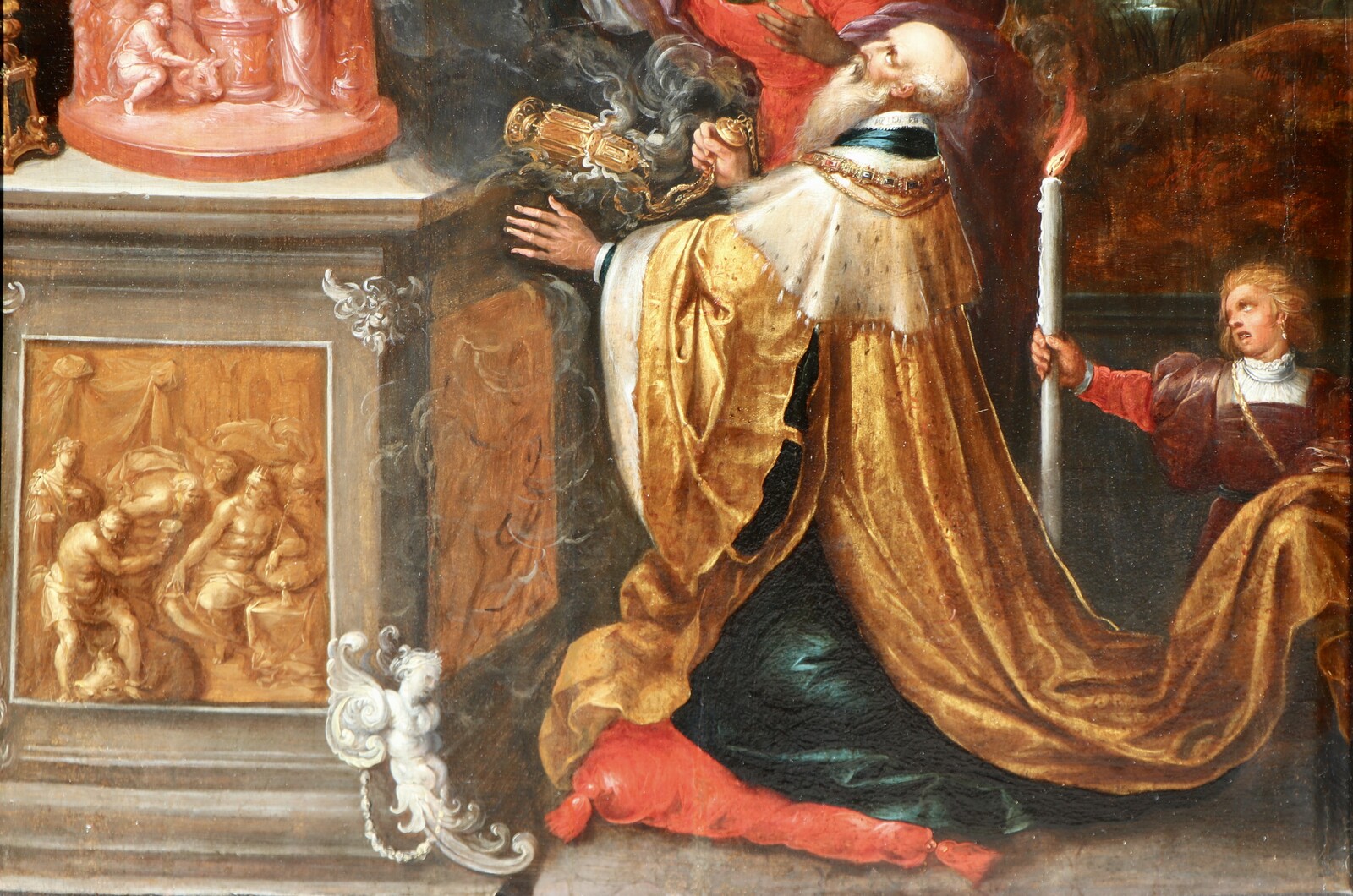
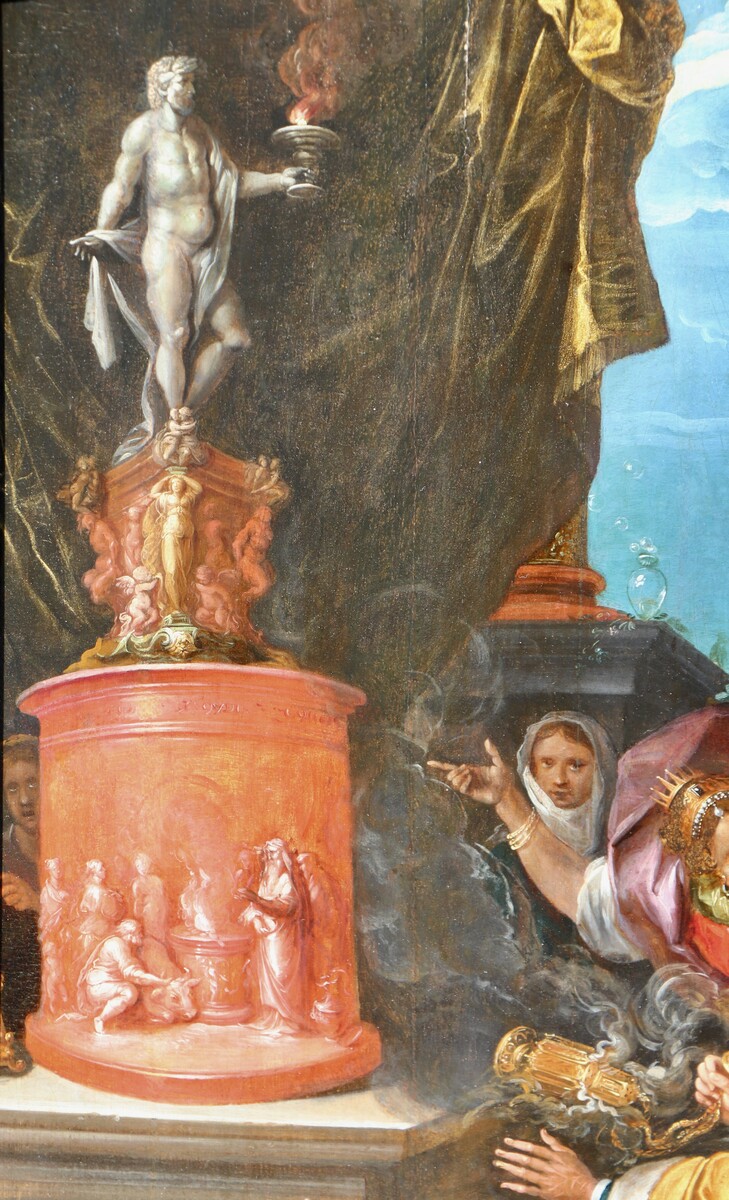
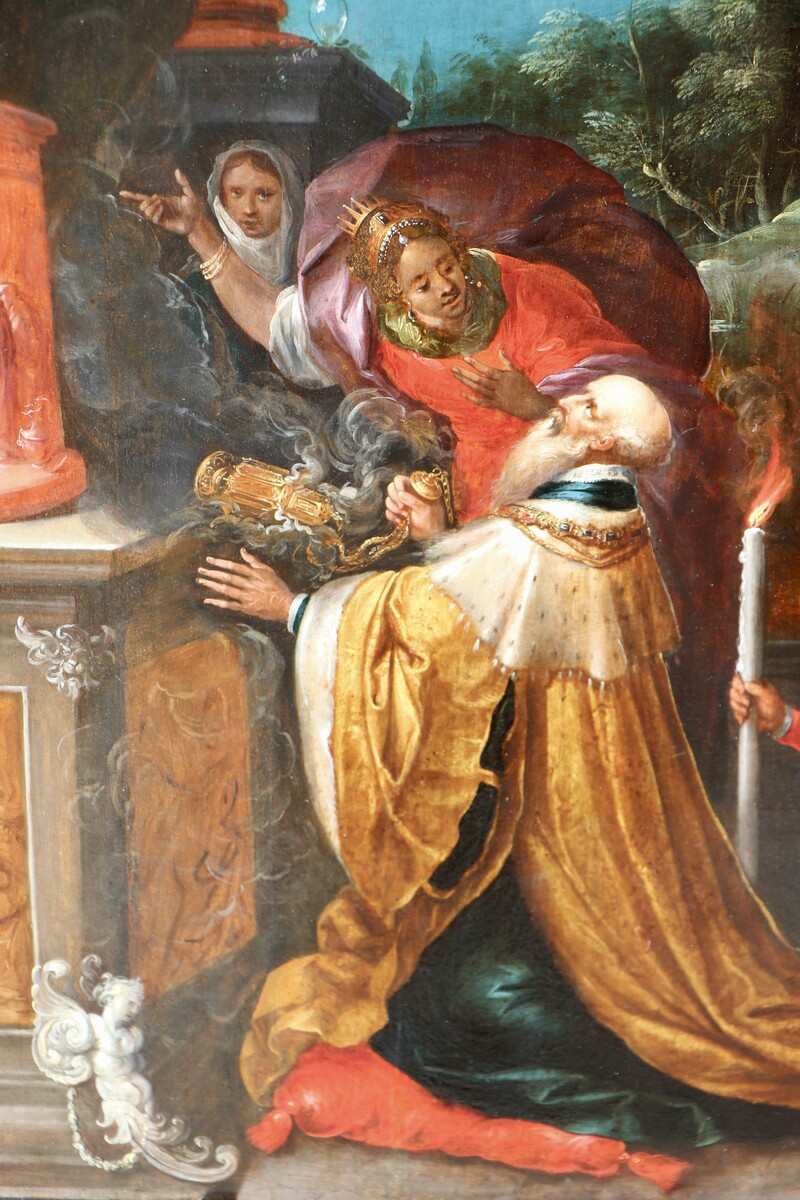
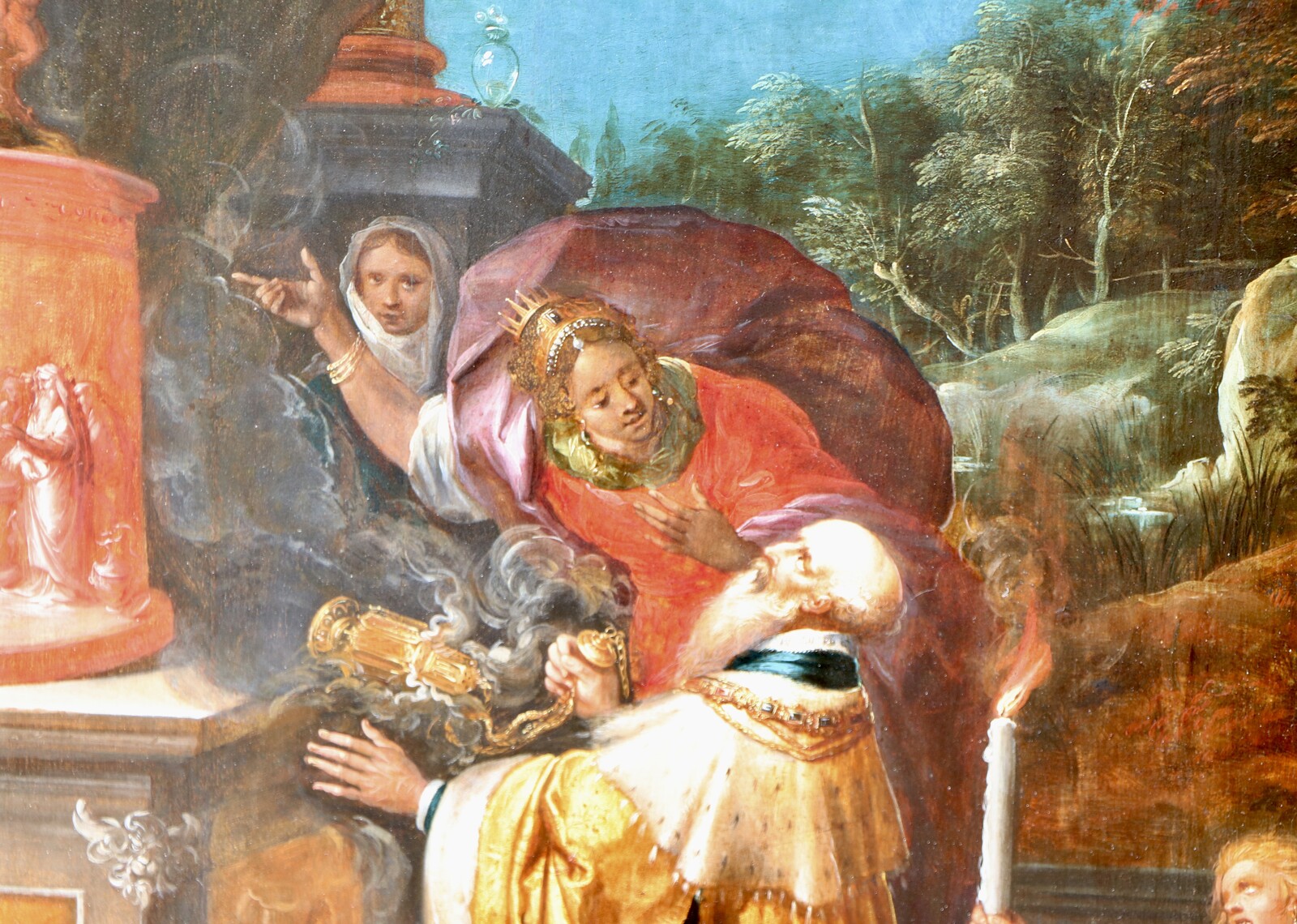
The idolatry of King Solomon
Oil on panel : 64,6 X 48,8 cm
Unsigned
Frame : 77,4 X 62,2 cm
Provenance :
- Unsold at Van Ham Cologne, 16/11/07
Estimate : 38.000 €
- Unsold at Dorotheum Vienna, 11/12/08
Estimate 30.000 – 35.000 €
- Sold at Lempertz Cologne, 17/11/18
à 8.680 €
Recorded at the RKD, The Hague under the number 191395 as by Frans Francken II
The painting is currently being treated to flatten the panel. Therefore the price of this painting will only be available after restoration.
In short
Frans Francken the Younger was an important, productive Antwerp painter of bliblical scenes.
In Ancient Israel King Solomon, renowned for his wisdom, fell at an advanced age into pagan worship under the influence of his numerous foreign wives.
The misogynistic lesson of this popular subject of Frans Francken II: a man should not drop God’s principles for a woman. During the 17th century women were still seen as sources of temptation and disorder.
About Frans Francken II
Flemish painter
Antwerp 1581 – 1642 Antwerp
Important history painter of biblical, mythological and allegorical subjects.
He also painted altar scenes and innovative subjects such as collector’s cabinet interiors or witches’ scenes.
Son and most likely pupil of Frans Francken I (1542 – 1616). He probably also studied under his uncle, Hieronymus Francken I (circa 1540 – 1610), in Paris.
Most important member of the Francken-family, which counted many painters divided over three generations.
In 1605 he became a free master in the Antwerp Guild of Saint Luke. In 1615 he was elected its second dean.
He was a very productive painter, who ran a large workshop, including his brothers and his sons. A lot of his workshop’s production (copies and routine replicas) was commissioned by dealers who exported them to Spain.
He often collaborated with other well-known painters, adding figures in their landscapes or interior scenes.
Frans II started painting in a typical, a bit old-fashioned Mannerist style, strongly influenced by his uncle Hieronymus I, and gradually evolved under the influence of Rubens into a Baroque painter.
About the popularity of this subject
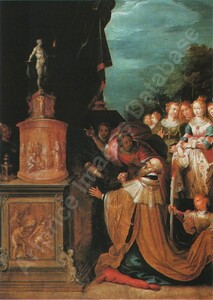
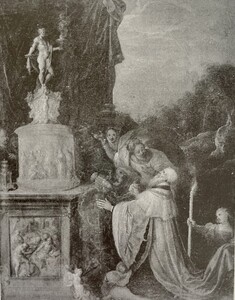
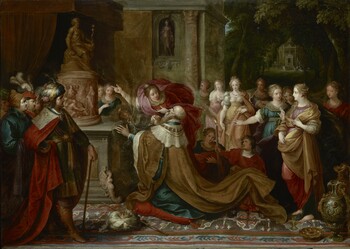
Frans Francken the Younger often painted this particular subject, The idolatry of King Solomon, in different compositions, horizontally or vertically, with a multitude of figures or just a few, on oak panels and on copper plates.
But why was there an important demand for this subject? King Solomon was, according to the Ancient Testament, a very wise king, a favourite of God. Just as other successful rulers from Antiquity he often married for diplomatic reasons. He had wives (700) and concubines (300), most of them were foreign princesses, who brought to Israel a multitude of foreign gods to be adorned. Solomon had places of worship, altars, erected for these gods, to please his wives. Solomon’s God was not happy with this, warned the king and finally decided to break up his kingdom after his death.
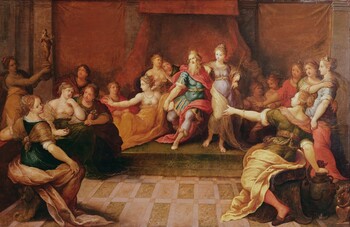
Strangely enough, I know only of one painting by our painter representing King Solomon and (some of) his women. Solomon’s polygamy was clearly not a big issue for Francken nor for his potential clients.
But why did our Antwerp, Catholic painter regularly paint King Solomon being introduced by a princess to worship a foreign, therefore false god? The king’s power was not an issue. Only in Francken’s most exuberant and baroque compositions are his crown and sceptre lying beside him: in the painting from the Getty Museum and in the one sold at Christie’s London, 27/10/04.
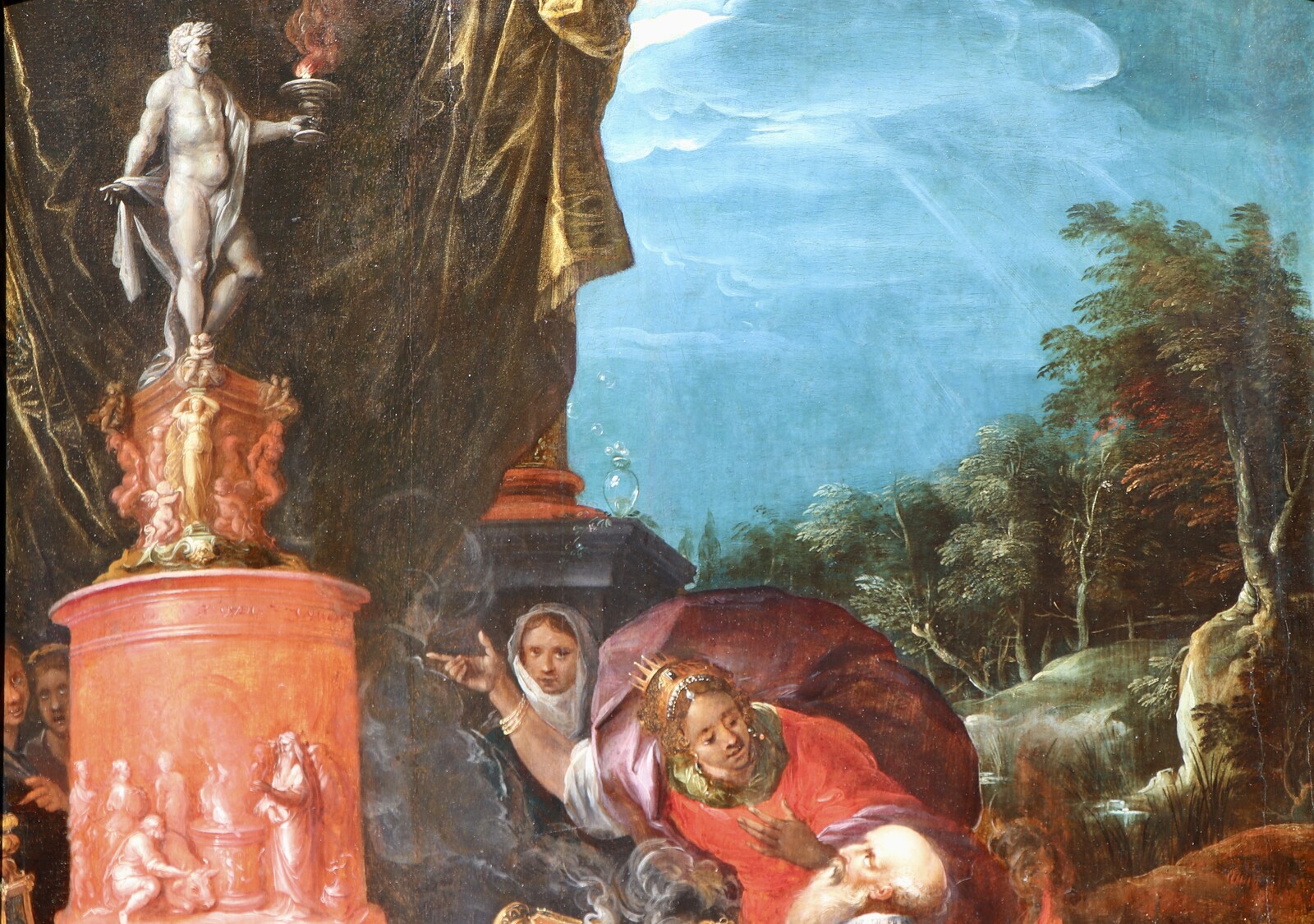
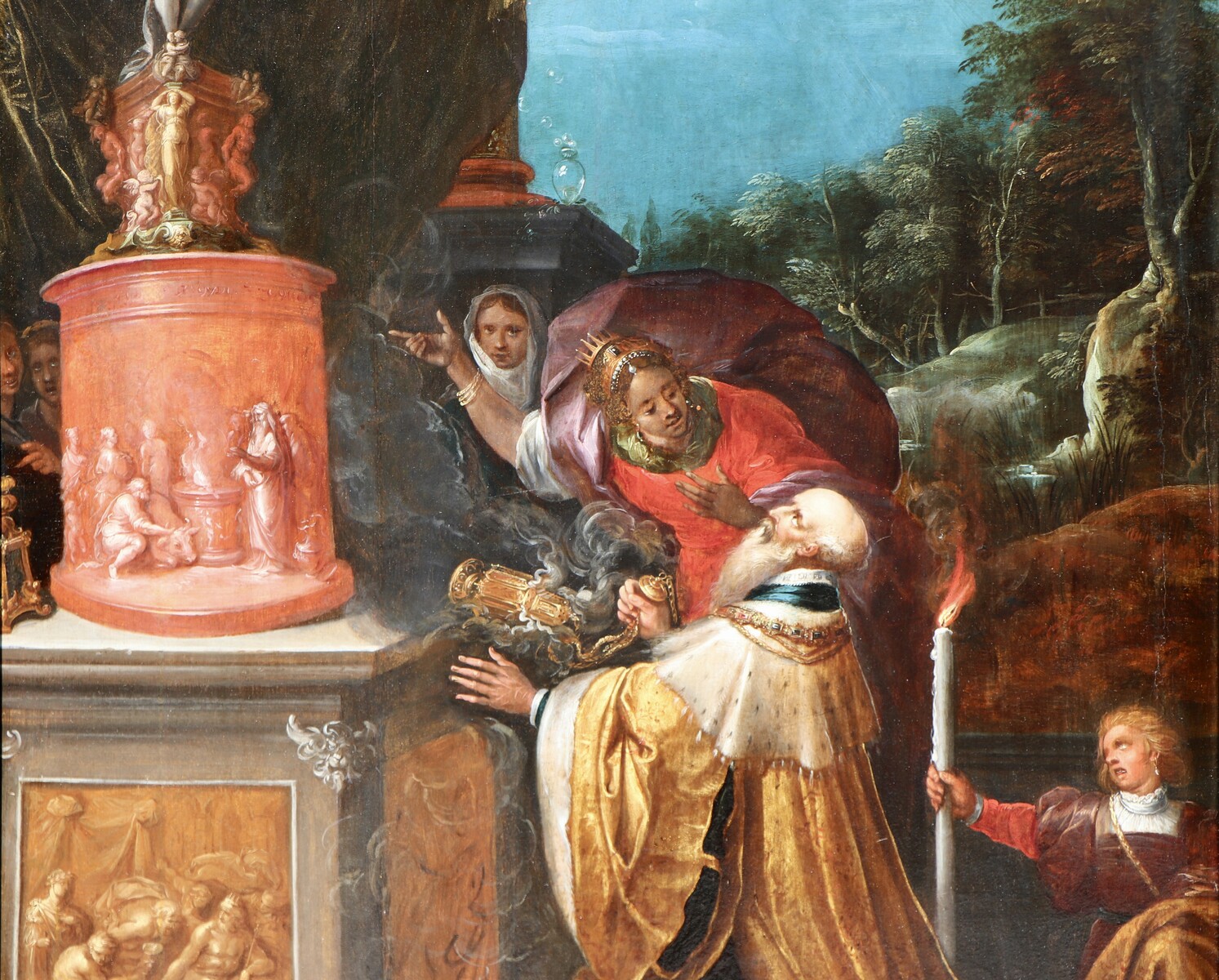
The reason for the popularity of Francken’s Idolatry of King Solomon must be that it served as a moral warning. Wisdom, power, and wealth do not guarantee spiritual fidelity. In fact, even the smartest man can make a wrong choice at the instigation of a woman or in the king’s case, of many women. Welcome to the 17th century. What is even more shocking is the skin colour of the wife introducing the king to this foreign deity: in all Francken’s Idolatry scenes, except for the one from the Getty Museum, both the foreign wife and her servant have a dark skin. One of the principal wives of the king was indeed an Egyptian princess, daughter of Pharaoh. During the 17th century the dark-skinned Gypsies or Romani were called 'Egyptians' or 'pagans' in Flanders and Holland. The designation 'Egyptian' (hence 'gypsy') refers to the story that they had fled from Egypt after the Muslim conquest of the country during the 7th century AD. Just as the Jews they were being heavily stigmatized and criminalized.
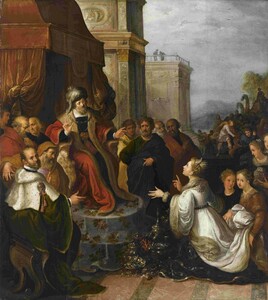
In this particular composition Francken has dropped all unnecessary, superfluous figures and details. All our attention must go to the princess convincing king Solomon to pray in front of a magnificent altar. Both relief scenes under the statue of a naked male god (Jupiter?) represent so-called taurobolia, offerings of a bull. Could the small boy at right, who is holding a burning candle, represent the true faith Solomon is about to lose?
Why should you buy this painting?
Because there is a very interesting, but troubling story being told in this magnificent composition: that makes it a true conversation piece.
Comparative paintings
Click photos for more details