18.000 €
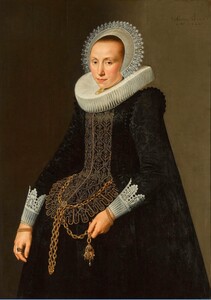
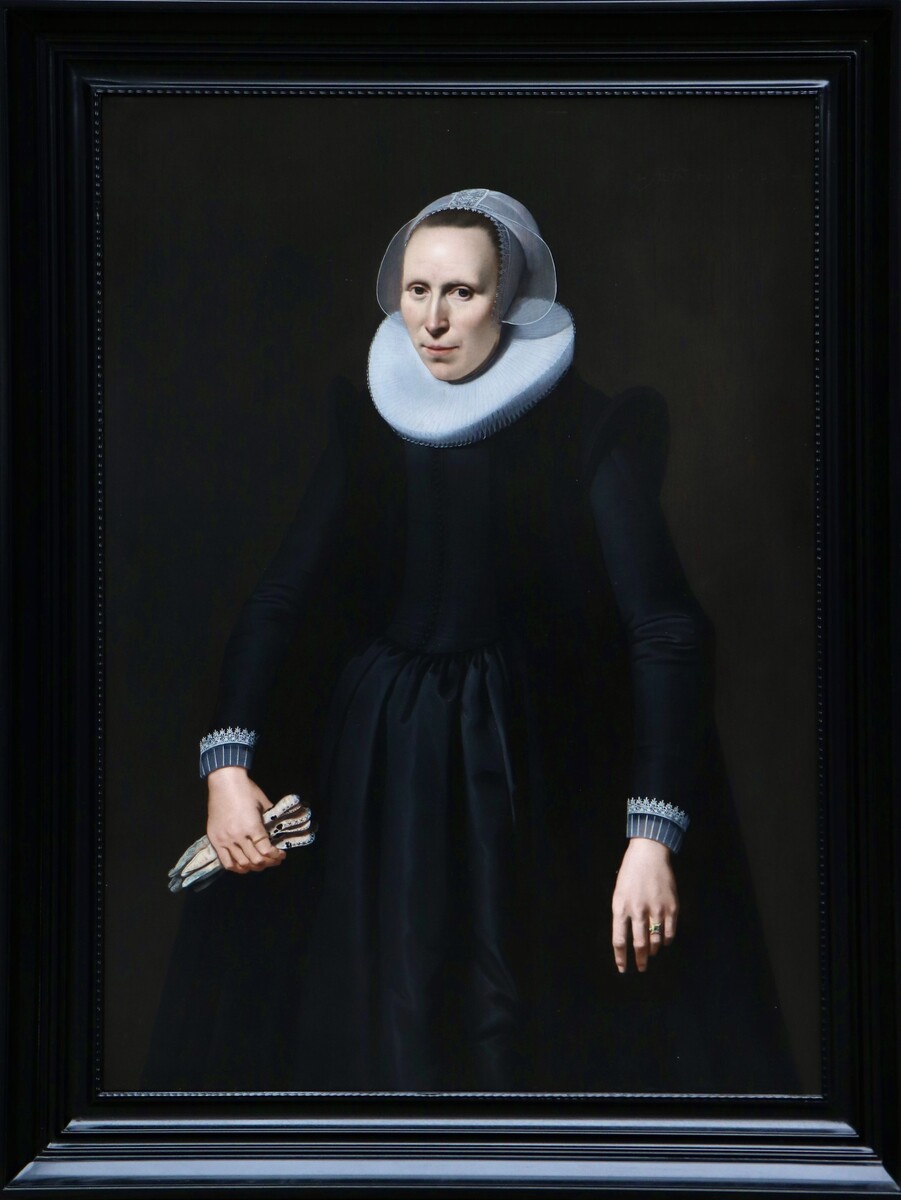
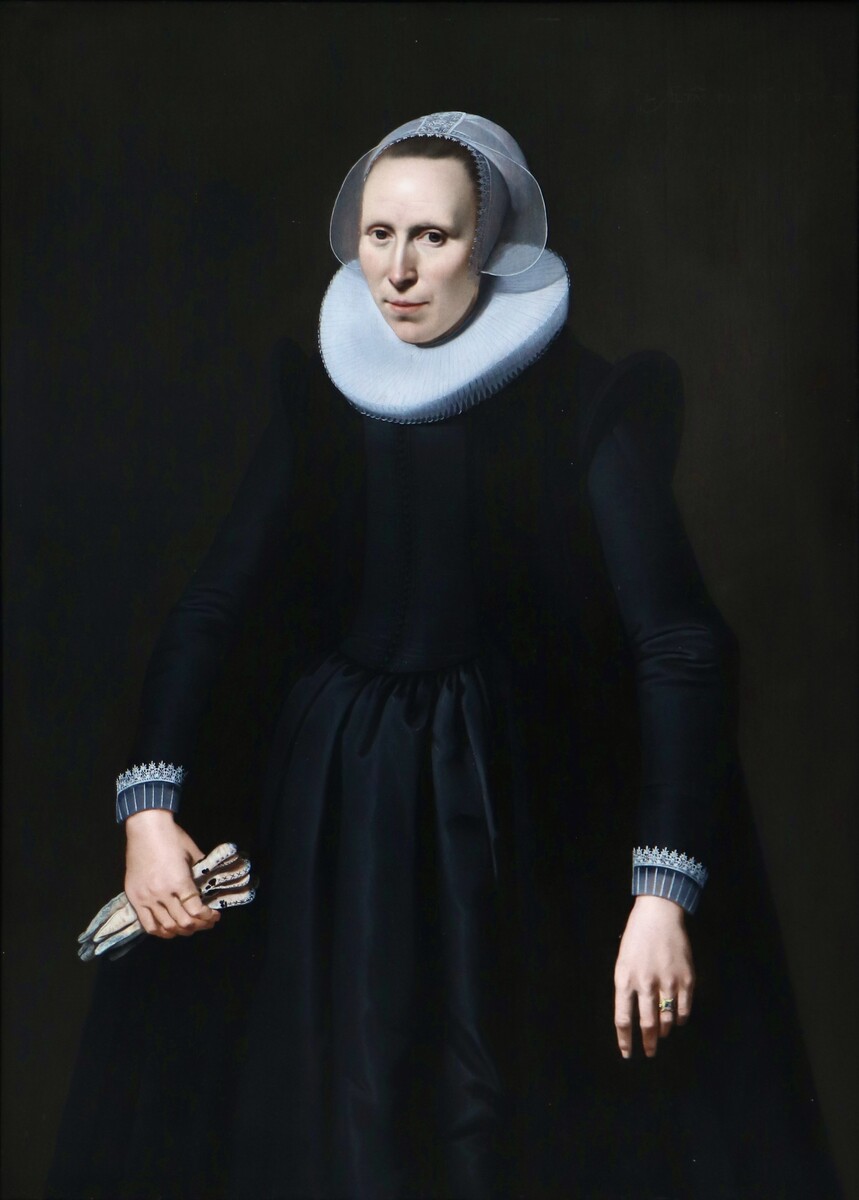
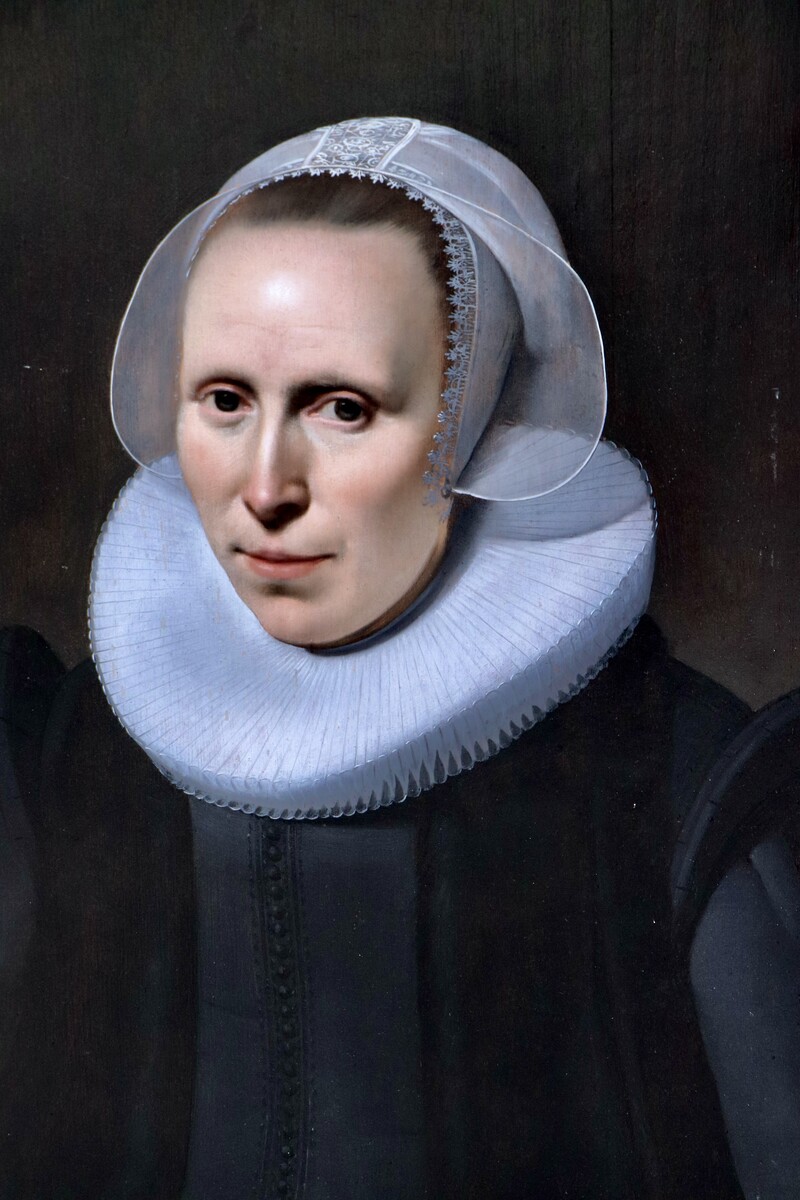
Portrait of a lady
Oil on panel : 122,5 X 89,9 cm
Inscribed and dated upper right “AETA 40 AN° 1631”
(aged 40, painted in 1631)
Frame : 144,3 X 110,0 cm
Provenance : unsold at Rieunier-Bailly-Pommery Paris, 12/06/02
Estimate : 35.000/45.000 € (+ buyer’s premium)
Our painting is recorded at the RKD, The Hague, Nr. 163387
In short
Our marriage portrait of a lady is attributed to one of Amsterdam’s leading painters for the local upper class, Nicolas Eliasz. Pickenoy.
About Nicolaes Eliasz. Pickenoy
Dutch painter
Amsterdam 1588 – 1650 Amsterdam
Portrait painter, he also painted a small number of biblical subjects.
Pupil of Cornelis van der Voort.
Master of Bartholomeus van der Helst and of Pieter Nason.
Both his parents were of Flemish origin. They emigrated to Amsterdam before Nicolaes was born.
Pickenoy married in 1621 a 21 years-old orphan. The couple had ten children.
Pickenoy painted individual portraits, regularly of local or national celebrities. He also painted large militia paintings (“Schuttersstukken”) and group portraits.
His heyday was ca. 1630-1637, a period marked by a high artistic level and numerous commissions from prominent patrons. After 1637 he painted little, save for a number of prestigious,lucrative group portraits.
About our portrait
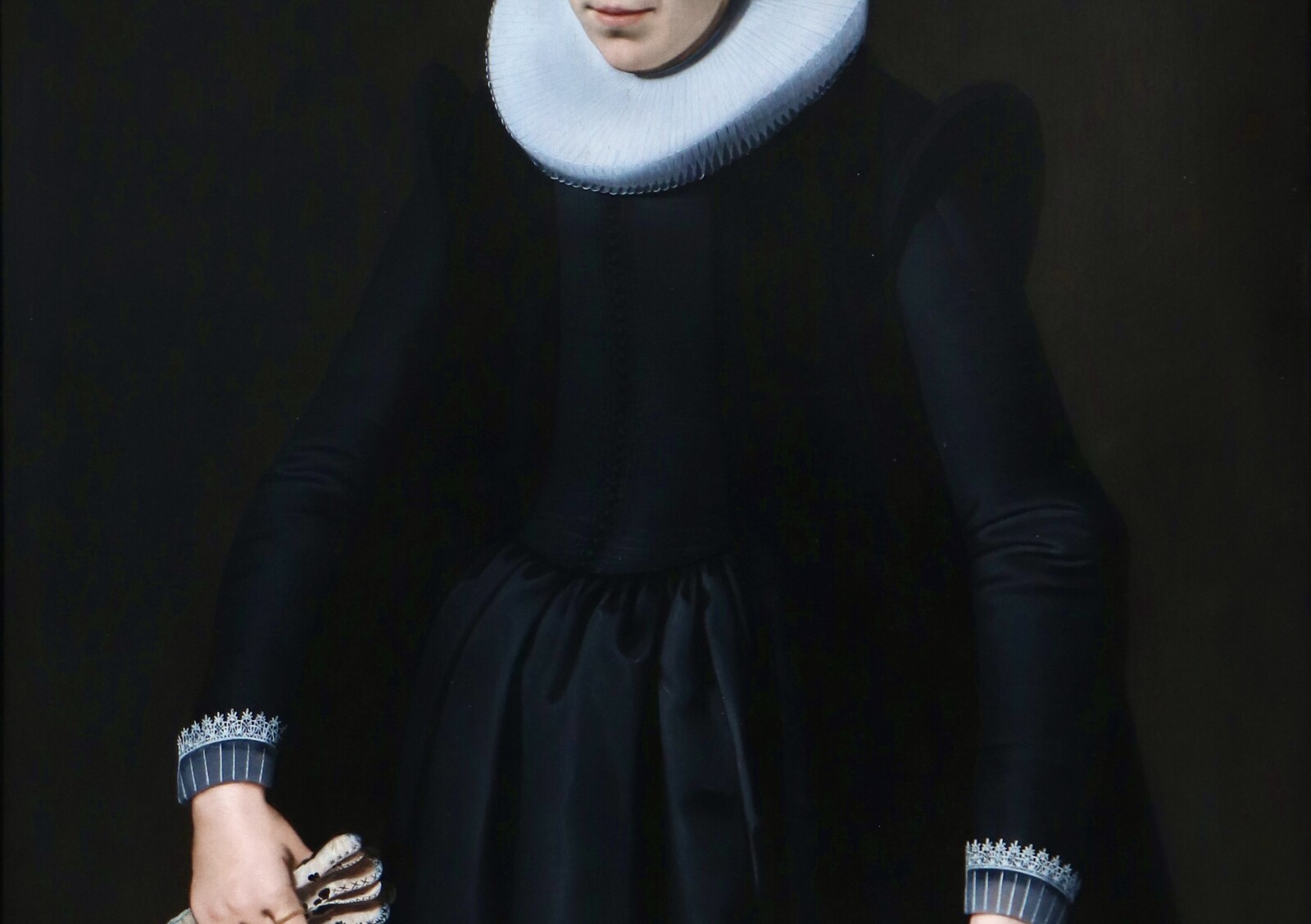
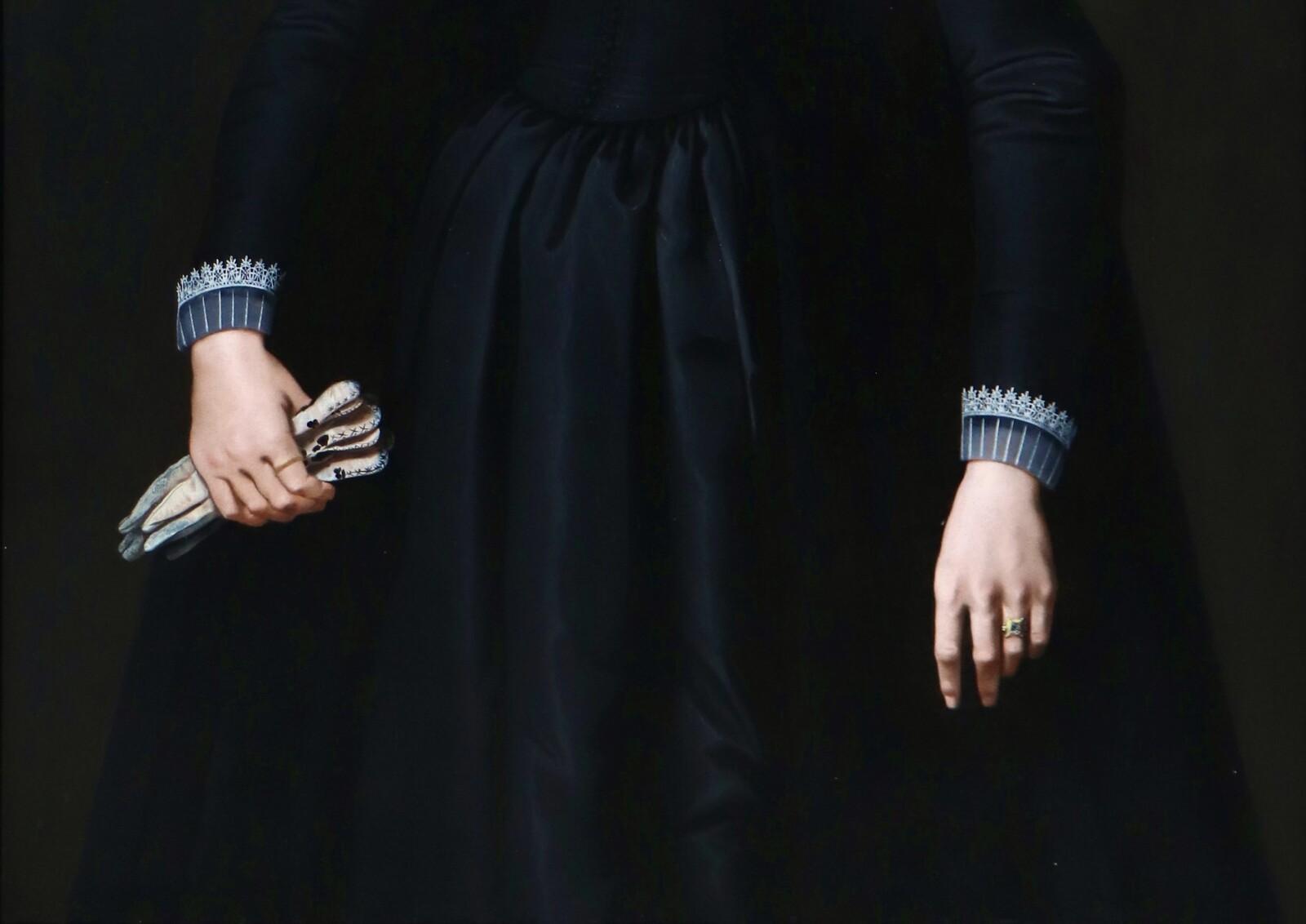
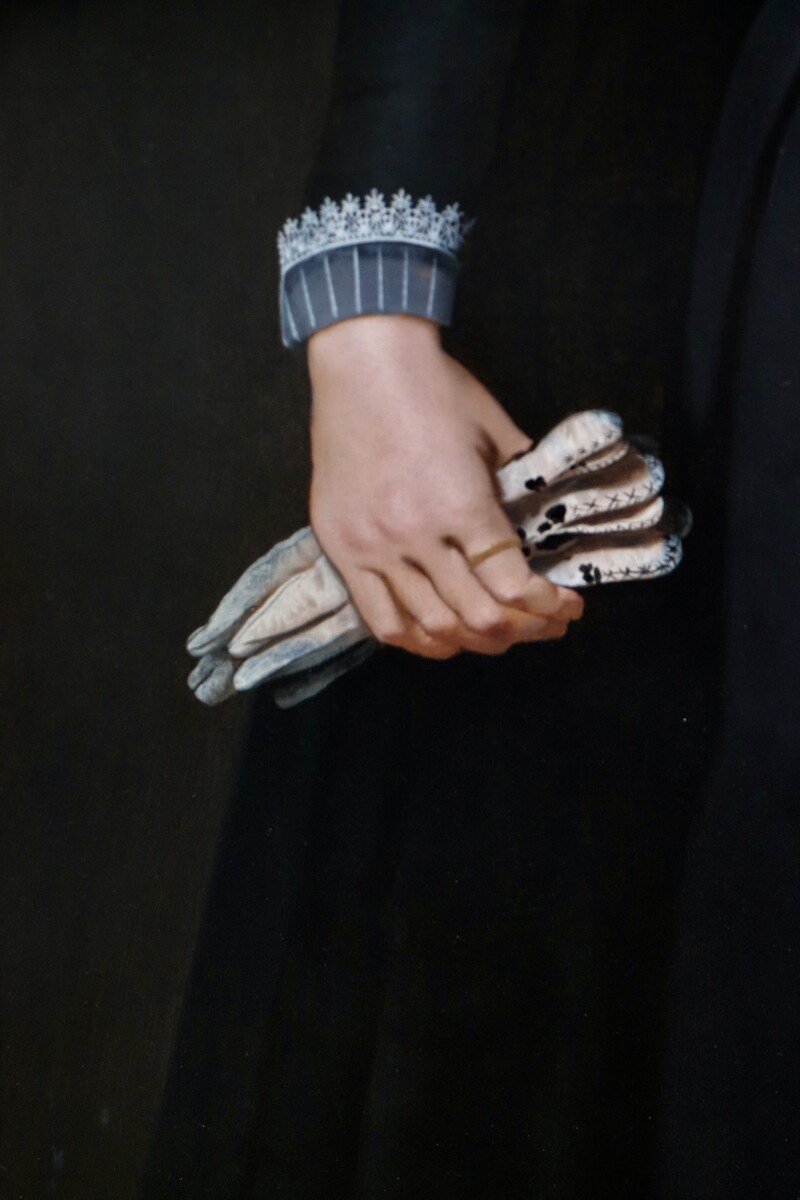
The glove that our lady is holding identifies this portrait as a marriage portrait. Gloves were a traditional wedding gift. At some stage our lady’s portrait got separated from her husband’s.
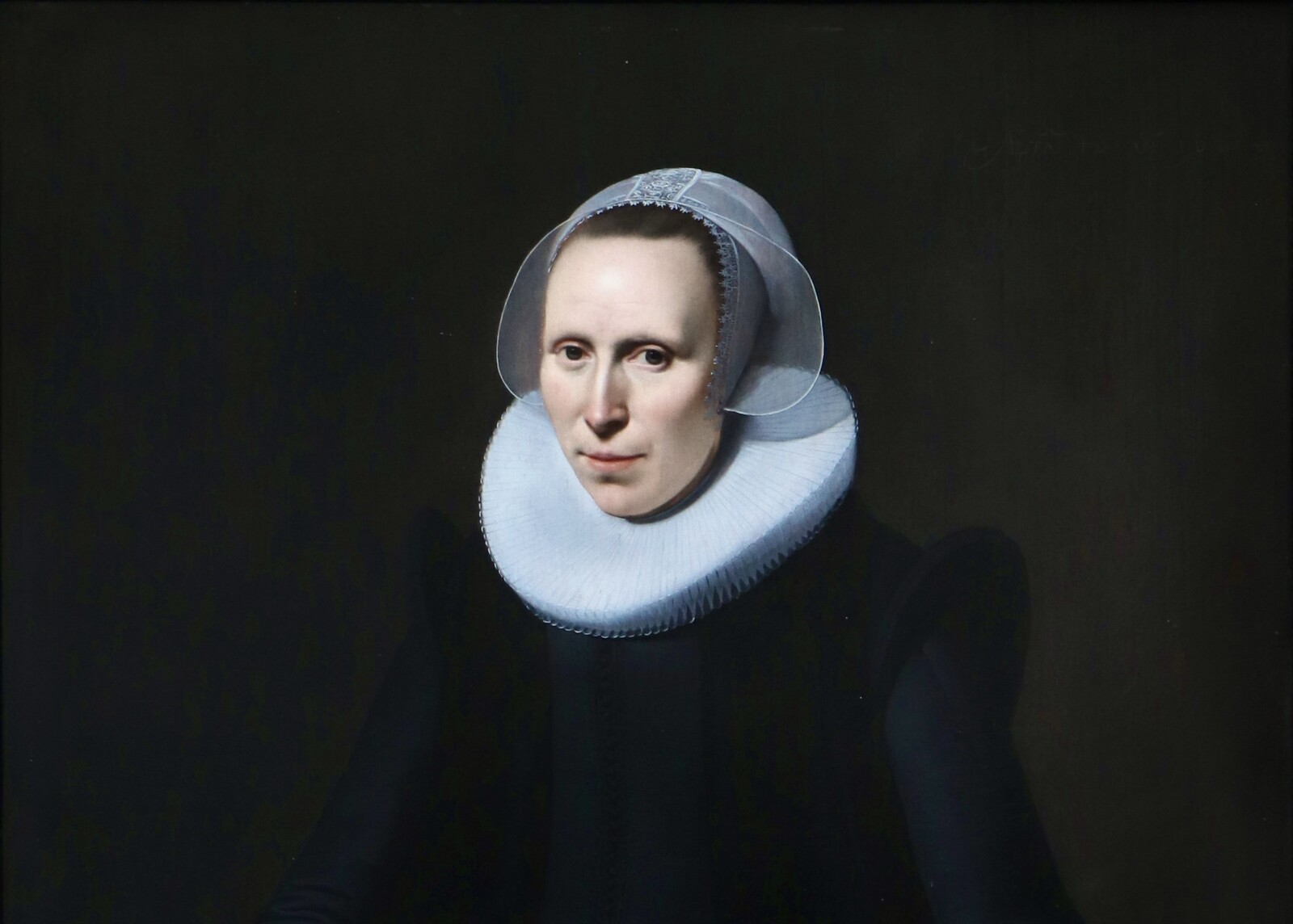
Her expensive black and white clothes are typical of the discrete way people could show their wealth in the Dutch Protestant society: black was a very expensive dye, while lace was of course very costly. Her typical round and flat ruff is called a millstone collar.
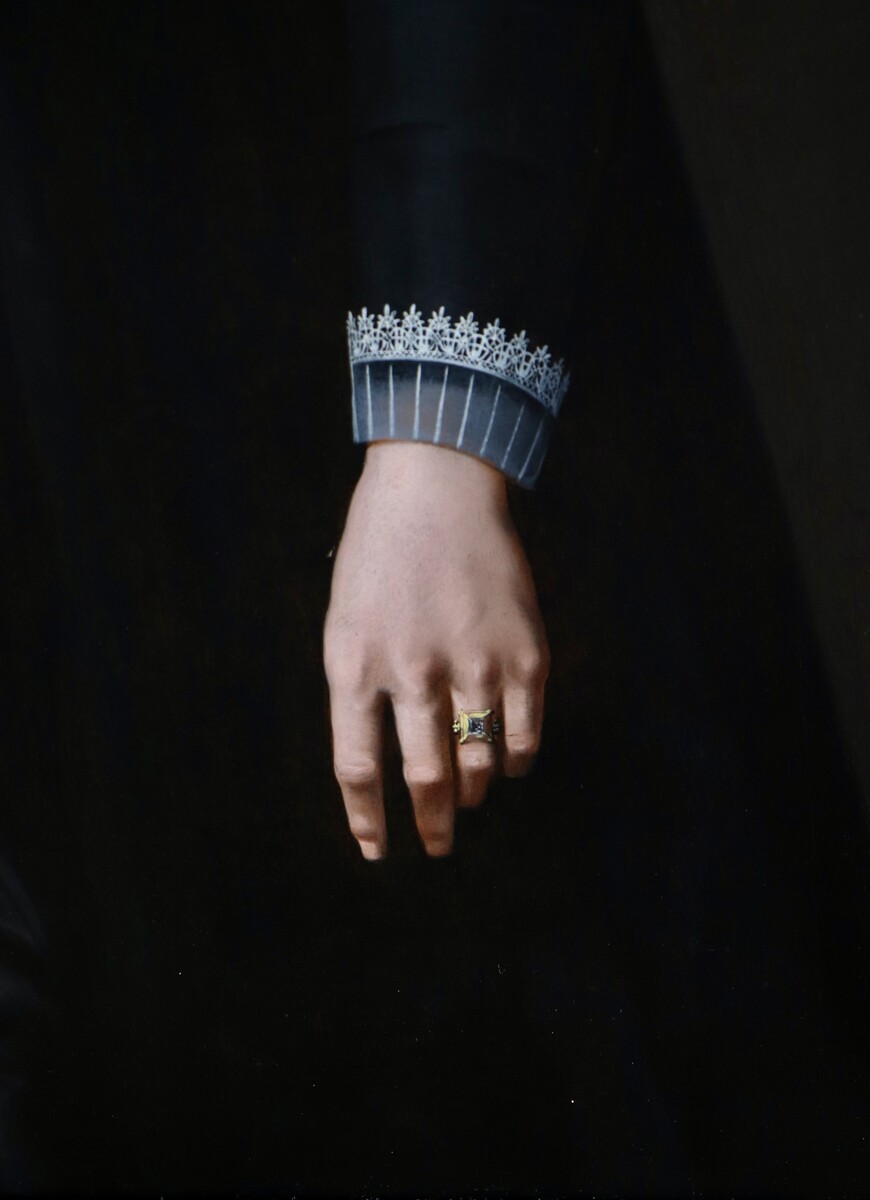
Typical of Pickenoy are the fiercely invading light that makes the head stand out sharply and the refined treatment of the hands.
During the first half of the 17th century Dutch upper class women were wearing a wedding ring that was usually decorated with jewels, as is the case here. It was thus very different from our simple, flat rings. This lady carries it on the traditional ring finger. Fashionable young women, especially from Amsterdam, regularly wore it on the forefinger. Men very rarely wore wedding rings.
Why should you buy this painting?
Because this perfectly executed portrait dated from Pickenoy’s heyday.
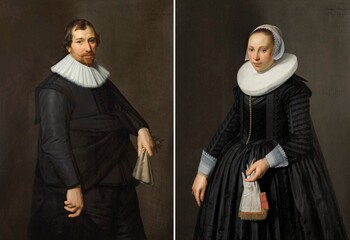
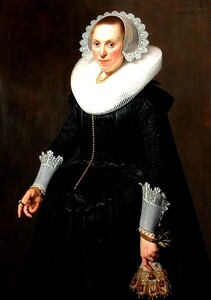
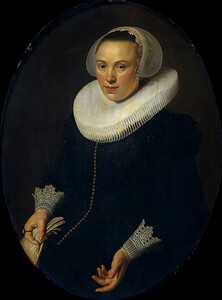
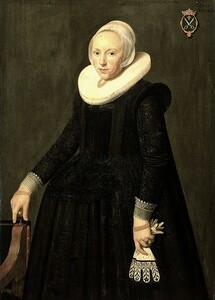
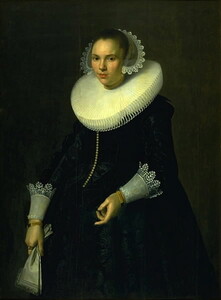
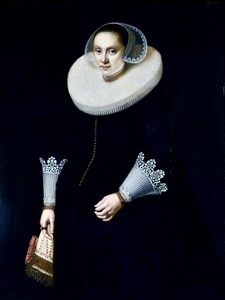
Comparative paintings
Click photos for more details