4.300 €
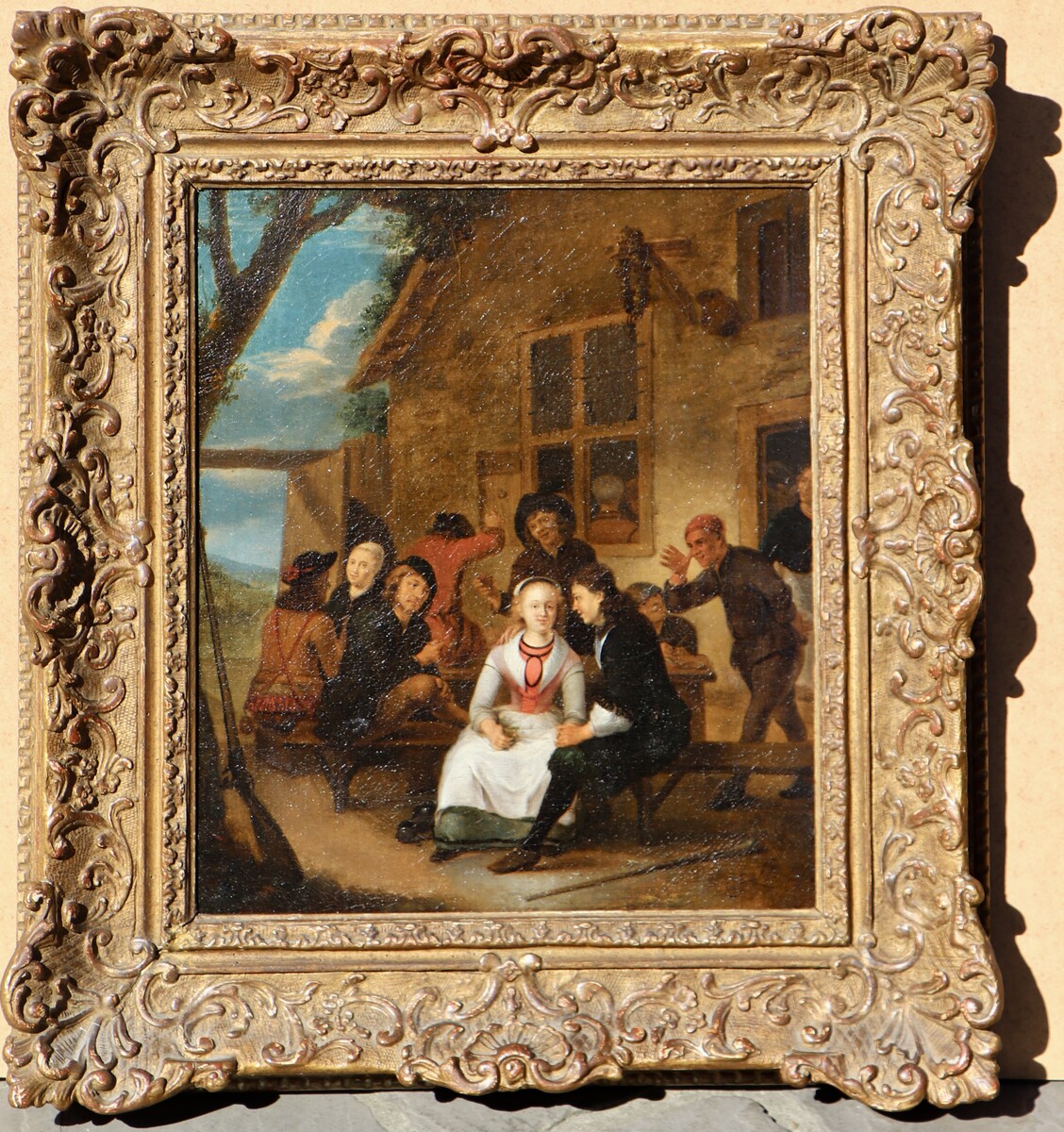
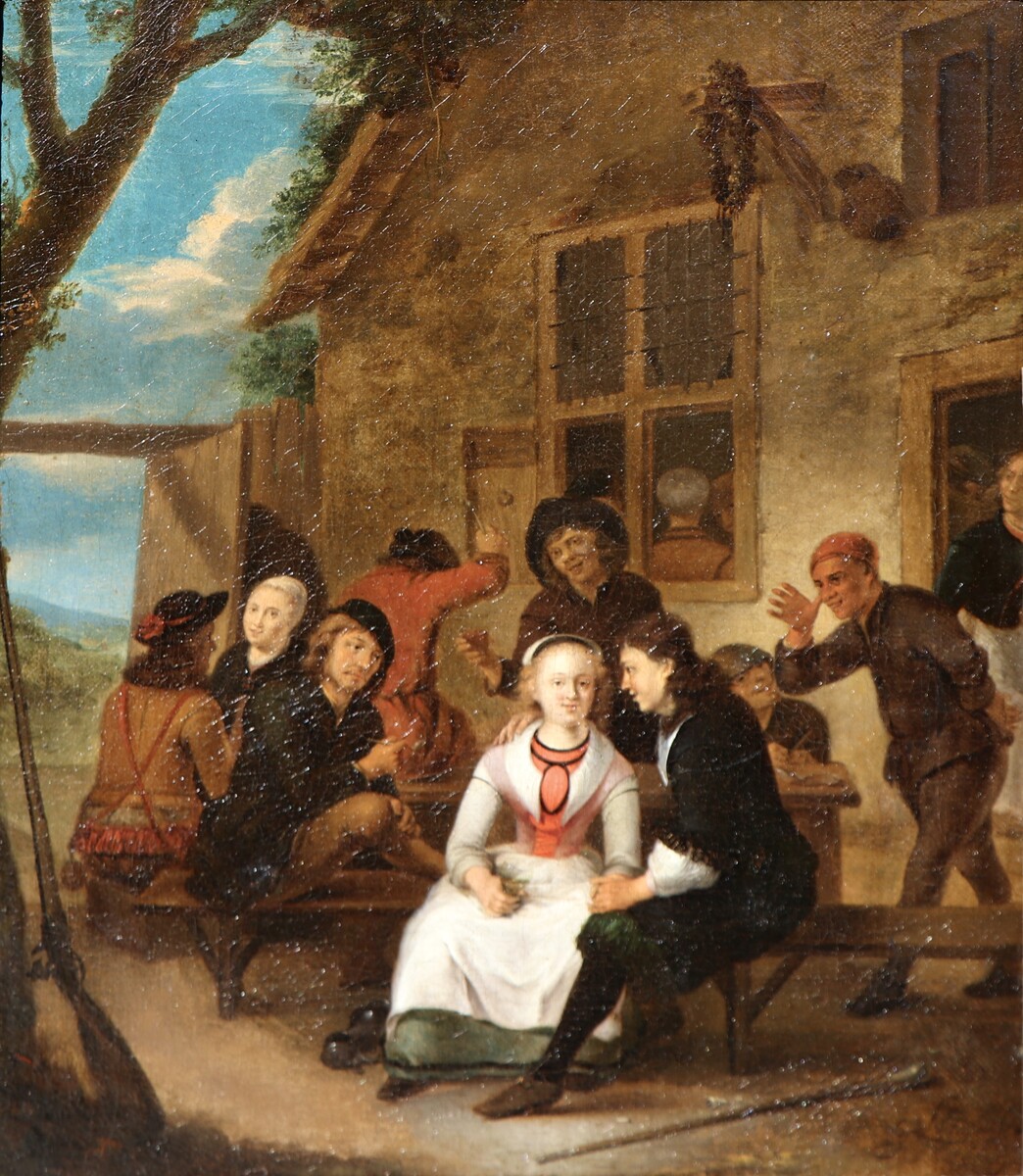
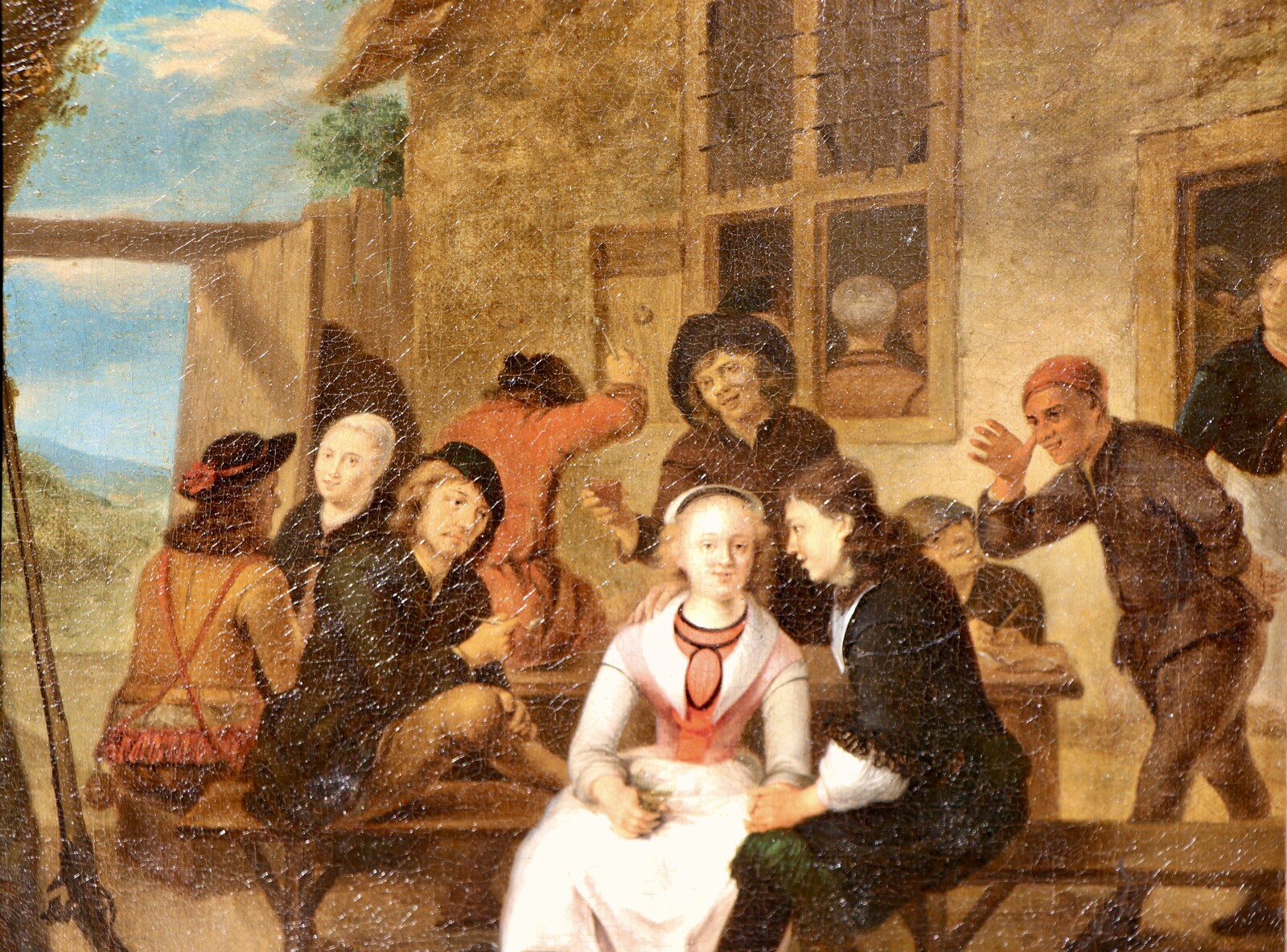
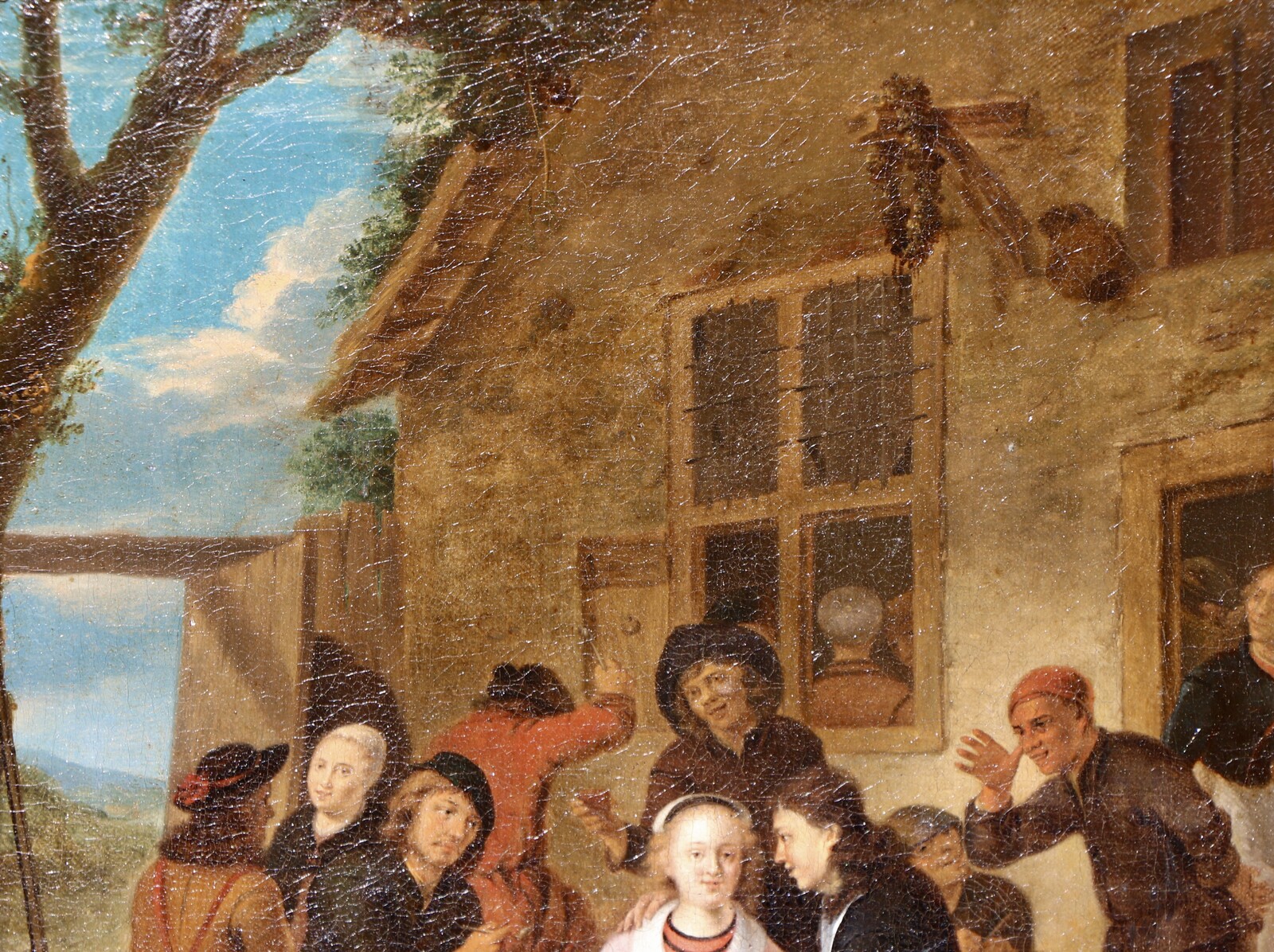
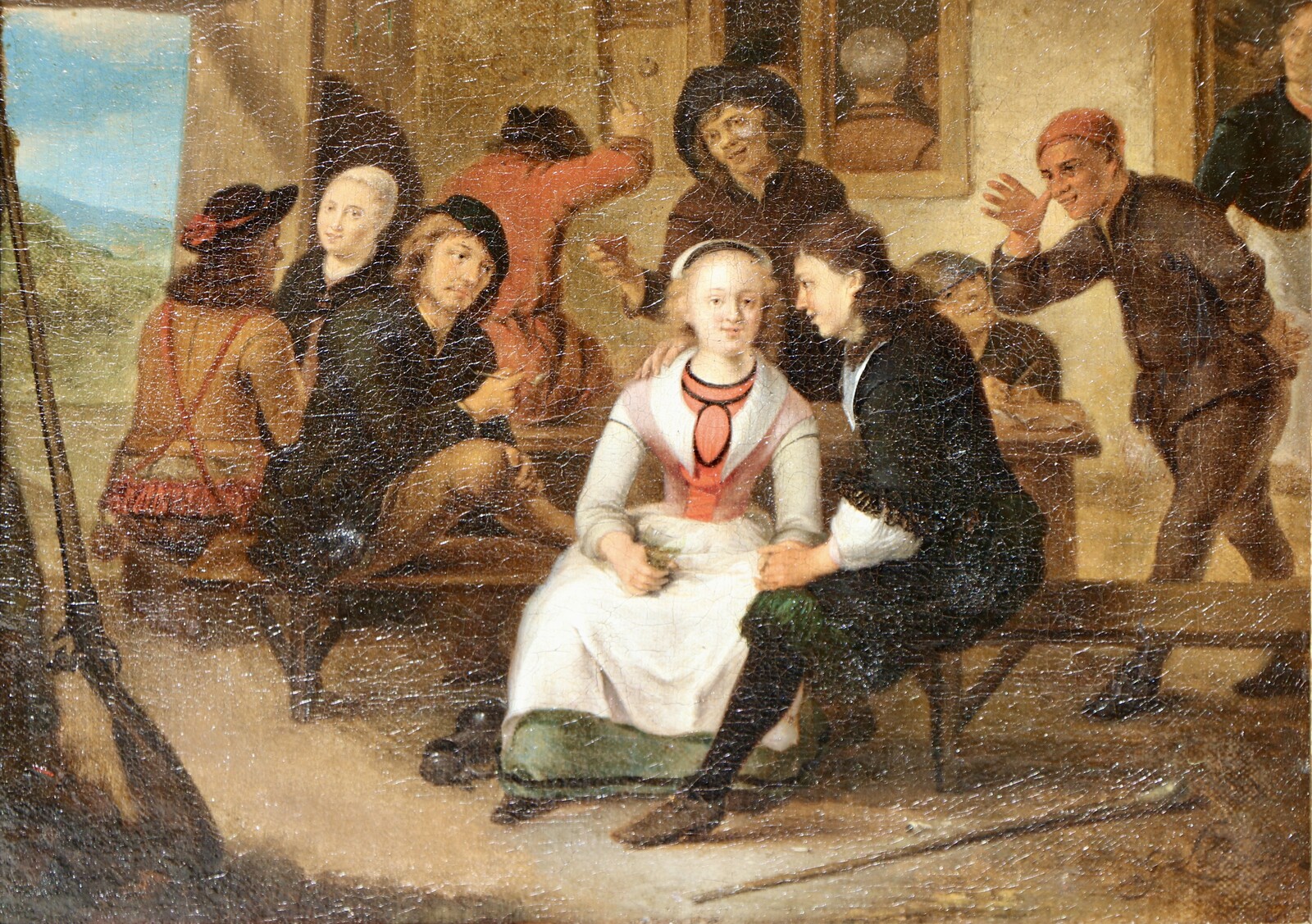
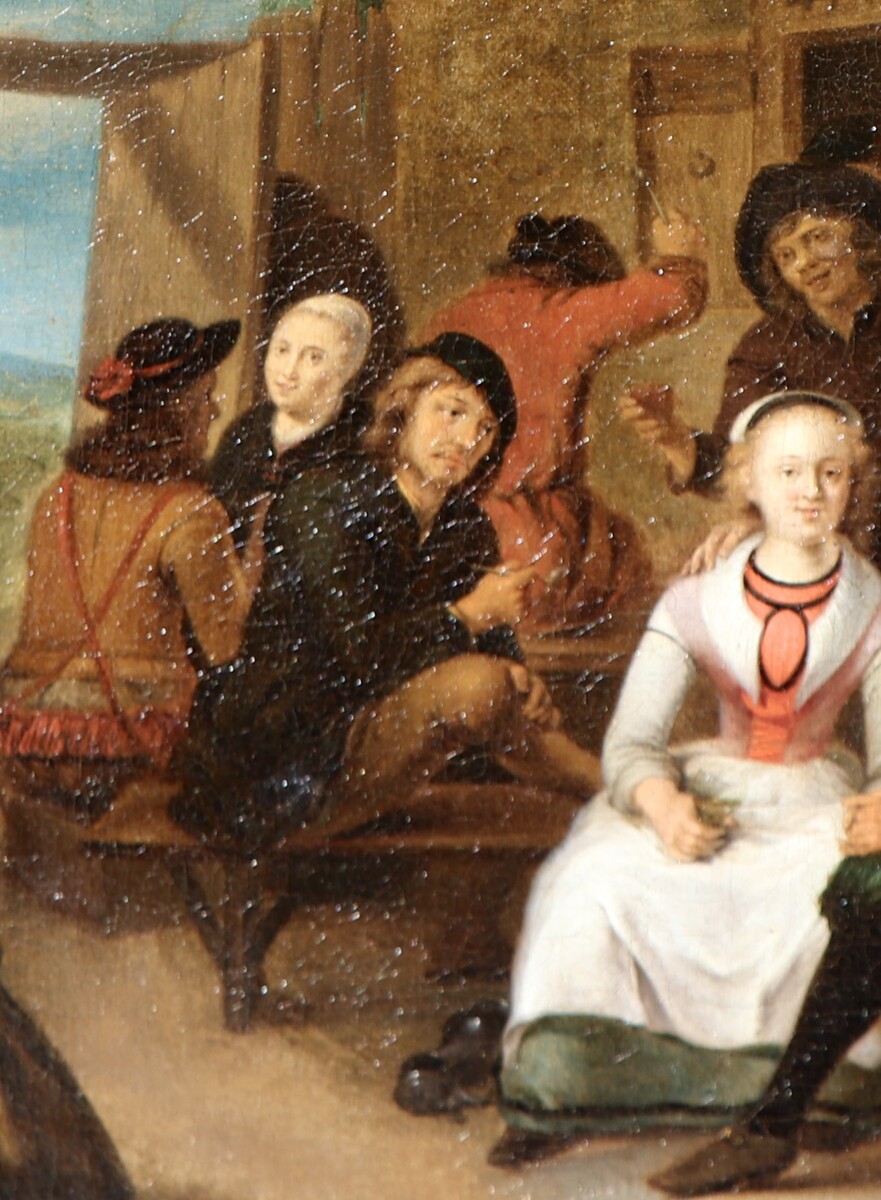
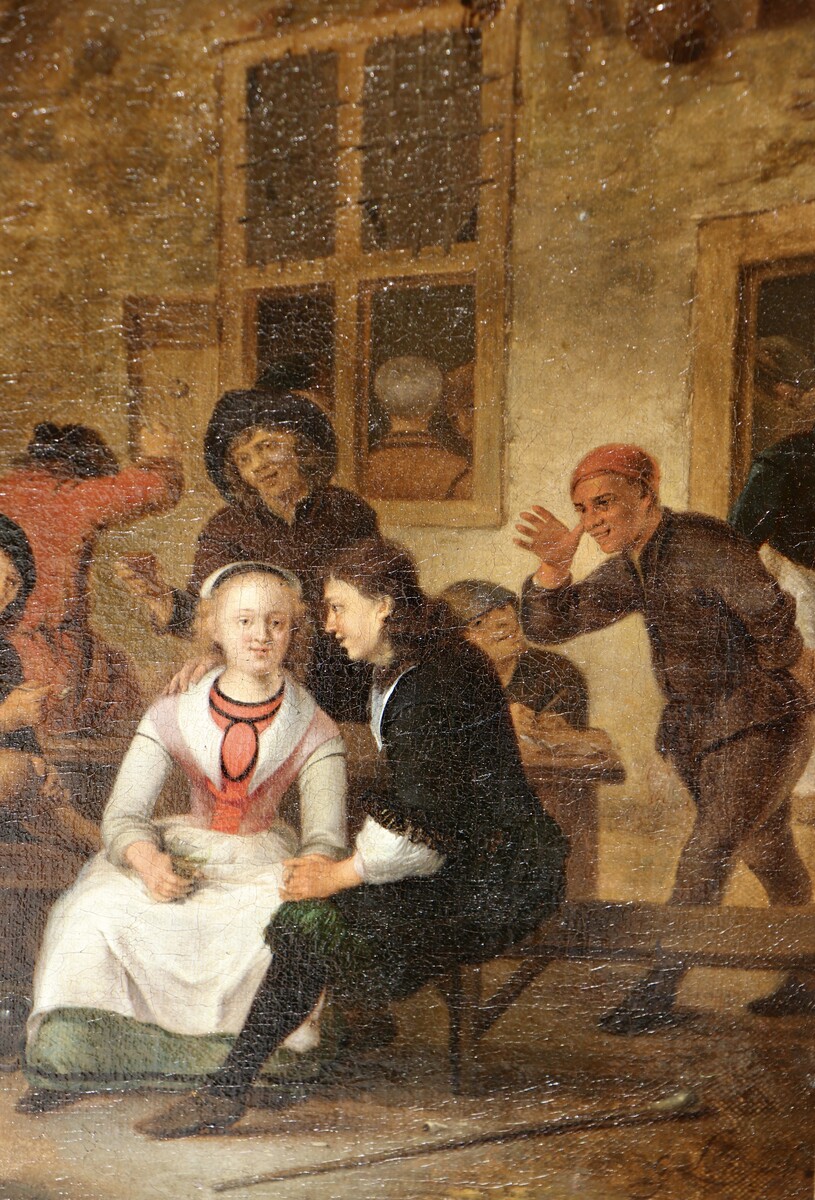
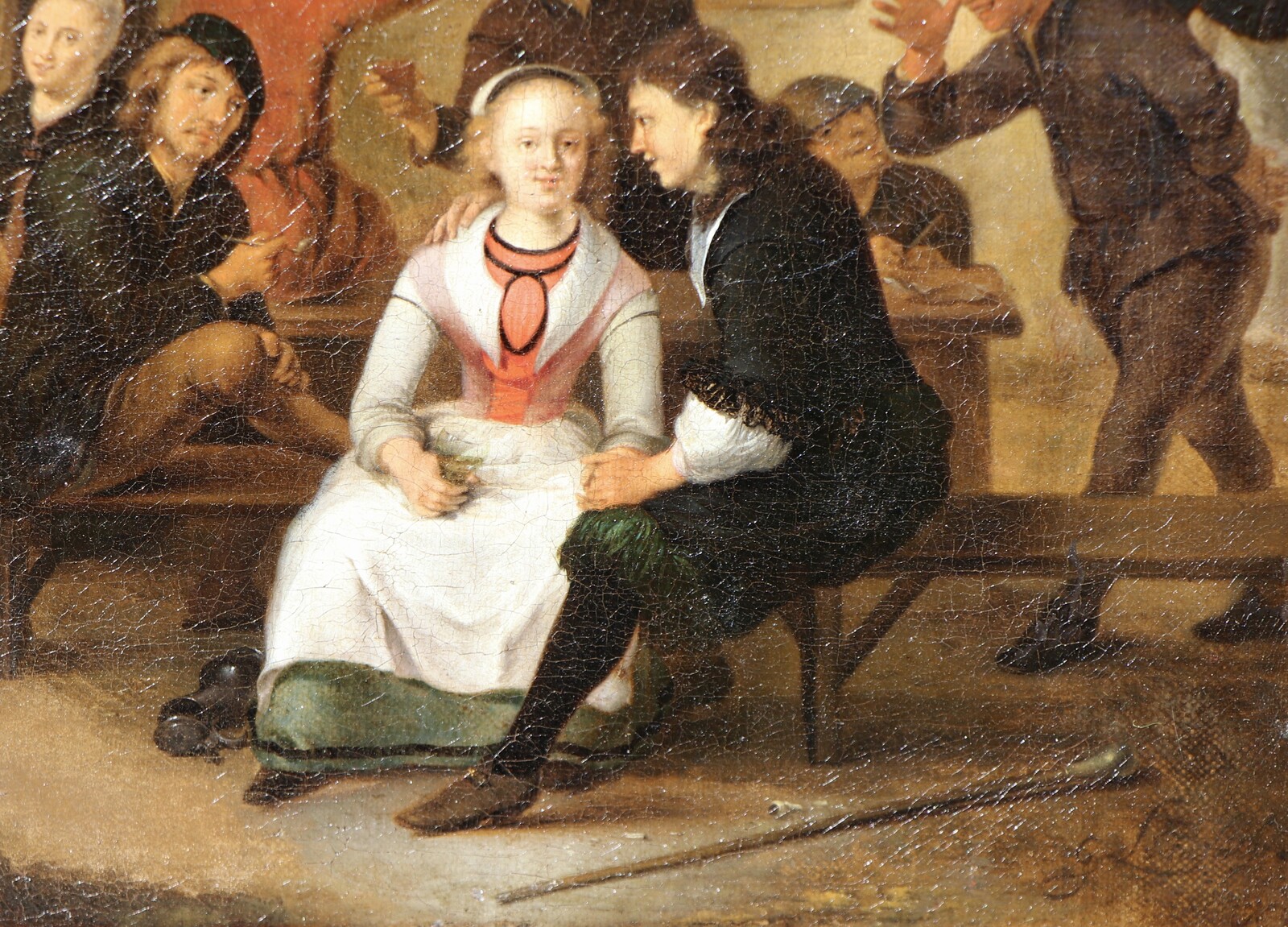
An elegant couple seated outside a tavern
Oil on canvas : 31,8 X 27,3 cm
Signed bottom right “G.LundenS”
Frame : 45,6 X 41,2 cm
I just have had the painting cleaned and relined.
It looks much better in real than on these clumsy photographs (due to the reflection of the sunlight).
In short
Gerrit Lundens was a genre scene painter from Amsterdam.
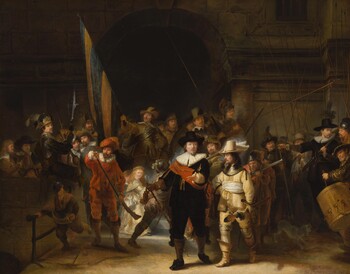
There will always be a single painting attributed to Lundens exhibited in the main room of the Rijksmuseum in Amsterdam. It hangs next to Rembrandt’s Night Watch; our painter made a small copy of it, showing figures that in 1715 have been cut away from the original.
About Gerrit Lundens
Dutch painter
Amsterdam 1622 – 1686 Amsterdam
Lundens was possibly a pupil of his brother-in-law, Abraham van den Hecken (circa 1610 – 1655), who married with his sister in 1635.
He was a painter of genre scenes. He also painted a few portraits and a single Vanitas still lifes (a boy blowing bubbles, sold at Christie’s London, 14/11/61).
Gerrit Lundens was influenced:
- by his brother-in-law Abraham van den Hecken, who lived in Amsterdam between 1635 and 1645, and from 1649 until 1651;
- and by Jan Miense Molenaer (Haarlem 1609/10 – 1668 Haarlem), a pupil of Frans Hals, who was active in Amsterdam between1637 and 1648, and then for a short time in 1655 -1656. He spent the rest of his career in Haarlem and in nearby Heemstede. Typical of the first Amsterdam period of Molenaer is the use of tonal colours, of brownish tonalities.
Lundens also painted rather unusual subjects, such as:
- operation scenes, with surgeons at work;
- a copy of “ the Night Watch” by Rembrandt; it now hangs next to the original in the Rijksmuseum in Amsterdam, although it belongs to the collection of the National Gallery of London. The copy attributed to Lundens is interesting because it shows the original condition, before the painting was cut: it holds two extra figures on the left side;
- a view of the fire that destroyed the old town hall of Amsterdam, July 7th 1652, today in the Amsterdam Historic Museum.
About the contemporary genre scene market in Amsterdam
The booming metropolis of Amsterdam, where Lundens was active, attracted a lot of good painters. Competition must have been very tough.
Rembrandt (1606 – 1669) moved at the end of 1631 to Amsterdam from his birthplace Leiden; he remained here until his death.
As to the genre painters we already mentioned Antwerp-born Samuel van den Hecken and Jan Miense Molenaer from Haarlem.
Several genre scene painters specialised in guardroom interiors (Pieter Codde, Willem Duyster and Simon Kick).
Pieter Quast returned to Amsterdam in 1641, but died here already six years later in 1647, while Hendrick Pot settled here around 1650, dying in 1657. Amsterdam-born Jan Victors specialised in street-life scenes in the first half of the 1650s.
Two excellent genre scene painters settled in Amsterdam around 1660: Gabriel Metsu from Leiden in 1657 and Pieter de Hooch from Delft in 1661.
They were joined in the 1670s by Jacob Ochtervelt (1674, from Rotterdam) and by Matthijs Naiveu (1678/79, from Leiden).
Why should you buy this painting?
Because it is such a good, vivid painting, a snapshot from middle 17th century happiness.
Comparative paintings
Click photos for more details