14.600 €
The so-called "Master of the Prodigal Son" was in fact a group of Flemish painters active in Antwerp circa 1530 – 1560. They shared common features and subjects.
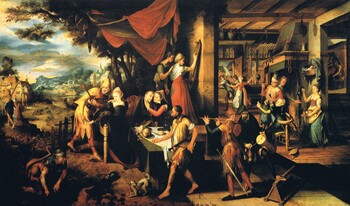
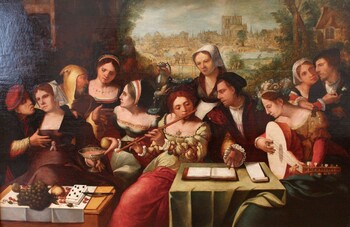
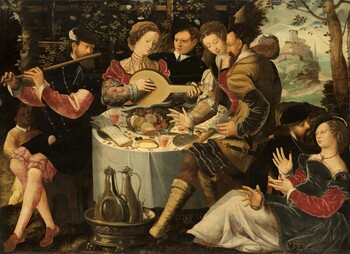
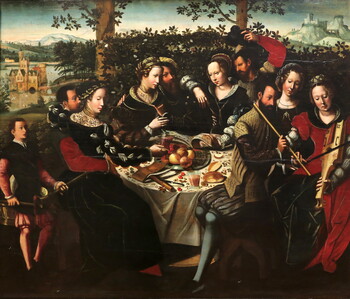
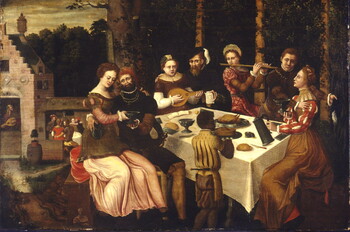
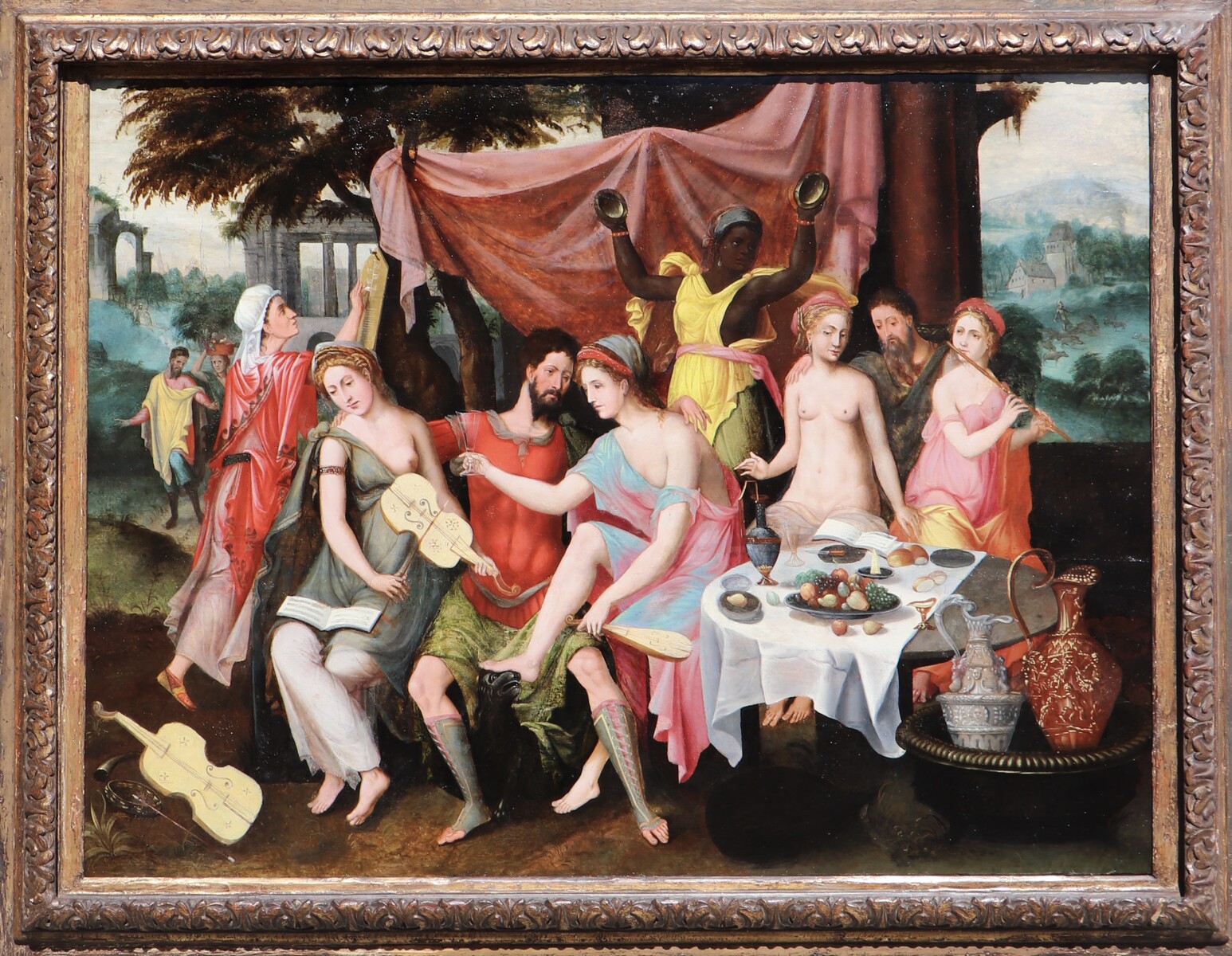
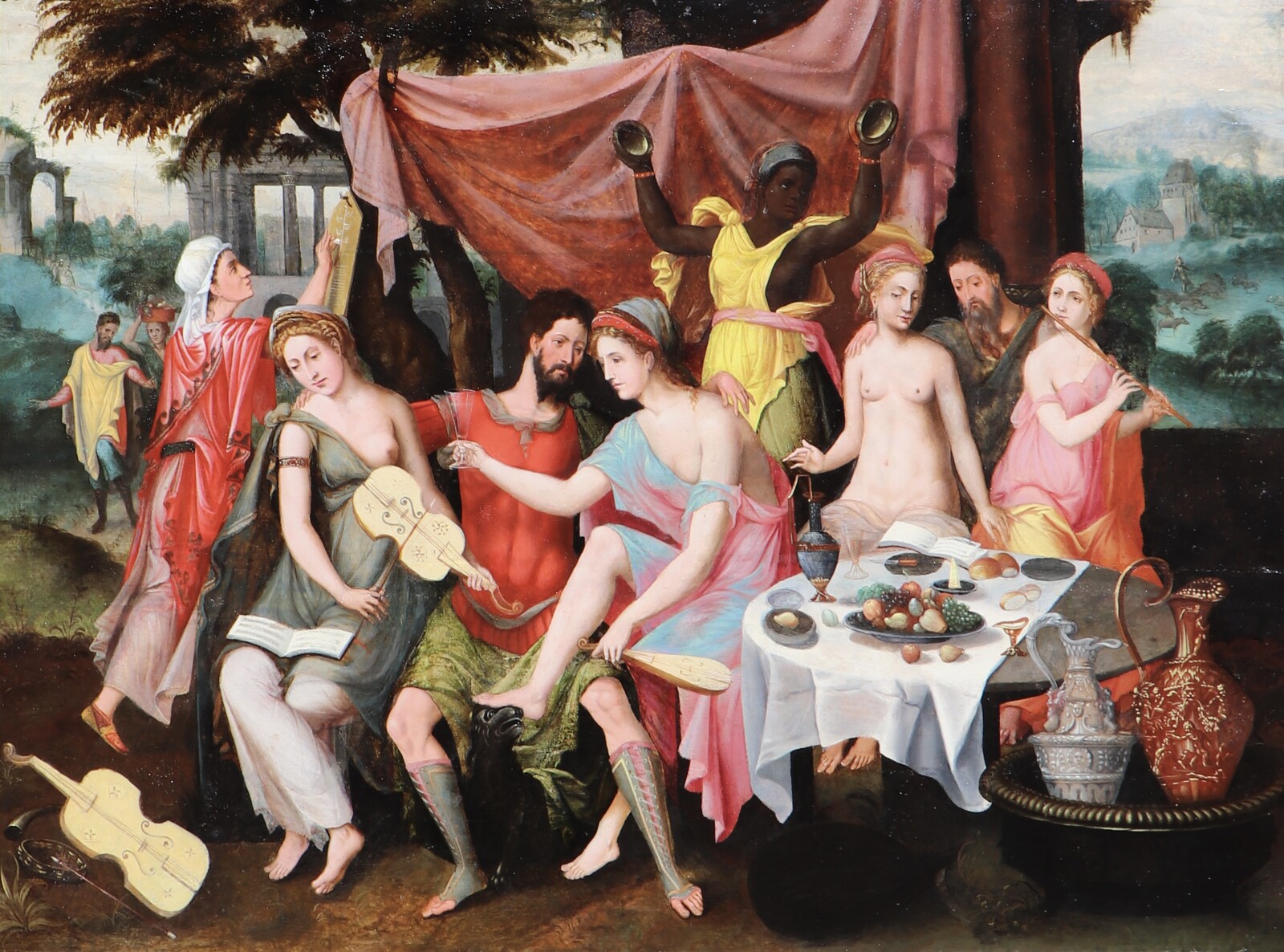
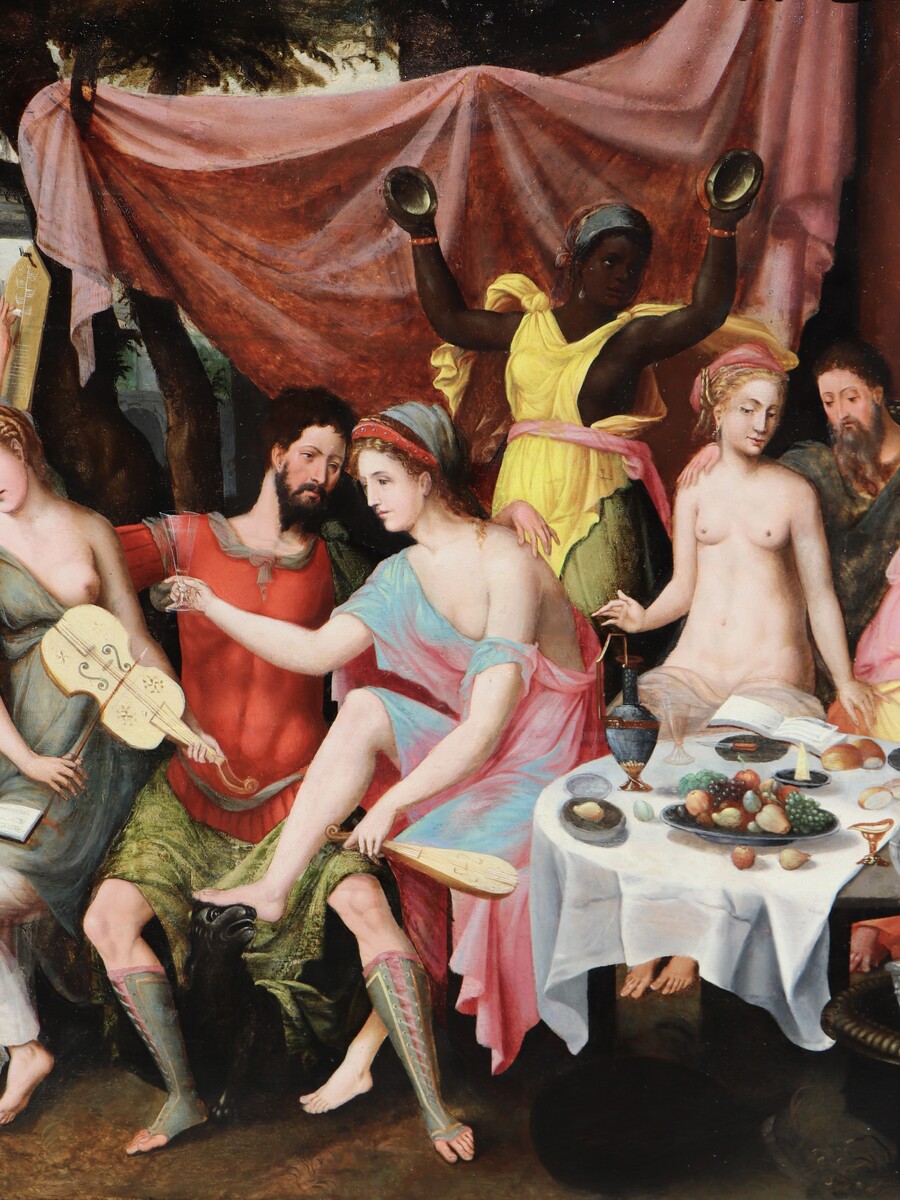
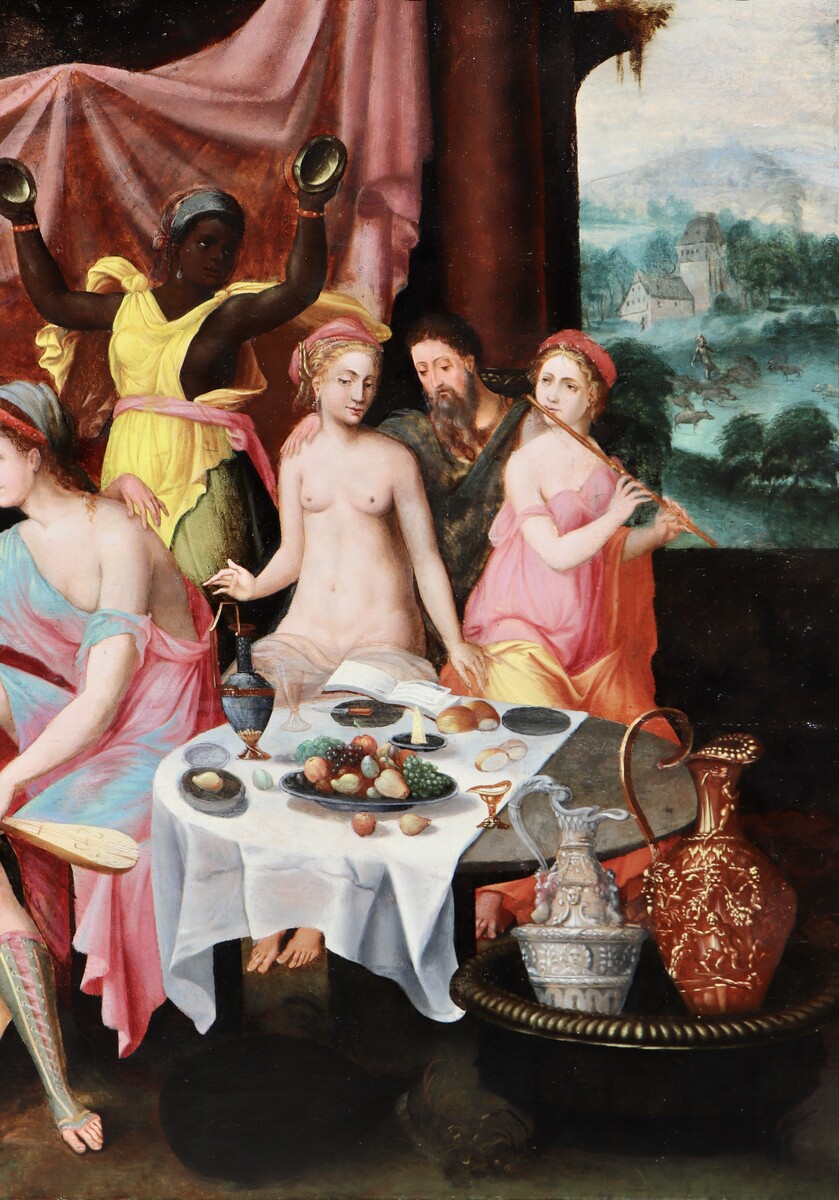
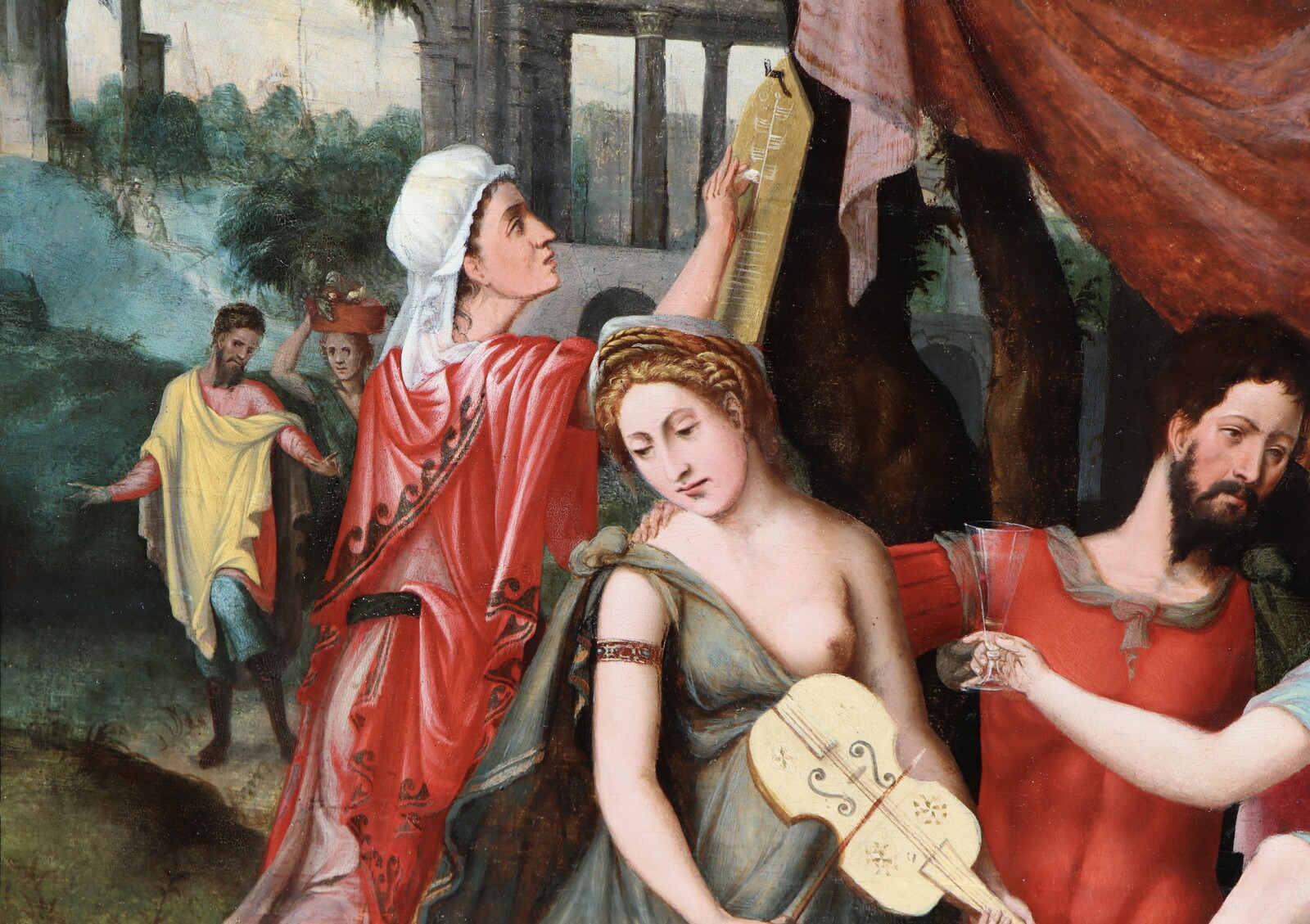
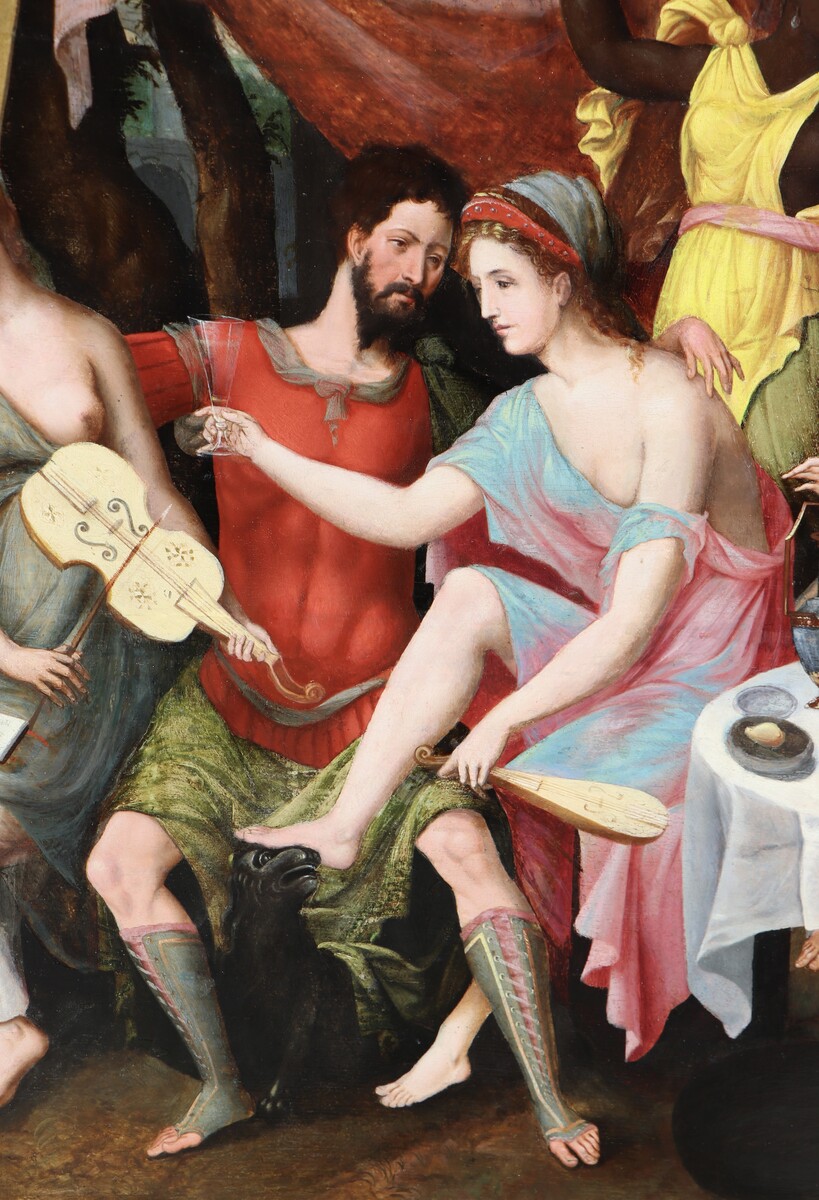
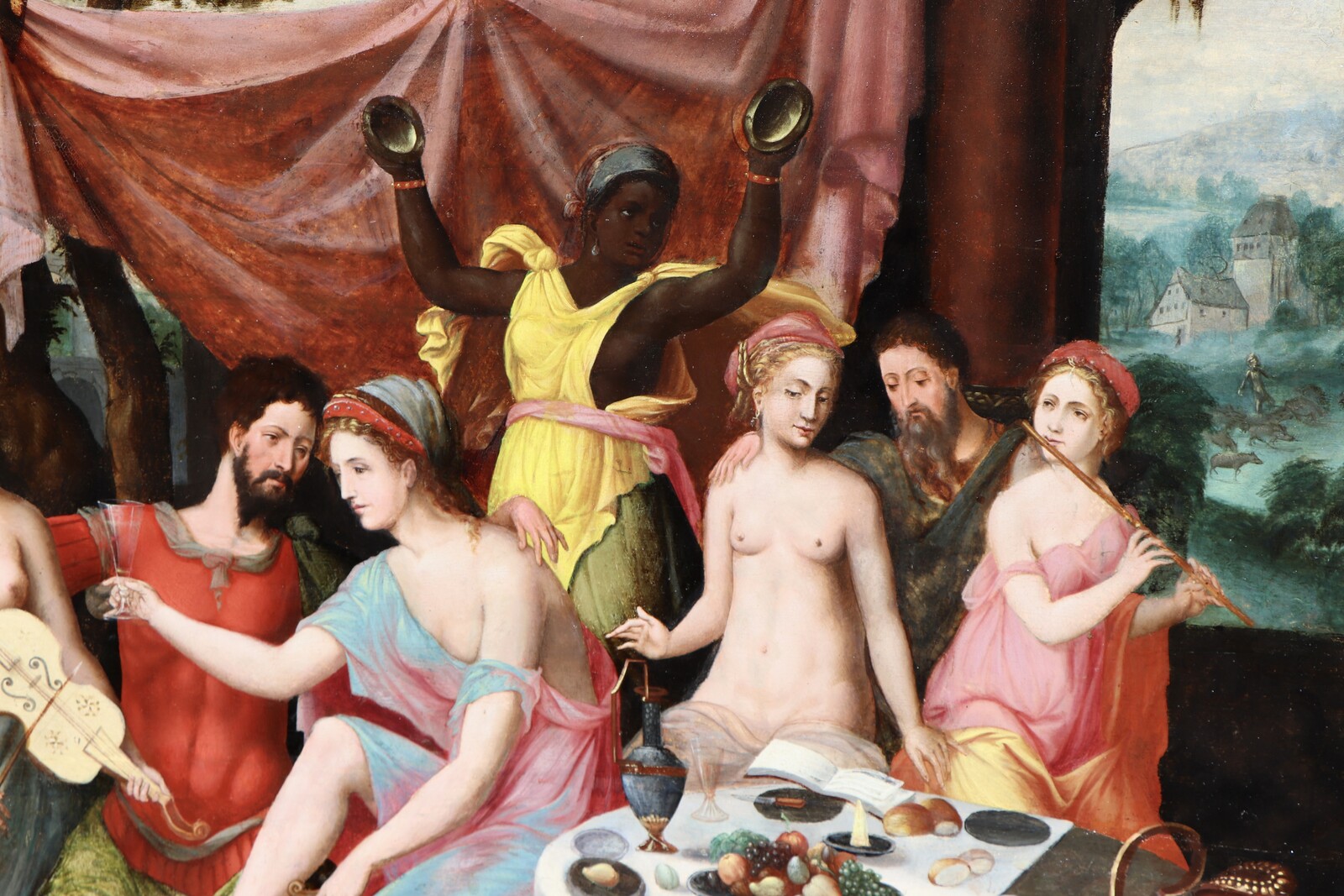
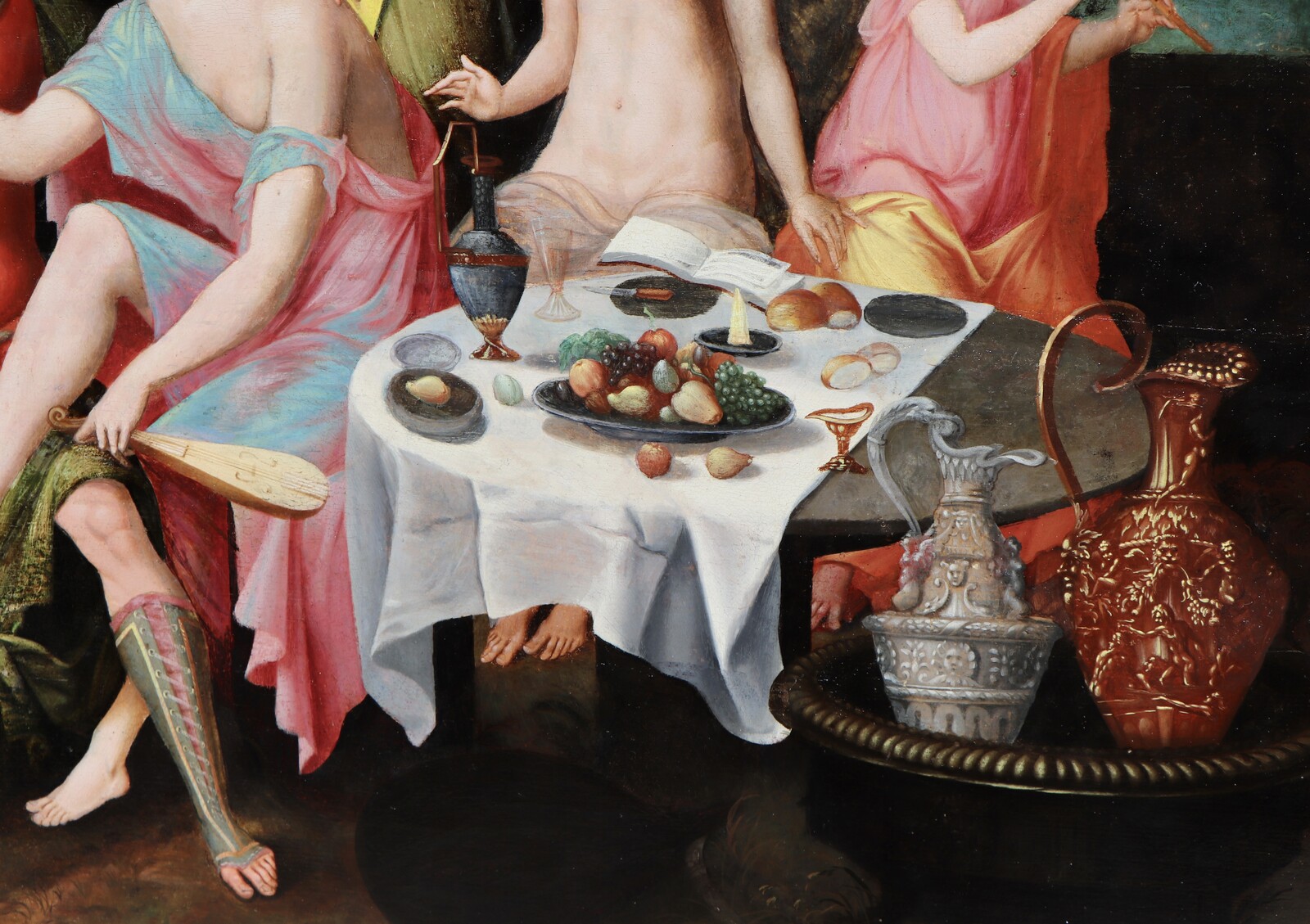
The Prodigal Son among the courtesans
Oil on panel : 83,7 X 112,5 cm
Unsigned
Frame : 101,1 X 129,8 cm
Absolute transparency: our cost price = 9.746 €
= acquisition price 6.475 € + shipment 125 € + restoration 3.271 €
Our export price 13.758 €
In short
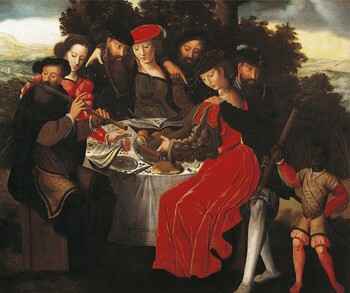
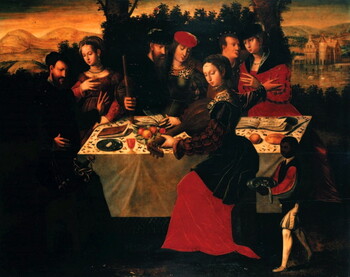
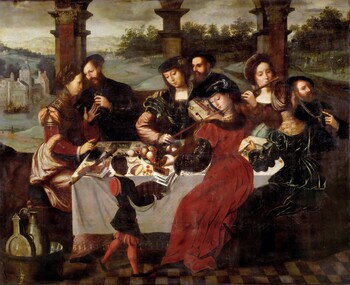
The moral intent of our painting, representing a brothel scene from the Bible, was easily recognizable for contemporary viewers: the Prodigal Son foolishly spent all his money before coming to his senses.
About The Master of the Prodigal Son
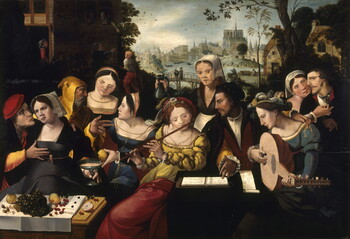
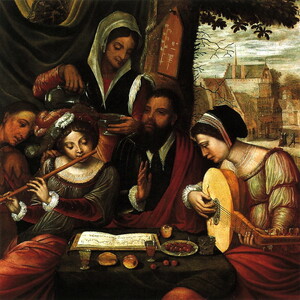
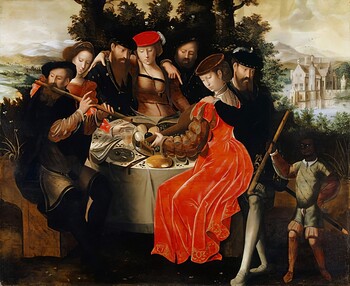
A number of paintings by anonymous Flemish painters, probably active in Antwerp between 1530 and 1560, have for a long time been confused with works by Pieter Aertsen, Hendrik van Cleve, Jan Mandijn and Frans Floris.
In 1909 Georges Hulin de Loo grouped these works round a painting representing “The Story of the Prodigal Son” from the Kunsthistorisches Museum of Vienna.
Today “The Master of the Prodigal Son” no longer stands for an individual painter from around 1550, but for a very active workshop that produced paintings of very diverse quality, regularly repeating its own compositions. Such an important workshop reminds of contemporary workshops in Antwerp, like the ones of Pieter Coecke van Aelst, Pieter Aertsen, Lambert Lombard or Frans Floris.
The subjects are mainly biblical, especially from the Old Testament, sometimes allegorical.
Characteristics of “The Master of the Prodigal Son” :
- elongated figures
- sharp noses and chins
- large hands
- almost dancing attitudes with elegant feet
- soft colour scheme
- importance given to the landscape (when there is one)
- Italian influence (from Rafael, the Bassano, other Venetians and from engravings made by Marc Antonio Raimondi and by Ghisi)
- a taste oriented towards both the classicism of the Renaissance and the modernism of Mannerism.
About the Parable of the Prodigal Son
The Prodigal Son, also known as the Lost Son, is one of the best-known Parables of Jesus. It appears only in the Gospel of Luke, in the New Testament of the Bible. It is the third and final member of a trilogy, following the Parable of the Lost Sheep and the Parable of the Lost Coin.
The story is found in Luke 15:11-32. Jesus tells the story of a man who has two sons.
The younger, rebellious son, who rejects his father's upbringing, demands his share of his inheritance while his father is still living. Prideful and strong, the son goes off to a distant country where he leads a wild life of adventure, and squanders everything of value (literally and symbolically). Eventually, he has to take work as a swine herder (clearly a low point, as swines are not kosher in Judaism). There, confronted with failure and despair, he comes to his senses, and determines to return home and throw himself on his father's mercy, repentant and willing to do anything to win back his father's favour.
To his surprise, and to the surprise of the others, his father greets him with open arms, and hardly gives him a chance to express his repentance; he kills a fatted calf to celebrate his return. No amount of time, no amount of money, and no amount of rebellion could get in the way of the father's patience and unconditional love for his son. The older brother becomes jealous at the favored treatment of his faithless brother and upset at the lack of reward for his own faithfulness: “For all these years I have been working like a slave for you, and I have never disobeyed your command; yet you have never given me even a young goat so that I might celebrate with my friends. But when this son of yours came back, who has devoured your property with prostitutes, you killed the fatted calf for him.”'
Then the father said to him, “Son, you are always with me, and all that is mine is yours. But we had to celebrate and rejoice, because this brother of yours was dead and has come to life; he was lost and has been found."
About our painting
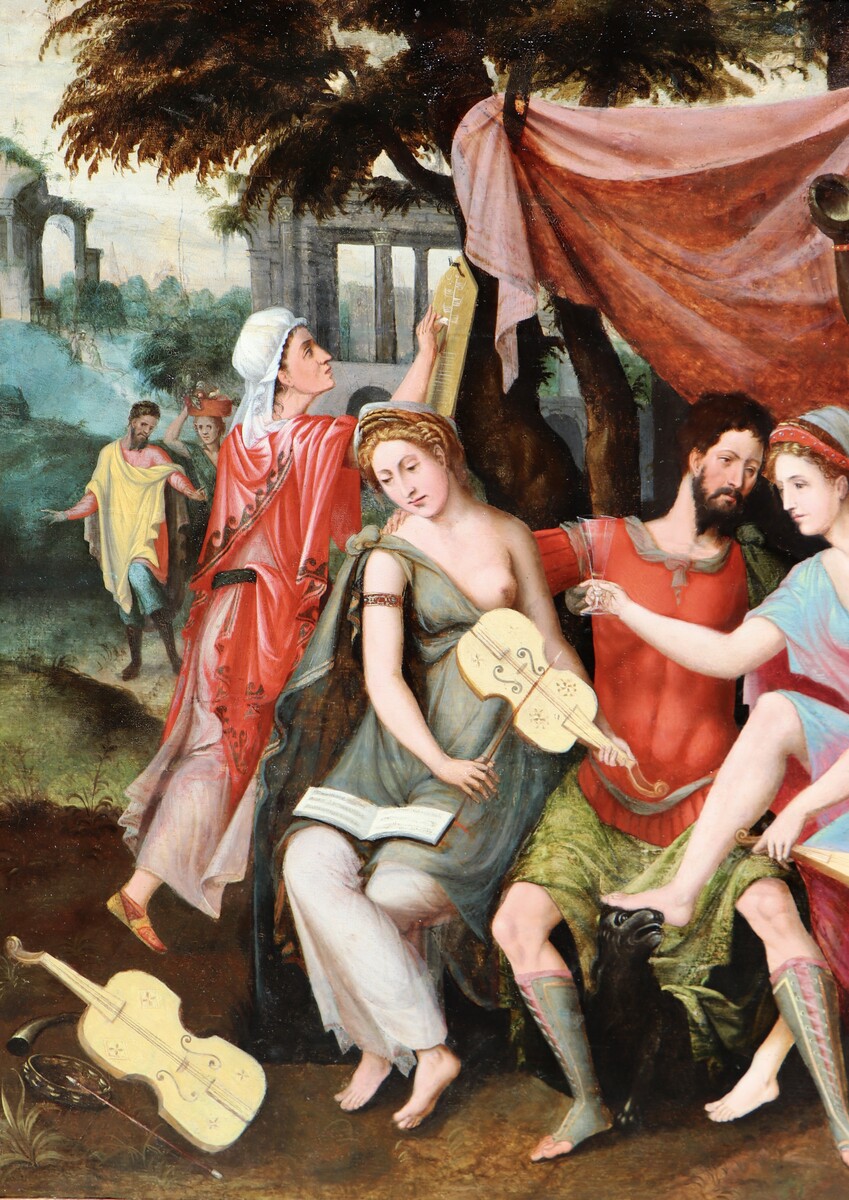
The Parable of the Prodigal Son formed at the same time a profound lesson and an excellent excuse for painters to represent flirting couples: their moralizing message was to keep away from such pleasures and excesses.
In the background of our composition stand two more important scenes from the Parable:
- at right, having squandered all his money, the Prodigal Son has to labour as a swine herder;
- at left, he returns back home to his father.
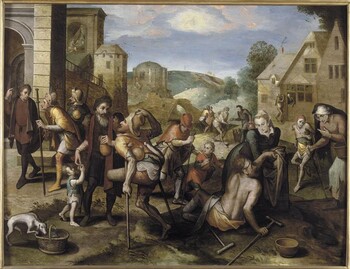
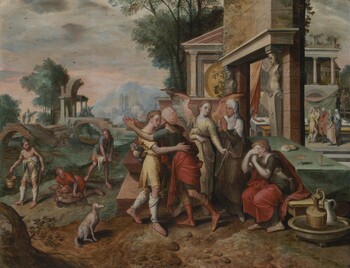
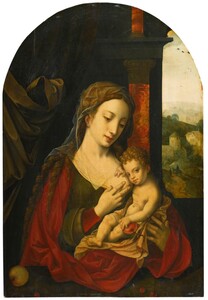
Comparative paintings
Click photos for more details