
4.000 €
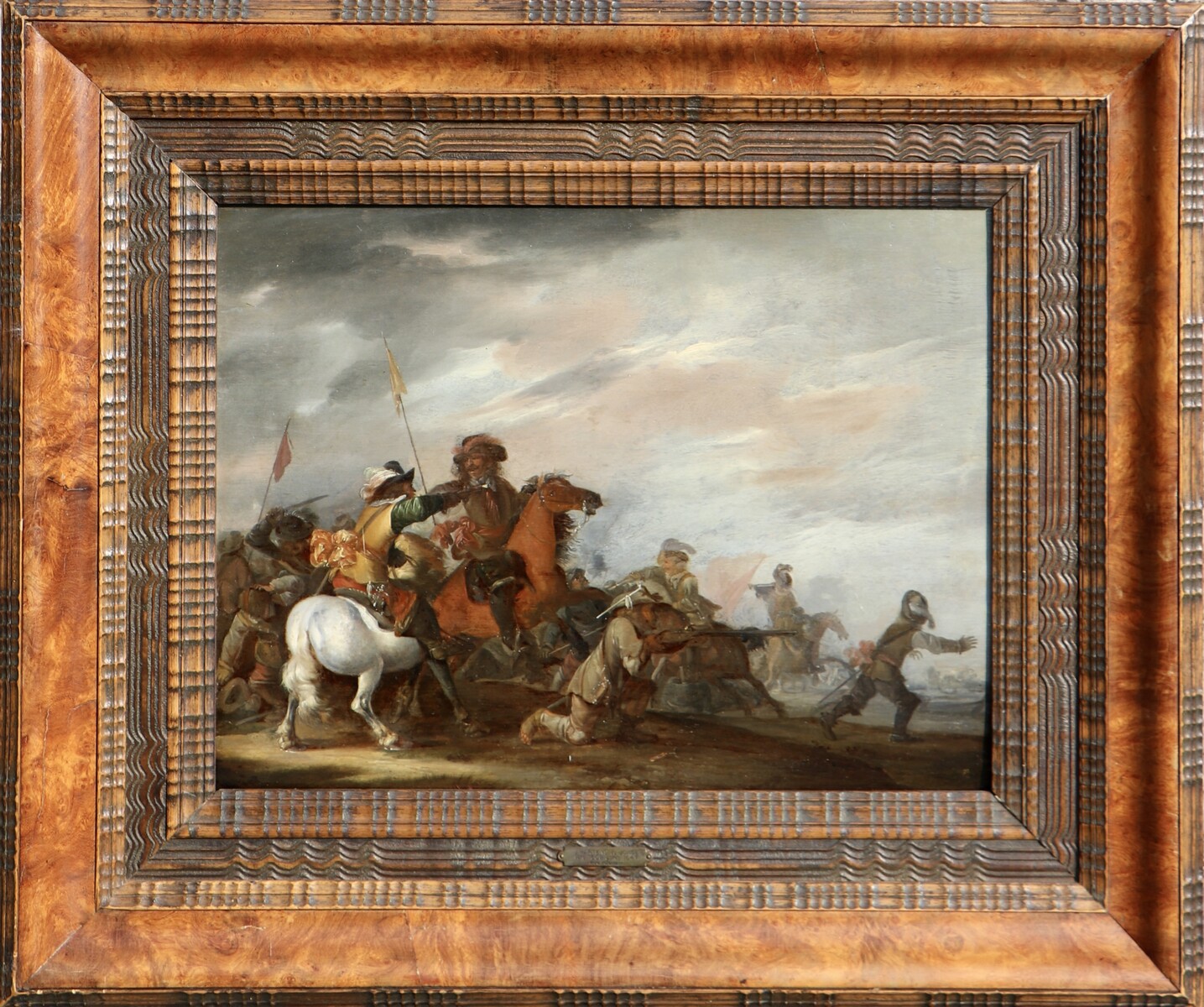
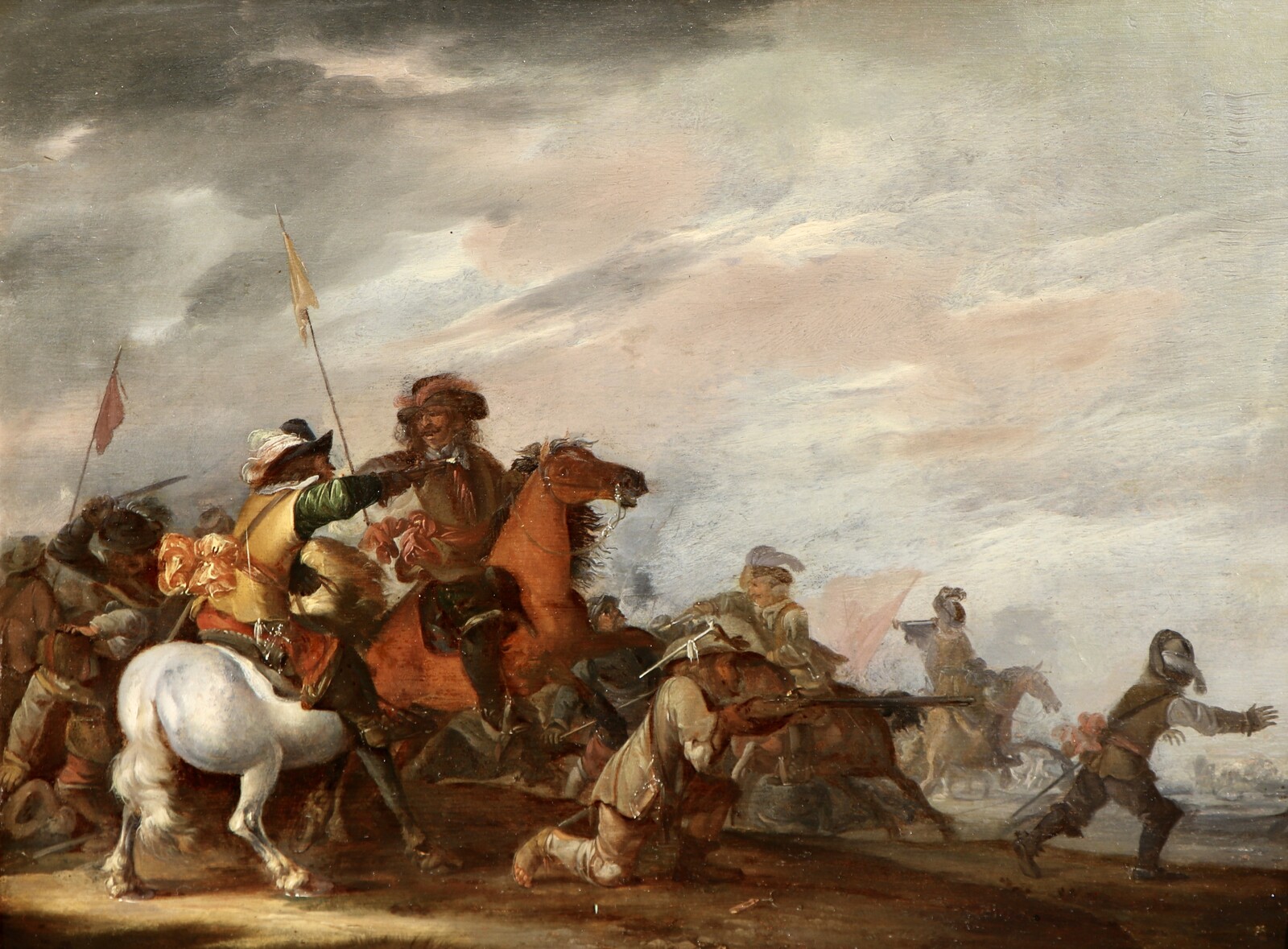
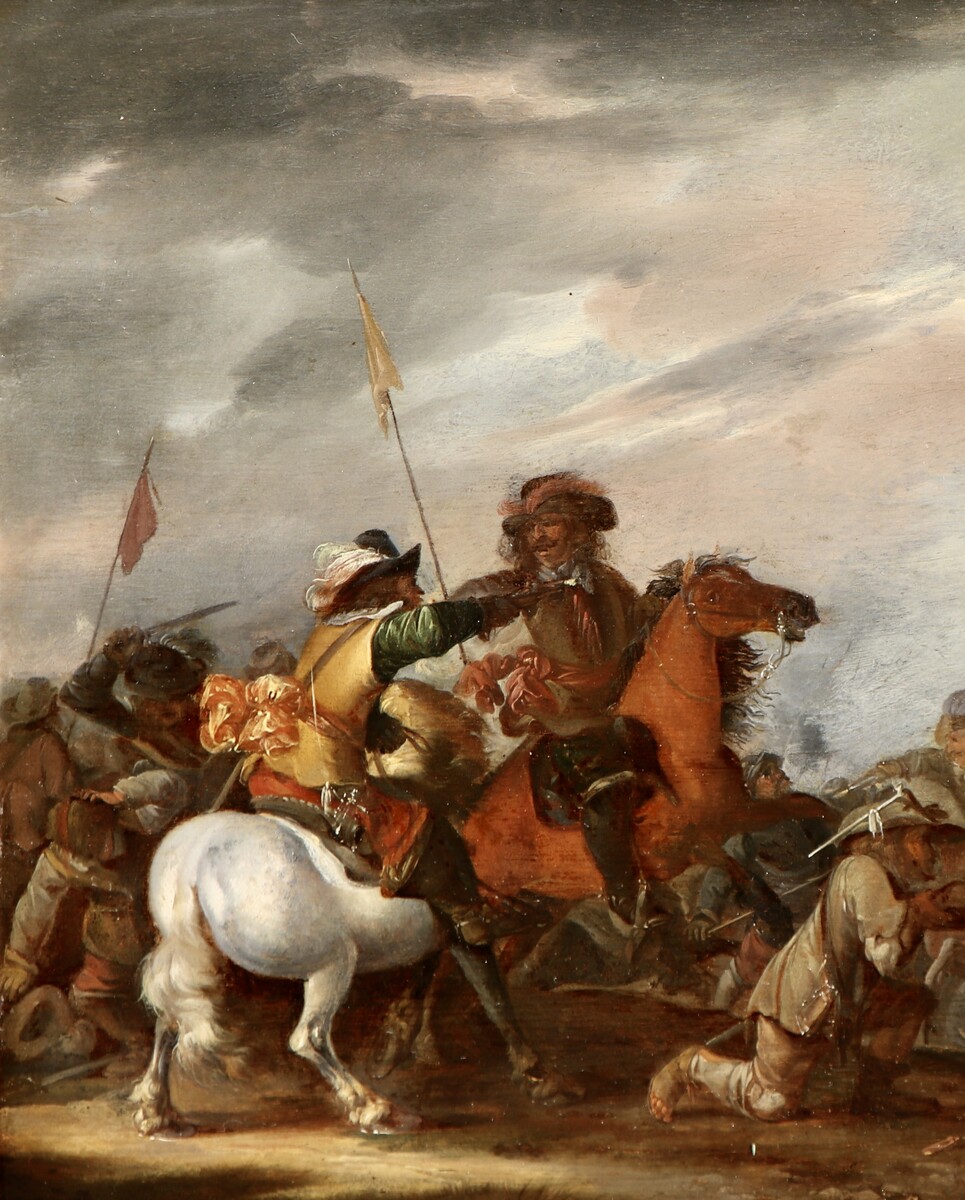
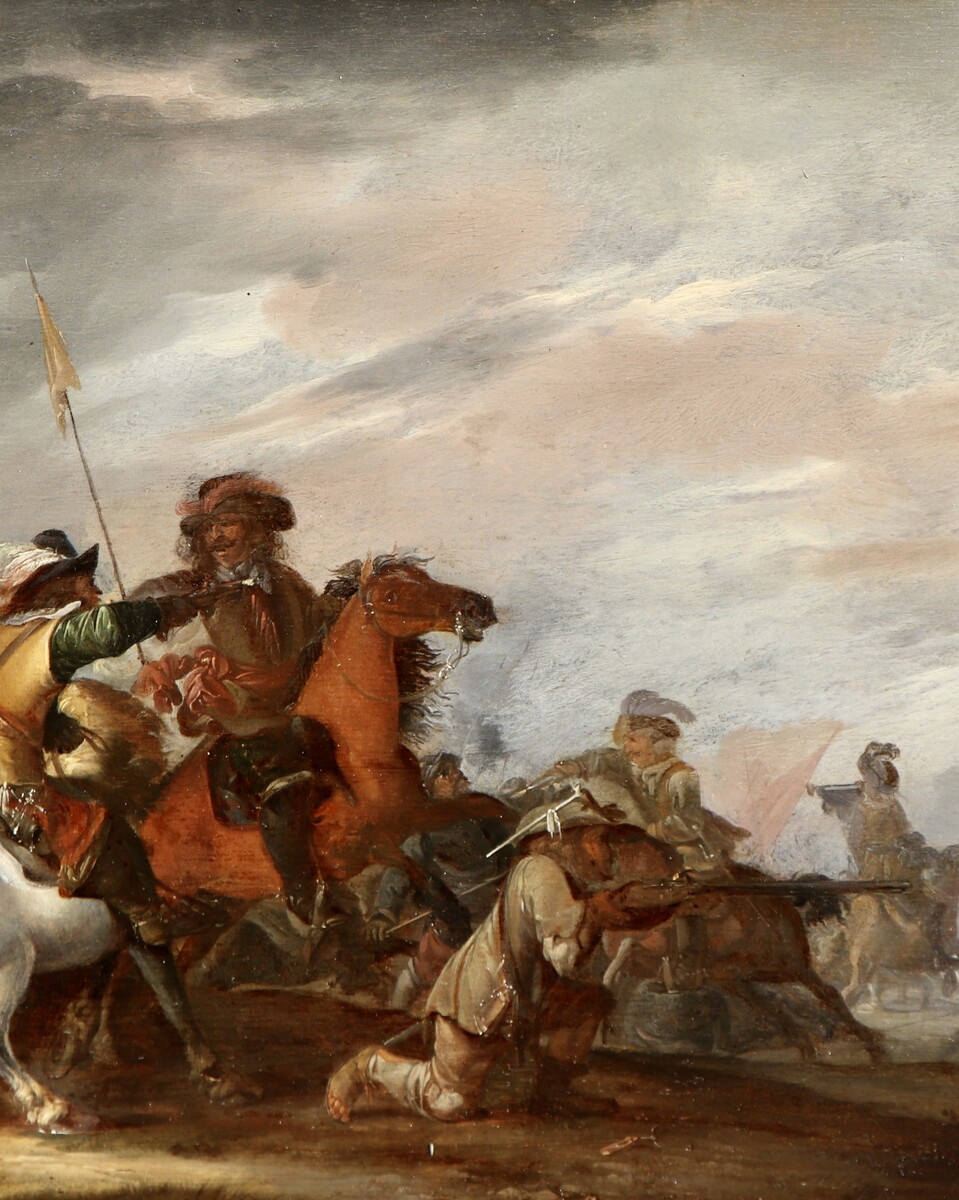
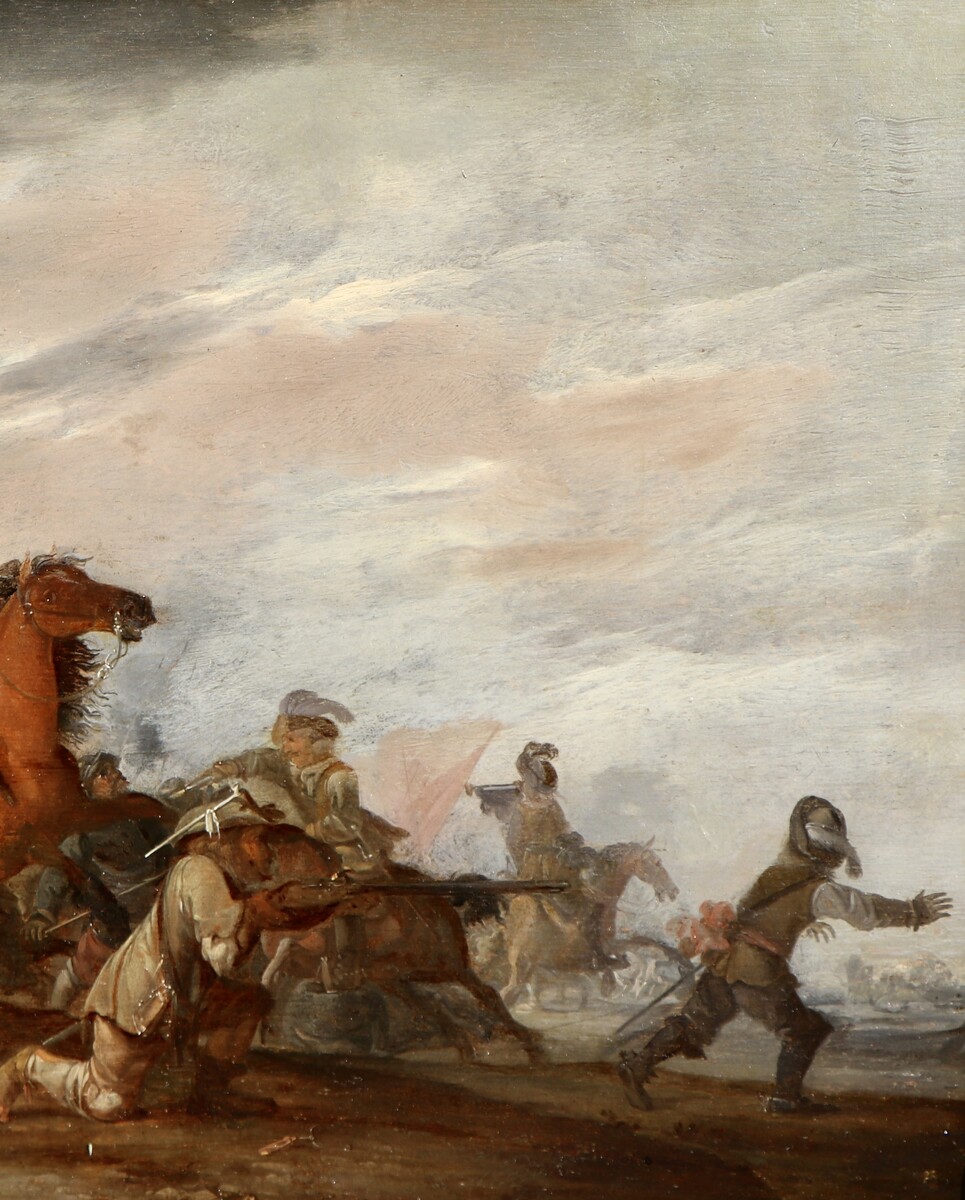
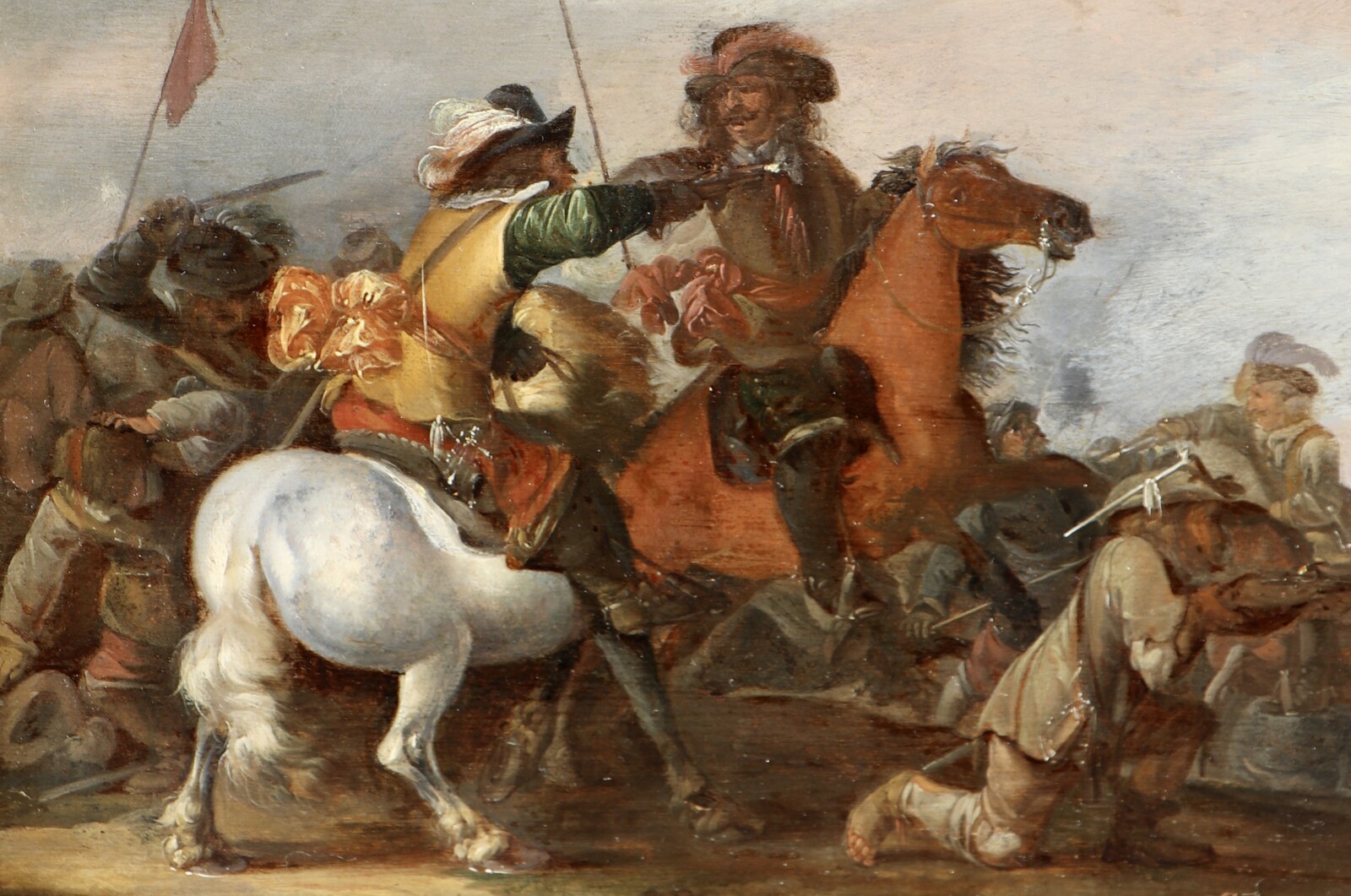
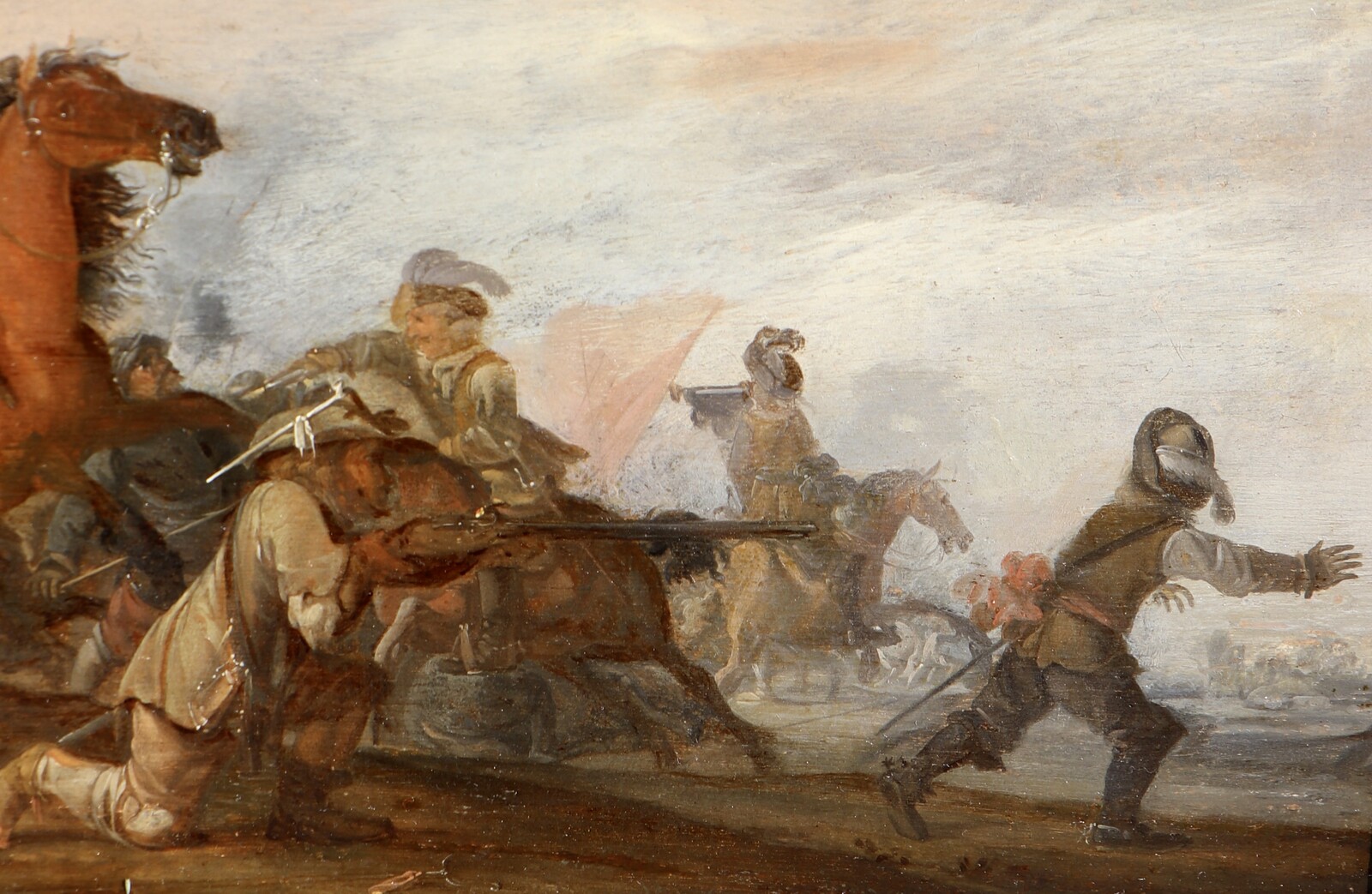
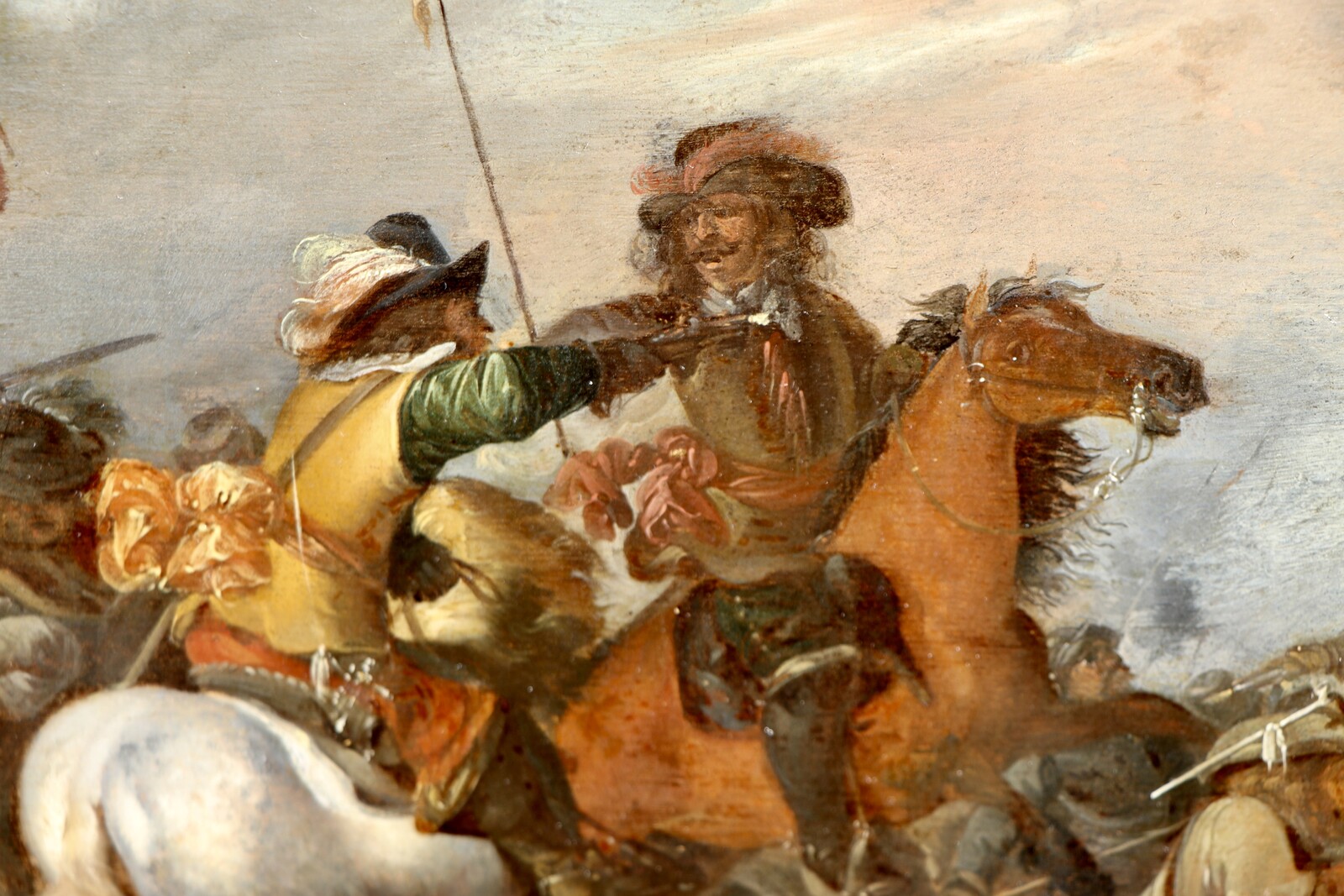
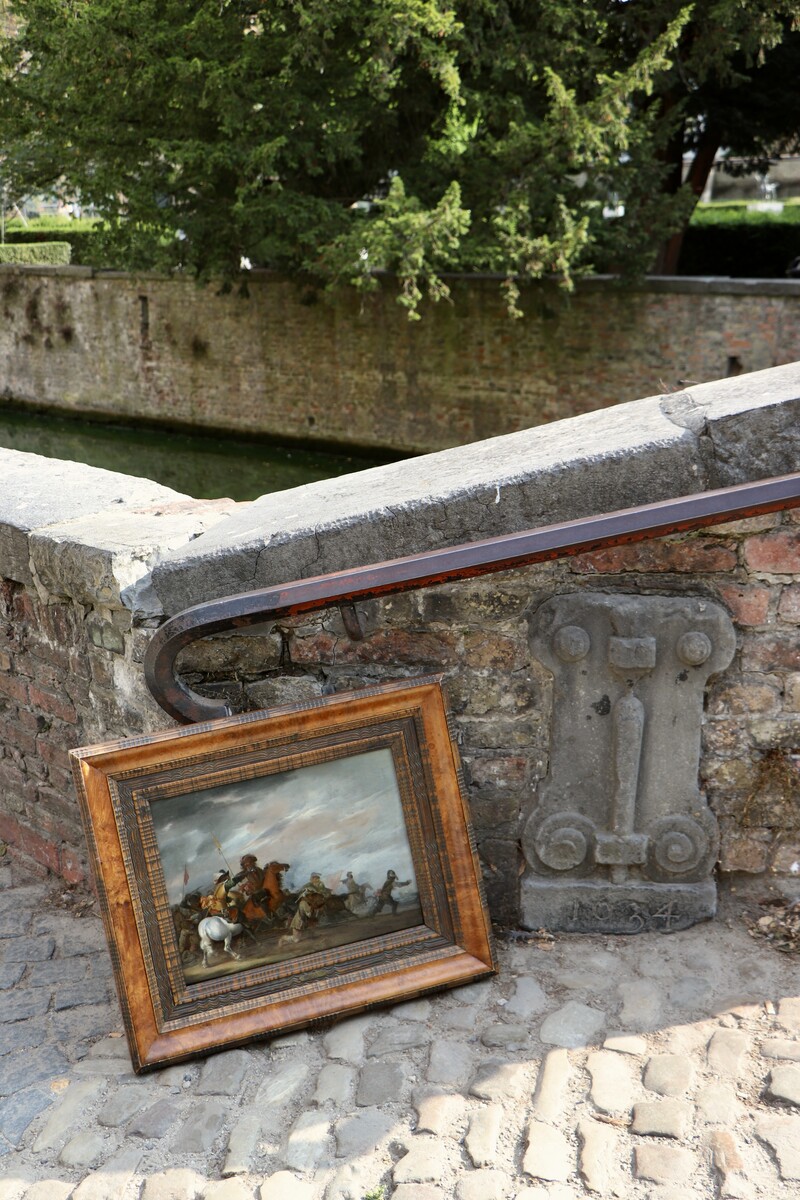
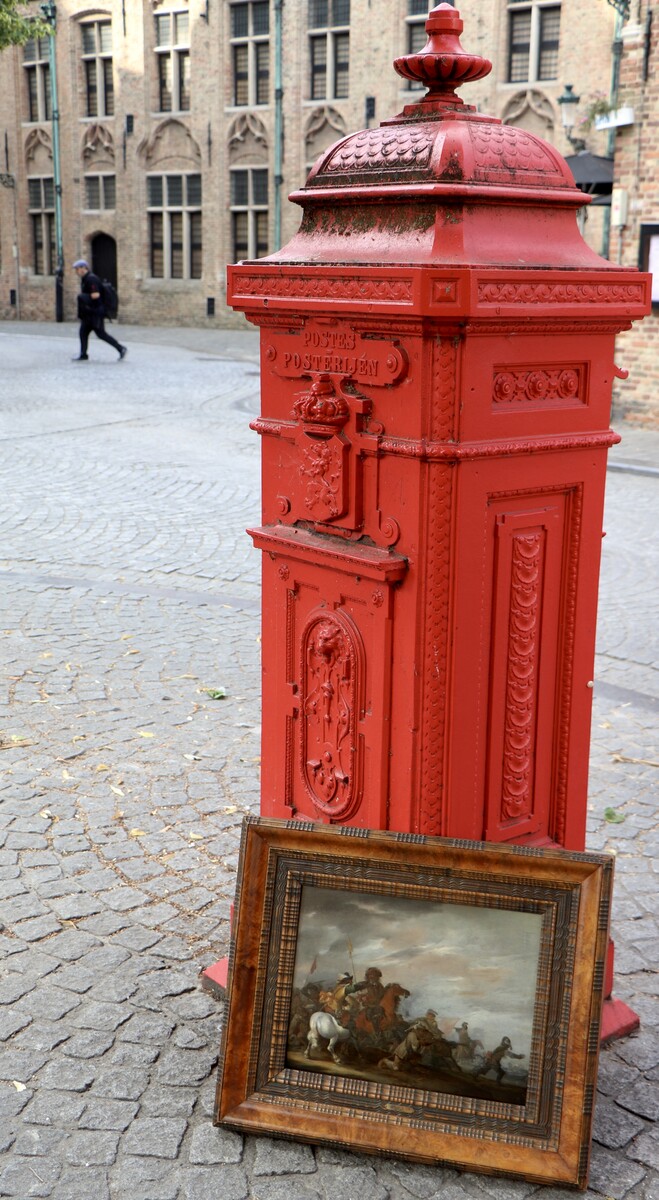
A cavalry battle scene
Oil on panel : 32,8 X 43,2 cm
Traces of a faded monogram bottom left “…MD..”
Frame : 53,7 X 64,2 cm
Absolute transparency: our cost price = 2.554 €
= acquisition price 1.887 € + shipment 123 € + restoration 544 €
Our export price 3.749 €
I am currently documenting this painting
In short
Jan Martsen de Jonge was an important witness of the last decades of the Eighty Years’ War, during which Holland freed itself from Spanish dominion.
This painting dates from Martsen’s later period in his career, from after 1630, when he was influenced by Palamedes Palamedesz.
About Jan Martsen de Jonge
Dutch painter
Haarlem circa 1609 – after 1647 Amsterdam
Jan Martsen probably added ‘de Jonge’, that is ‘the Younger’ to some signatures of his paintings to differentiate himself from his father, who had also been a painter (and his first master), and whose first name Jacob also starts with a ‘J’. It is thought that Jan’s earliest paintings were made in The Hague under his father’s licence.
Jan’s name is also spelled as :
- Jan Martszen de Jonge
In English it is sometimes translated into :
- Jan Martsen or Martszen the Younger
Two authors, George S. Keyes and Jan Briels, call him :
- Jan Martens
Painter and engraver of battle scenes.
His father, Jacob(us) Martsen (Gent 1580 – 1647 Amsterdam) was a painter specialised in portraits and genre scenes. He studied in Haarlem under Karel van Mander.
Our painter was a pupil of his uncle, Esaias van de Velde (1587 – 1630).
Jan’s father, Jacob, married Esaias’ sister Susanna in 1608; three years later Esaias married Jacob’s sister Catelyna.
Van de Velde was born in Amsterdam, where he remained until 1609, from 1609 until 1617 he lived in Haarlem, and from 1618 until his death in 1630 in The Hague.
Jan Martsen remained in Haarlem during his youth until 1625. That year he moved with his father to Amsterdam. In 1626 both father and son moved to The Hague, where Jacob joined the Painter’s Guild. Jan’s new master, his uncle Esaias van de Velde, had been active here since 1618.
In 1629 Jan settled in his birthplace Haarlem. Except for a 5-year stay (following his marriage) in Amsterdam (1633 – 1638) he is documented in Haarlem until 1645.
At some stage Jan must also have been active in Delft.
Jan Martsen’s early paintings, during the late 1620s, were strongly influenced by his uncle, Esaias van de Velde. Later he was influenced by Palamedes Palamedesz., who had also been a pupil of Esaias van de Velde.
All three Esaias van de Velde, Anthonie Palamedesz. (the elder brother of Palamedes Palamedesz.) and Jan Martsen have been painting figures in some of the architectural scenes of Bartholomeus van Bassen (circa 1590 – 1652). Antwerp-born van Bassen was active in Delft between 1613 and 1622 and from 1622 until his death thirty years later in The Hague.
Jan Martsen had one pupil: Jan Asselijn. He studied with Jan Martsen in Amsterdam. His earliest paintings, from 1634 and 1635, are battle scenes, showing the strong influence of his master. Asselijn subsequently dropped this subject, only to paint it briefly again around 1646, when he was active in Lyon and Paris, before returning to Amsterdam. Asselijn is foremost known as an important Italianate landscape and genre painter, a ‘Bamboccianto’ active in Rome between circa 1635 and 1644.
About the Eighty Years’ War and about the evolution of battle scene painting.
1. The Eighty Years’ War started of as a Protestant uprising against the Catholic Spanish Habsburg. It ended with the Peace of Westphalia in 1648: Spain recognized an independent Republic of the Seven United Provinces, Holland, while Flanders remained Spanish.
The War can be divided into four phases:
- 1568 until circa 1600 : this period ends with Prince Maurice taking a lot of towns from the Spaniards.
- 1609 – 1621: the Twelve Years’ Truce.
- 1621 – 1625 : important Spanish successes, for example the fall of Breda in 1625.
- 1625 – 1648 : the new stadtholder Frederick Henry takes town after town from the Spaniards.
The career of Jan Martsen falls in this last, very successful period for Holland.
2. Both in the Southern (Flanders) and in the Northern (Holland) Low Countries there was an important market for subjects related to the War: specific sieges (which were rare), unspecified battle scenes, resting soldiers, attacks on travellers and convoys, village plunderings, army camps and guardroom scenes. A lot of specialists were active in every of these specific domains.
Our painting belongs to the unspecified battle scenes. It might seem strange to you but almost all battle scenes have no references to time or place. The painters visualised current events in a general way. As their clients, from nobility and the higher middle classes, belonged to the cavalry (which made out a quarter of the army) they mostly painted cavalry battles, much less engagements between cavalry and infantry.
The best known specialists in cavalry battle scenes were:
- in Flanders Sebastiaen Vrancx, Pieter Snayers and Pieter Meulener;
- in Holland Esaias van de Velde, Palamedes Palamedesz., Jan Martsen de Jonge, Abraham van der Hoeff, Jan Jacobsz. van der Stoffe, Jan Asselijn and Philips Wouwerman.
The simplest difference between both regions is that the Flemish battle scenes painters often use a high horizon line, the Dutch a low one. Exceptions to this rule are the later paintings of both Snayers and Meulener.
3. Typical in these battle scenes is the lack of uniforms. These appeared only in the 18th century. 16th and 17th century soldiers recognized each other by colours: orange (sometimes also blue or black) for the Dutch, red for the Spanish. These colours appeared in sashes, worn round the middle, and in plumes, attached to the hats and helmets.
About the differences between Esaias van de Velde, Palamedes Palamedesz. and Jan Martsen de Jonge
By the end of the Twelve Years’ Truce (1621) Esaias van de Velde (1587 – 1630) was the first Dutchman who started painting contemporary battle scenes (he also painted other subjects related to the War). Although he already died in 1630 he strongly influenced three painters:
- Pieter de Neyn (1597 – 1639), who painted battle scenes and attacks during the years 1625 and 1626;
- Palamedes Palamedesz. (1607 – 1638). The ‘z.’ in his last name stands for ‘zoon’, ‘son’;
- Our Jan Martsen de Jonge (circa 1609 – after 1647), who started painting battle scenes by the end of the 1620s.
In their paintings one finds typical elements of van de Velde back:
- strong, sharp contours of human figures and horses;
- monochrome colour use;
- dynamic, robust horses with long, flat, square heads.
Our painting clearly dates from this period.
Circa 1630, immediately after van de Velde’s death Palamedesz. and Martsen de Jonge changed their style:
- Palamedesz. reduced the size of the heads of his horses and placed them on broad necks;
Circa 1635 both changed again their style, using soft green undertones:
- Palamedesz. reduced landscape elements, building his compositions no longer along a diagonal, but grouping his figures in blocks along a triangle;
- Jan Martsen chose for opener landscapes with contrasts of light and darker areas and a smoother, enamel-like way of applying the paint.
But the simplest way for recognizing Palamedesz. from Jan Martsen is the fact that the first one loved representing his cavalrymen wearing flat lace collars, while our painter loved the central motif of a heroic, unbeatable, Dutch horseman, often riding a white horse.
Why should you buy this painting?
Because it is a good example of the art of Jan Martsen de Jonge.